
Title
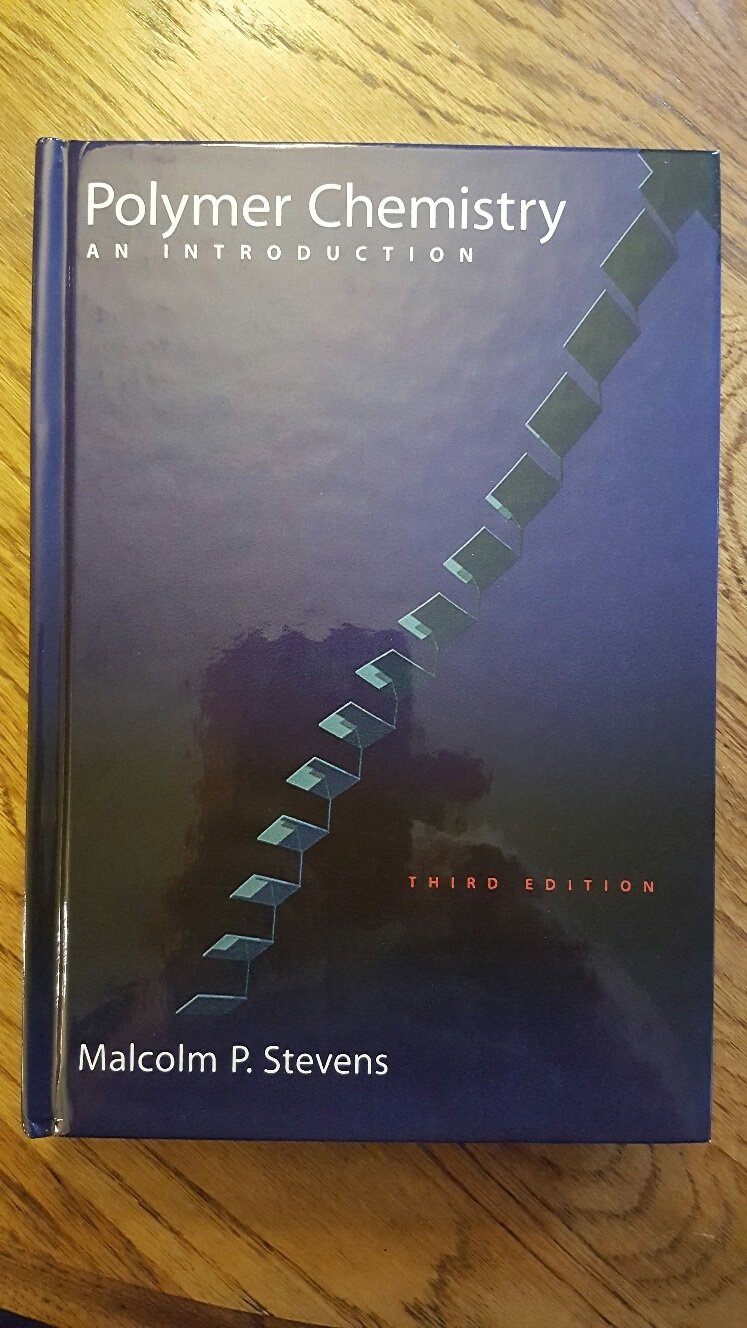
Polymer Chemistry: An Introduction,Used
Sold by Ergodebooks, an authorized reseller.
Returns accepted within 30 days | support@ergodebooks.com
Shipping Information
- Free Standard Shipping — United States only
- Processing Time: 3–5 business days
- Estimated Delivery: 6–10 business days after dispatch
- Double-boxed, fully insured & discreetly packaged
- Tracking number sent via email once dispatched
Returns & Refund
Returns accepted within 30 days of delivery.
Damaged or Defective Item
Free return shipping + replacement or full refund
Wrong Item Received
Free return shipping + replacement or full refund
Change of Mind
Return shipping at customer's expense · 25% restocking fee applies
Payment Option

Now updated to incorporate recent developments in the field, the third edition of this successful text offers an excellent introduction to polymer chemistry. Ideal for graduate students, advanced undergraduates, and industrial chemists who work with polymers, it is the only current polymer textbook that discusses polymer types according to functional groups. It provides a comprehensive and uptodate overview of the chemistry of macromolecular substances, with particular emphasis on polymers that are important commercially and the properties that make them important. Major topics include polymer synthesis and nomenclature; molecular weight and molecular weight distribution; reactions of polymers; recycling of polymers; methods used for characterizing and testing polymers; morphology; stereoregular polymers; polymer blends; stepgrowth, chaingrowth, and ringopening polymerization; commercially important addition and condensation polymers; and heterocyclic, inorganic, and natural polymers. Review exercises, many including journal references, are provided to help lead students into the polymer literature.Polymer Chemistry, 3/e, offers the most uptodate treatment available of new developments in this rapidly changing field. It covers dendritic and hyperbranched polymers, olefin polymerization using metallocene catalysts, living free radical polymerization, biodegradable bacterial polyesters, mass spectrometric methods for determining molecular weights of polymers, atomic force microscopy for characterizing polymer surfaces, and polymers exhibiting nonlinear optical properties.
⚠️ WARNING (California Proposition 65):
This product may contain chemicals known to the State of California to cause cancer, birth defects, or other reproductive harm.
For more information, please visit www.P65Warnings.ca.gov.
- Q: How many pages does this book have? A: This book has five hundred seventy-six pages. It offers a comprehensive overview of polymer chemistry, making it suitable for both students and professionals.
- Q: What is the binding type of this book? A: The binding type is hardcover. This durable format is ideal for frequent use and provides longevity for academic study.
- Q: What are the dimensions of 'Polymer Chemistry: An Introduction'? A: The dimensions are six point five four inches in length, one point three five inches in width, and nine point six nine inches in height. This size makes it portable for students.
- Q: What level of students is this book suitable for? A: This book is suitable for graduate students and advanced undergraduates. It covers fundamental and advanced topics in polymer chemistry.
- Q: Is there an emphasis on practical applications in this book? A: Yes, the book emphasizes commercially important polymers and their properties. It provides insights into real-world applications of polymer chemistry.
- Q: How do I approach the review exercises in this book? A: You can approach the review exercises by attempting them after each chapter. They include journal references to guide you into further polymer literature.
- Q: What is the recommended care for this hardcover book? A: To keep this hardcover book in good condition, store it upright in a cool, dry place. Avoid exposure to direct sunlight to prevent fading.
- Q: Can I clean this book if it gets dirty? A: Yes, you can clean the cover gently with a soft, dry cloth. Avoid using water or cleaning solutions as they may damage the cover.
- Q: Is this book suitable for beginners in polymer chemistry? A: While it is primarily aimed at advanced students, beginners may find it useful with additional resources. It provides a solid foundation in polymer chemistry.
- Q: What should I do if my book arrives damaged? A: If your book arrives damaged, contact the retailer for a return or exchange. Make sure to have your order details ready for a smooth process.
- Q: What if I need to return the book after purchase? A: You can return the book within the retailer's specified return period. Check their return policy for specific instructions and conditions.
- Q: Are there any online resources that complement this book? A: Yes, there are several online resources, including academic journals and polymer chemistry websites, that complement the material covered in the book.
- Q: Does the book cover the latest developments in polymer chemistry? A: Yes, the third edition includes recent developments like biodegradable bacterial polyesters and living free radical polymerization.
- Q: Is there a glossary or index included in the book? A: Yes, the book includes an index that helps you locate specific topics quickly. This feature is beneficial for referencing during study.
- Q: Who is the author of 'Polymer Chemistry: An Introduction'? A: The author is Malcolm P. Stevens. He is well-regarded in the field of polymer science.