
Title
Poor Place, Thriving People: How The Middle East And North Africa Can Rise Above Spatial Disparities (Mena Development Report),New
Sold by Ergodebooks, an authorized reseller.
Returns accepted within 30 days | support@ergodebooks.com
Shipping Information
- Free Standard Shipping — United States only
- Processing Time: 3–5 business days
- Estimated Delivery: 6–10 business days after dispatch
- Double-boxed, fully insured & discreetly packaged
- Tracking number sent via email once dispatched
Returns & Refund
Returns accepted within 30 days of delivery.
Damaged or Defective Item
Free return shipping + replacement or full refund
Wrong Item Received
Free return shipping + replacement or full refund
Change of Mind
Return shipping at customer's expense · 25% restocking fee applies
Payment Option

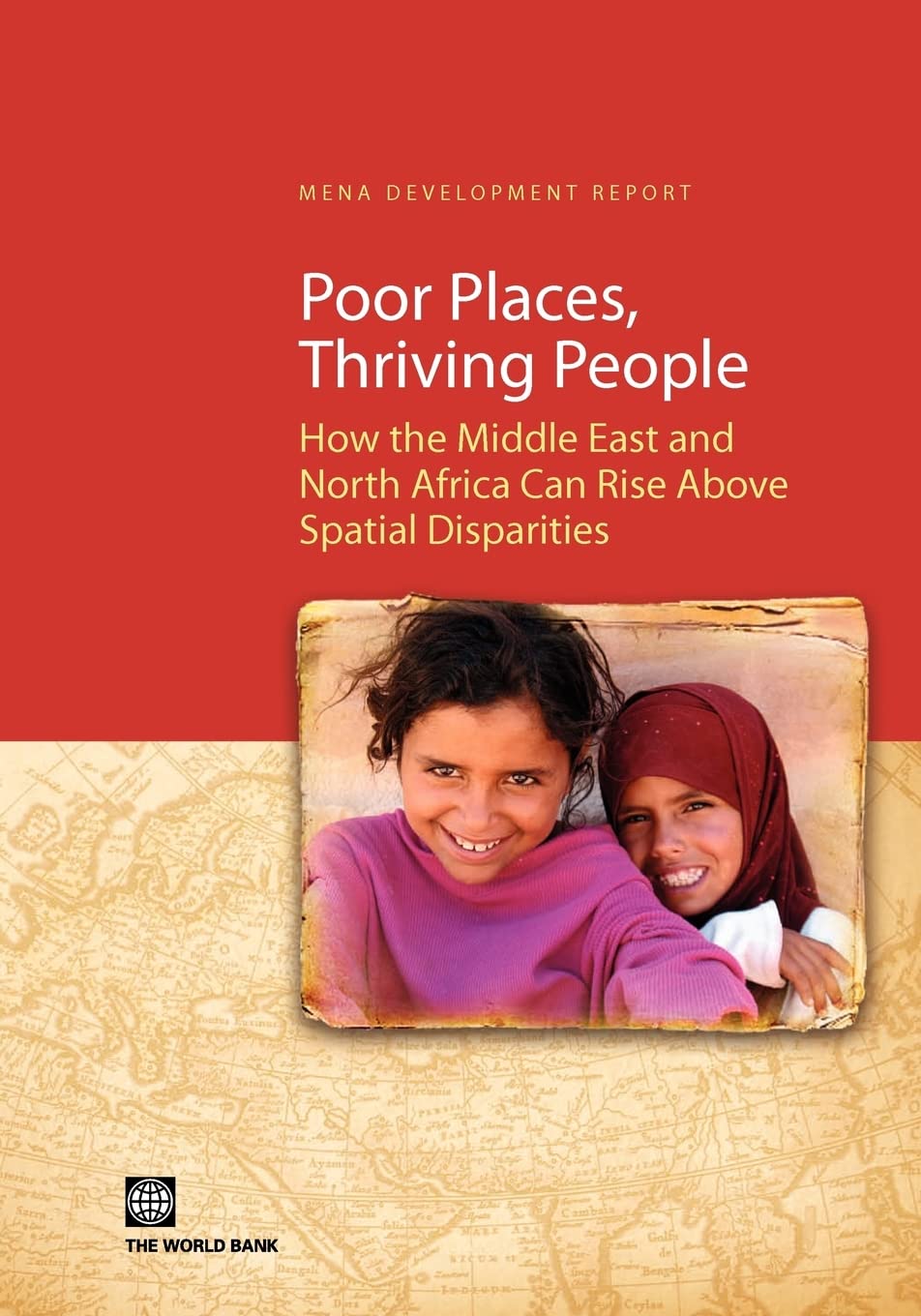
Geographical differences in living standards are a pressing concern for policymakers in the Middle East and North Africa (MENA). Economies of agglomeration mean that production is most efficient when concentrated in leading areas. So how can the region reduce spatial disparities in wellbeing without compromising growth?The solution to spatial disparities lies in matching the policy package to a lagging areas specific characteristics. Key questions include: is the lagging area problem really as serious as one thinks; is it a problem of low economic opportunity or of poor human development; are lagging area populations close enough to agglomerations to benefit from spillovers; and is there manifest private investor interest? Drawing on the World Banks 2009 World Development Report, Reshaping Economic Geography, the book proposes 3 policy packages.First, all lagging areas can benefit from a level playingfield for development and investment in people. Geographic disparities in the policy environment are a legacy of MENAs history, and gaps in human development are a major component of spatial disparities. Smart policies for the investment environment, health, education, social transfers and urban development can therefore close spatial gaps in living standards.Second, lagging areas that are close to economic agglomeration can benefit from spillovers provided that they are connected. MENAs expenditure priority is not necessarily longdistance primary connections, but infrastructure maintenance and shortdistance connections such as rural roads and periurban networks. Publicprivate partnerships can also bring electronic connectivity to lagging areas.Third, shifting regional development policy away from spatial subsidies towards the facilitation of clusterbased growth will increase the chance of costeffective impacts.The final chapter of the book examines the institutional prerequisites for effective spatial policy. It argues that MENAs centralized/sectoral structures are not always adapted to governments spatial development agendas, and describes alternative institutional options.
⚠️ WARNING (California Proposition 65):
This product may contain chemicals known to the State of California to cause cancer, birth defects, or other reproductive harm.
For more information, please visit www.P65Warnings.ca.gov.