
Title
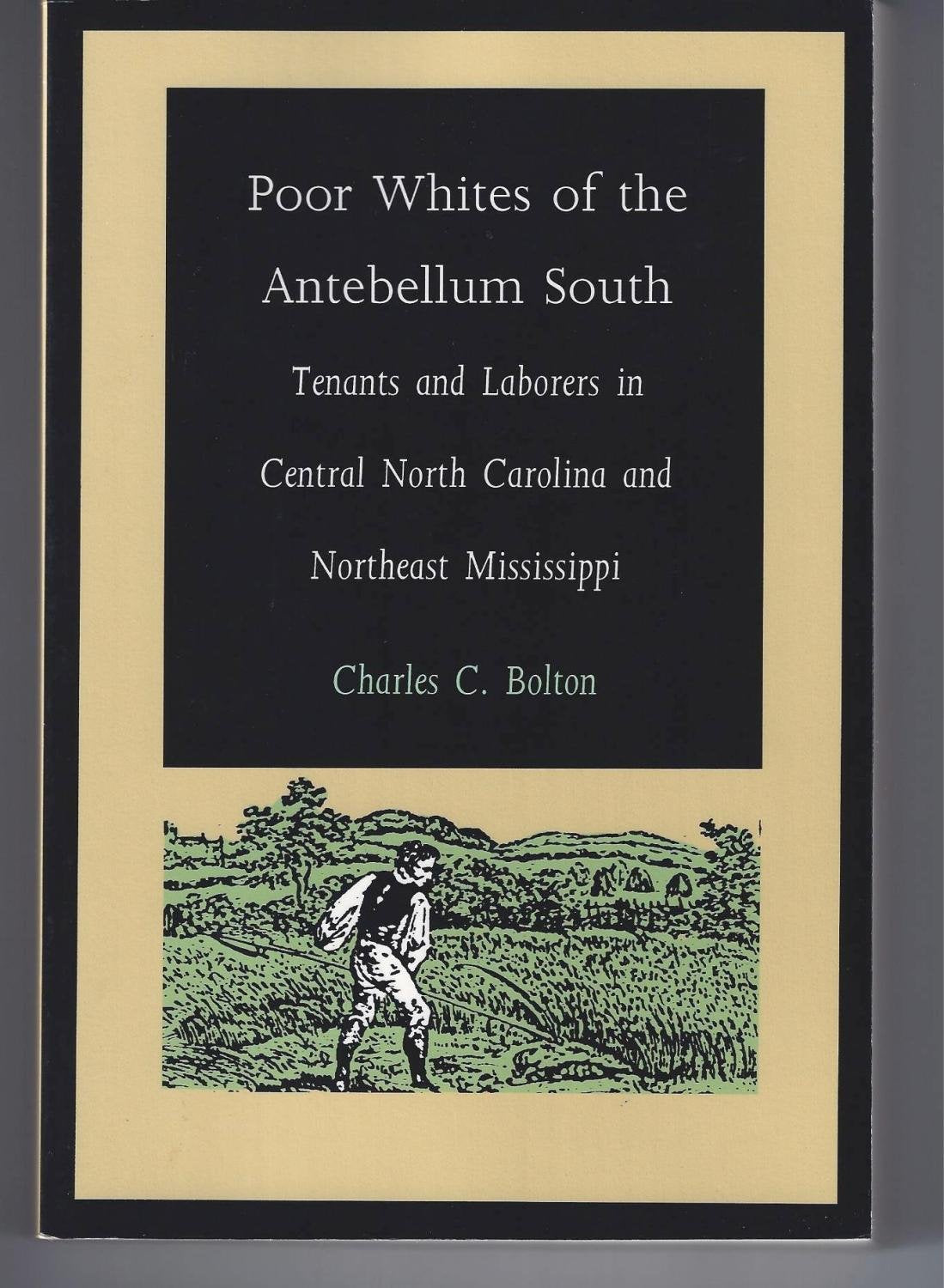
Poor Whites Of The Antebellum South: Tenants And Laborers In Central North Carolina And Northeast Mississippi,Used
Sold by Ergodebooks, an authorized reseller.
Returns accepted within 30 days | support@ergodebooks.com
Shipping Information
- Free Standard Shipping — United States only
- Processing Time: 3–5 business days
- Estimated Delivery: 6–10 business days after dispatch
- Double-boxed, fully insured & discreetly packaged
- Tracking number sent via email once dispatched
Returns & Refund
Returns accepted within 30 days of delivery.
Damaged or Defective Item
Free return shipping + replacement or full refund
Wrong Item Received
Free return shipping + replacement or full refund
Change of Mind
Return shipping at customer's expense · 25% restocking fee applies
Payment Option

In Poor Whites of the Antebellum South, Charles C. Bolton gives a distinct voice to one of the most elusive groups in the society of the Old South. Bolton's detailed examination reveals much about the lives of these landless white tenants and laborers and their relationship to yeoman farmers, black slaves, free blacks and elite whites. Providing a provocative analysis of the failure of the Jeffersonian 'yeoman ideal' of democracy in whitemajority areas, this book also shows how poor whites represented a more significant presence on the political, economic, and social landscape than previously had been thought.Looking at two specific regionsthe 'settled' central piedmont of North Carolina and the 'frontier' of northeast MississippiBolton describes how poor whites played an important, though circumscribed, role in the local economy. Dependent on temporary employment, they represented a troubling presence in a society based on the principles of white independence and black slavery. Although perceived by southern leaders as a threat, poor whites, Bolton argues, did not form a political alliance with either free or enslaved blacks because of numerous factors including white racism, kinship ties, religion, education, and mobility. A concluding discussion of the crisis of 186061 examines the rejection of secession by significant numbers of poor whites, as well as the implications for their future as the Old South turned toward the new.Poor Whites of the Antebellum South sheds light on a group often neglected in southern history. It is an important contribution that will be of interest to all students and historians of the American South.
⚠️ WARNING (California Proposition 65):
This product may contain chemicals known to the State of California to cause cancer, birth defects, or other reproductive harm.
For more information, please visit www.P65Warnings.ca.gov.