If you have any questions, you are always welcome to contact us. We'll get back to you as soon as possible, withing 24 hours on weekdays.
Customer service
All questions about your order, return and delivery must be sent to our customer service team by e-mail at yourstore@yourdomain.com
Sale & Press
If you are interested in selling our products, need more information about our brand or wish to make a collaboration, please contact us at press@yourdomain.com
Help
If you have any questions, you are always welcome to contact us. We'll get back to you as soon as possible, withing 24 hours on weekdays.
Customer service
All questions about your order, return and delivery must be sent to our customer service team by e-mail at yourstore@yourdomain.com
Sale & Press
If you are interested in selling our products, need more information about our brand or wish to make a collaboration, please contact us at press@yourdomain.com
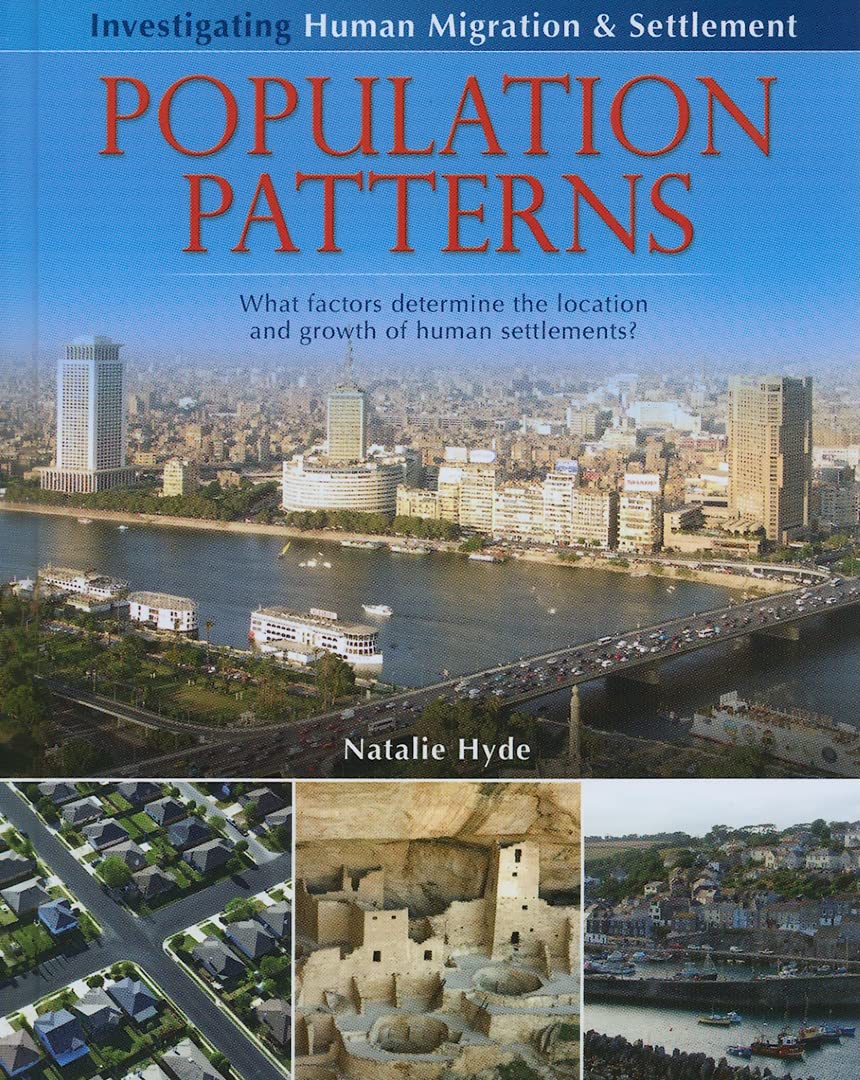
Why do people migrate to and settle in the places they do? Fascinating examples in history help explain how the earliest human settlements were situated close to fertile ground and rivers for farming and raising livestock. Other determining factors have included areas that offered defensive advantages, resources such as metals, salt, and fossil fuels, and locations on trading routes. In modern times proximity to commercial centers and transportion links, such as railways, canals, and airports, have become more important. Examples featured include settling the Nile in ancient Egypt; the shaping of Central America by trade and colonization; the Industrial Revolution in Britain; the opening up of the American West; the Gold Rush; and the colonization of Australia. The concepts of urbanization the settlement and growth of cities and suburbanization, the return to the countryside and the growth of commuter towns, are both examined.
⚠️ WARNING (California Proposition 65):
This product may contain chemicals known to the State of California to cause cancer,
birth defects, or other reproductive harm.
For MAP (Minimum Advertised Price) violations and Intellectual Property (IP) or Trademark concerns, please contact:
support@ergodebooks.com
⚠️ California Proposition 65 Warning: Some products sold on this website may expose you to chemicals known to the State of California to cause cancer, birth defects, or other reproductive harm. For more information, visit www.P65Warnings.ca.gov.