If you have any questions, you are always welcome to contact us. We'll get back to you as soon as possible, withing 24 hours on weekdays.
Customer service
All questions about your order, return and delivery must be sent to our customer service team by e-mail at yourstore@yourdomain.com
Sale & Press
If you are interested in selling our products, need more information about our brand or wish to make a collaboration, please contact us at press@yourdomain.com
Help
If you have any questions, you are always welcome to contact us. We'll get back to you as soon as possible, withing 24 hours on weekdays.
Customer service
All questions about your order, return and delivery must be sent to our customer service team by e-mail at yourstore@yourdomain.com
Sale & Press
If you are interested in selling our products, need more information about our brand or wish to make a collaboration, please contact us at press@yourdomain.com
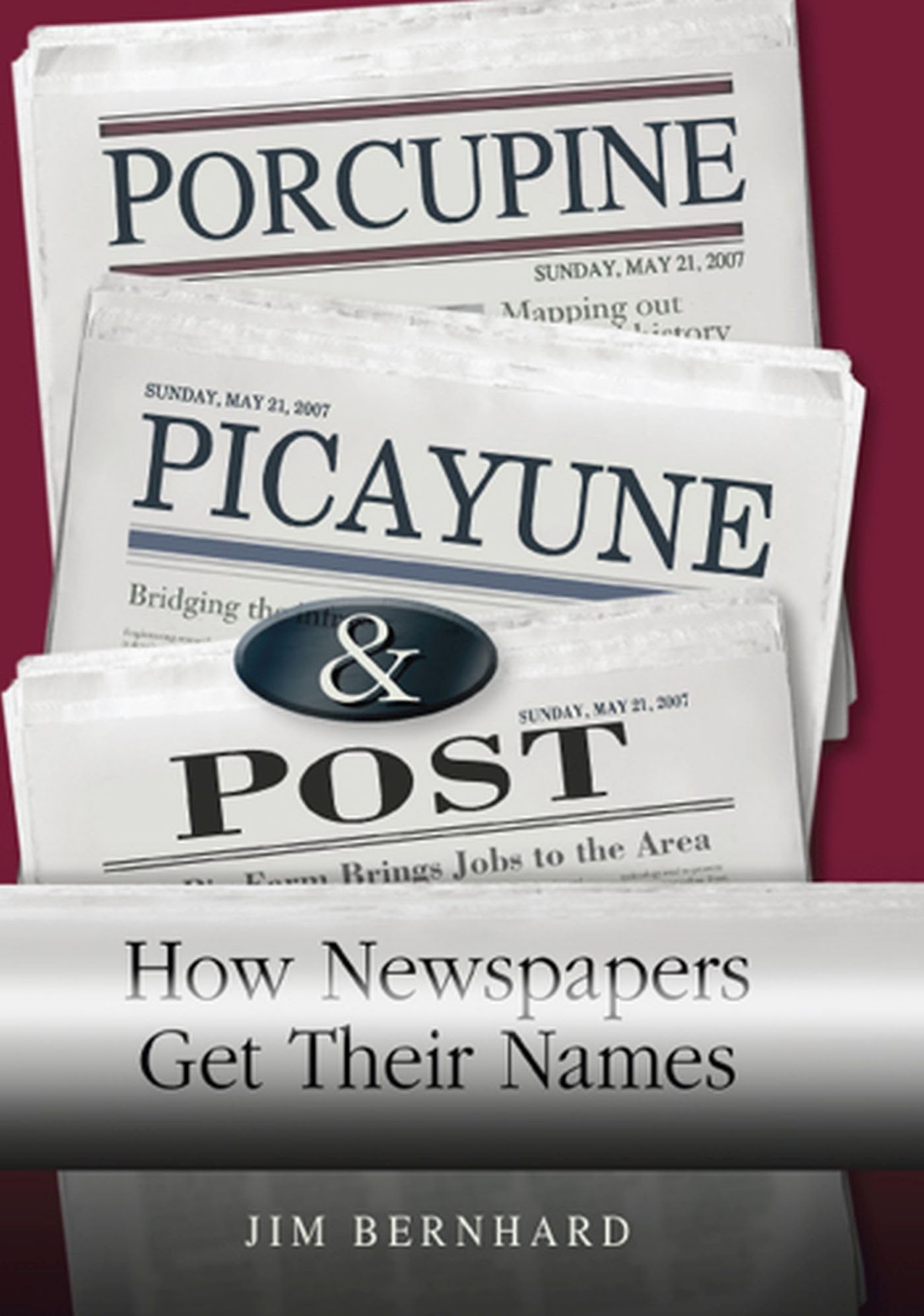
Why a Gazette? When one stops to think about it, Times or News is easy to understand, but why do some newspapers have strange names such as Jimplecute or Bazoo? And not to be picayune, but why Picayune?Word sleuth Jim Bernhard stopped to consider such questions and began a quest that resulted in the only booklength account of the history of newspaper titles. Cataloging names from the most common to the most bizarre, Porcupine, Picayune, & Post explores the history and etymology of newspapers namesnames that, by their very peculiarity, cry out for explanation.Bernhard focuses on printed generalinterest Englishlanguage dailies and weeklies, from the Choteau (Montana) Acantha to the Moab (Utah) Zephyr, with everything in betweenincluding the Gondolier of Venice, Florida, and the Iconoclast of Crawford, Texas. He explains why there are more Heralds, Journals, Posts, and Tribunes than you can shake a typestick at. He also goes beyond Americas borders to consider such oddities as the Banbury Cake in England and the Gawler Bunyip in Australia.As Bernhard shows, the reasons for newspaper names vary: sometimes their origins are political or historical, sometimes personal or simply whimsical. Many names have lost their original purposes over time but were chosen with care to symbolize a philosophy or mission or else were created by word association with the papers location or community role.This book is bursting with littleknown facts that will delight anyone who picks up a daily paper: how the Oil City Derrick in Pennsylvania got its name from a seventeenthcentury English hangman, why a Londoner printed a newspaper on calico and named it the Handkerchief, and what meaning lurks behind the Unterrified Democrat of Linn, Missouri. Theres even a chapter on noteworthy fictional newspapers, from Supermans Daily Planet to Lake Wobegons HeraldStar.With the naming of newspapers fast becoming a lost art, Porcupine, Picayune, & Post tells whats behind the banners we see each day but probably never stop to think about. Thanks to Bernhard, we may never see them in the same way again.
⚠️ WARNING (California Proposition 65):
This product may contain chemicals known to the State of California to cause cancer,
birth defects, or other reproductive harm.
<div class="dynamic-checkout__content" id="dynamic-checkout-cart" data-shopify="dynamic-checkout-cart"> <shopify-accelerated-checkout-cart wallet-configs="[{"name":"shop_pay","wallet_params":{"shopId":73758048501,"merchantName":"Ergodebooks","personalized":true}},{"name":"amazon_pay","wallet_params":{"checkoutLanguage":"en_US","ledgerCurrency":"USD","placement":"Cart","sandbox":false,"merchantId":"A1G1ZY975O1T6J","productType":"PayAndShip","design":"C0002"}},{"name":"paypal","wallet_params":{"shopId":73758048501,"countryCode":"US","merchantName":"Ergodebooks","phoneRequired":true,"companyRequired":false,"shippingType":"shipping","shopifyPaymentsEnabled":true,"hasManagedSellingPlanState":false,"requiresBillingAgreement":false,"merchantId":"L873BZSC9NMQS","sdkUrl":"https://www.paypal.com/sdk/js?components=buttons\u0026commit=false\u0026currency=USD\u0026locale=en_US\u0026client-id=AbasDhzlU0HbpiStJiN1KRJ_cNJJ7xYBip7JJoMO0GQpLi8ePNgdbLXkC7_KMeyTg8tnAKW4WKrh9qmf\u0026merchant-id=L873BZSC9NMQS\u0026intent=authorize"}}]" access-token="c0f52a66b386e9fa5c0ab4c2febc737c" buyer-country="US" buyer-locale="en" buyer-currency="USD" shop-id="73758048501" cart-id="00a0af9ff969979f6527016c6662716c" > <div class="wallet-button-wrapper"> <ul class='wallet-cart-grid wallet-cart-grid--skeleton' role="list" data-shopify-buttoncontainer="true"> <li data-testid='grid-cell' class='wallet-cart-button-container'><div class='wallet-cart-button wallet-cart-button__skeleton' role='button' disabled aria-hidden='true'> </div></li><li data-testid='grid-cell' class='wallet-cart-button-container'><div class='wallet-cart-button wallet-cart-button__skeleton' role='button' disabled aria-hidden='true'> </div></li><li data-testid='grid-cell' class='wallet-cart-button-container'><div class='wallet-cart-button wallet-cart-button__skeleton' role='button' disabled aria-hidden='true'> </div></li> </ul> </div> </shopify-accelerated-checkout-cart> <small id="shopify-buyer-consent" class="hidden" aria-hidden="true" data-consent-type="subscription"> One or more of the items in your cart is a recurring or deferred purchase. By continuing, I agree to the <span id="shopify-subscription-policy-button">cancellation policy</span> and authorize you to charge my payment method at the prices, frequency and dates listed on this page until my order is fulfilled or I cancel, if permitted. </small> </div>
Stay in the know
Subscribe to our newsletter and stay updated on latest offers, discounts and events near you.
For MAP (Minimum Advertised Price) violations, please contact:
map@ergode.com
For Intellectual Property (IP) or Trademark concerns, please contact:
ip@ergode.com
⚠️ California Proposition 65 Warning: Some products sold on this website may expose you to chemicals known to the State of California to cause cancer, birth defects, or other reproductive harm. For more information, visit www.P65Warnings.ca.gov.