
Title
Positive Computing: Technology for Wellbeing and Human Potential (Mit Press),Used
Sold by Ergodebooks, an authorized reseller.
Returns accepted within 30 days | support@ergodebooks.com
Shipping Information
- Free Standard Shipping — United States only
- Processing Time: 3–5 business days
- Estimated Delivery: 6–10 business days after dispatch
- Double-boxed, fully insured & discreetly packaged
- Tracking number sent via email once dispatched
Returns & Refund
Returns accepted within 30 days of delivery.
Damaged or Defective Item
Free return shipping + replacement or full refund
Wrong Item Received
Free return shipping + replacement or full refund
Change of Mind
Return shipping at customer's expense · 25% restocking fee applies
Payment Option

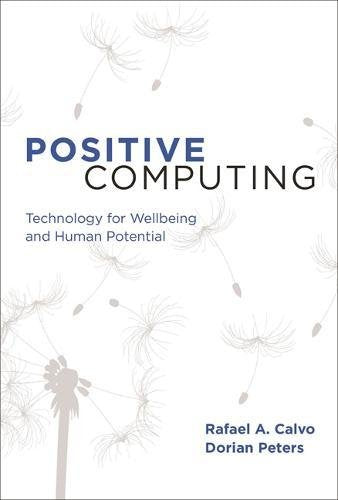
A case for building a digital environment that can make us happier and healthier, not just more productive, and a theoretical framework for doing so.On the eve of Google's IPO in 2004, Larry Page and Sergey Brin vowed not to be evil. Today, a growing number of technologists would go further, trying to ensure that their work actively improves people's lives. Technology, so pervasive and ubiquitous, has the capacity to increase stress and suffering; but it also has the lessheralded potential to improve the wellbeing of individuals, society, and the planet. In this book, Rafael Calvo and Dorian Peters investigate what they term positive computingthe design and development of technology to support psychological wellbeing and human potential.Calvo and Peters explain that technologists' growing interest in social good is part of a larger public concern about how our digital experience affects our emotions and our quality of lifewhich itself reflects an emerging focus on humanistic values in many different disciplines. Synthesizing theory, knowledge, and empirical methodologies from a variety of fields, they offer a rigorous and coherent foundational framework for positive computing. Sidebars by experts from psychology, neuroscience, humancomputer interaction, and other disciplines supply essential context. Calvo and Peters examine specific wellbeing factors, including positive emotions, selfawareness, mindfulness, empathy, and compassion, and explore how technology can support these factors. Finally, they offer suggestions for future research and funding.SidebarsTimothy N. Bickmore, Jeremy Bailenson, danah boyd, Jane Burns, David R. Caruso, Mihaly Csikszentmihalyi, Felicia Huppert, MaryHelen ImmordinoYang, Adele Krusche and J. Mark G. Williams, Jane McGonigal, Jonathan Nicholas, Don Norman, Yvonne Rogers
⚠️ WARNING (California Proposition 65):
This product may contain chemicals known to the State of California to cause cancer, birth defects, or other reproductive harm.
For more information, please visit www.P65Warnings.ca.gov.