
Title
Possessing Nature: Museums, Collecting, and Scientific Culture in Early Modern Italy (Studies on the History of Society and Cult,New
Sold by Ergodebooks, an authorized reseller.
Returns accepted within 30 days | support@ergodebooks.com
Shipping Information
- Free Standard Shipping — United States only
- Processing Time: 3–5 business days
- Estimated Delivery: 6–10 business days after dispatch
- Double-boxed, fully insured & discreetly packaged
- Tracking number sent via email once dispatched
Returns & Refund
Returns accepted within 30 days of delivery.
Damaged or Defective Item
Free return shipping + replacement or full refund
Wrong Item Received
Free return shipping + replacement or full refund
Change of Mind
Return shipping at customer's expense · 25% restocking fee applies
Payment Option

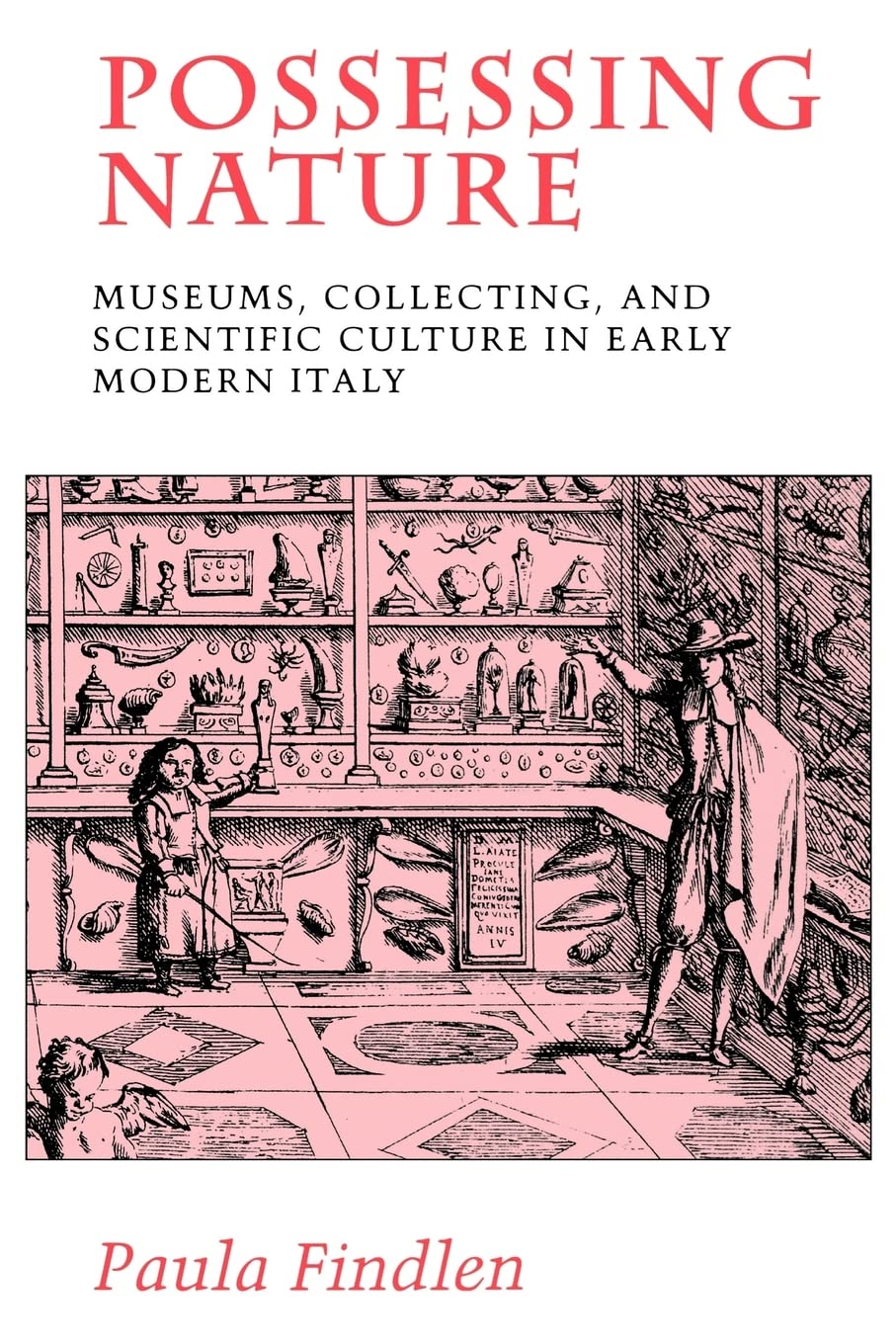
In 1500 few Europeans regarded nature as a subject worthy of inquiry. Yet fifty years later the first museums of natural history had appeared in Italy, dedicated to the marvels of nature. Italian patricians, their curiosity fueled by new voyages of exploration and the humanist rediscovery of nature, created vast collections as a means of knowing the world and used this knowledge to their greater glory.Drawing on extensive archives of visitors' books, letters, travel journals, memoirs, and pleas for patronage, Paula Findlen reconstructs the lost social world of Renaissance and Baroque museums. She follows the new study of natural history as it moved out of the universities and into sixteenth and seventeenthcentury scientific societies, religious orders, and princely courts. Findlen argues convincingly that natural history as a discipline blurred the border between the ancients and the moderns, between collecting in order to recover ancient wisdom and the development of new textual and experimental scholarship. Her vivid account reveals how the scientific revolution grew from the constant mediation between the old forms of knowledge and the new.
⚠️ WARNING (California Proposition 65):
This product may contain chemicals known to the State of California to cause cancer, birth defects, or other reproductive harm.
For more information, please visit www.P65Warnings.ca.gov.
- Q: What is the main focus of the book 'Possessing Nature'? A: The book explores the development of natural history museums in early modern Italy, highlighting how collecting and scientific culture evolved during the Renaissance and Baroque periods.
- Q: Who is the author of 'Possessing Nature'? A: The author of 'Possessing Nature' is Paula Findlen.
- Q: When was 'Possessing Nature' published? A: The book was published on April 2, 1996.
- Q: What is the binding type of this book? A: 'Possessing Nature' is available in paperback binding.
- Q: How many pages does 'Possessing Nature' have? A: The book contains 468 pages.
- Q: Is 'Possessing Nature' a new book? A: Yes, the item condition of 'Possessing Nature' is listed as new.
- Q: What category does 'Possessing Nature' fall under? A: 'Possessing Nature' is categorized under Italy.
- Q: What historical period does 'Possessing Nature' examine? A: The book examines the late Renaissance and Baroque periods in Italy, focusing on the emergence of natural history as a discipline.
- Q: Does the book include primary source materials? A: Yes, Paula Findlen uses extensive archives, including visitors' books, letters, and travel journals, to support her research.
- Q: What themes are explored in 'Possessing Nature'? A: The book explores themes such as the intersection of ancient wisdom and modern scholarship, collecting practices, and the role of museums in scientific culture.