
Title
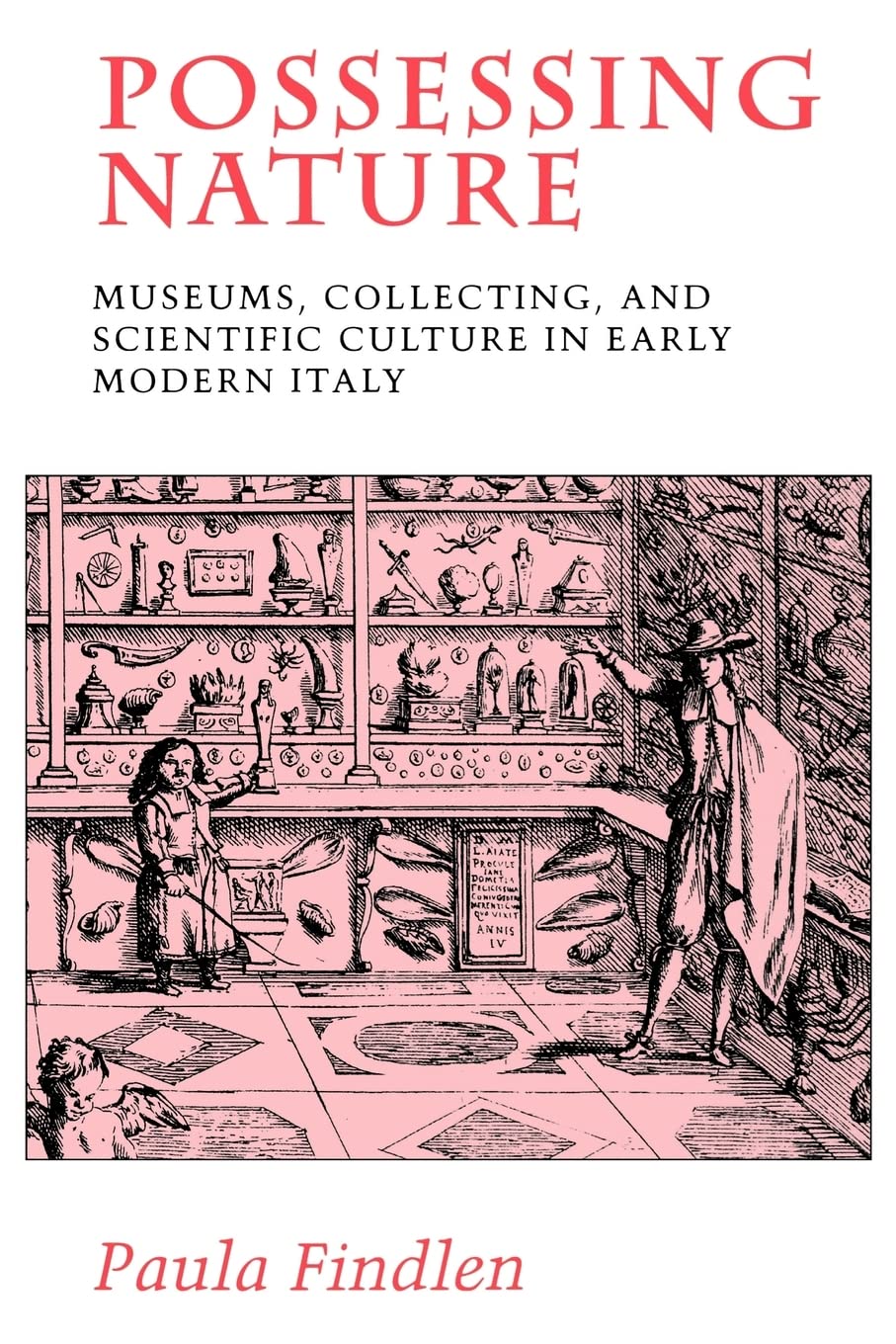
Possessing Nature: Museums, Collecting, And Scientific Culture In Early Modern Italy (Studies On The History Of Society And Cult,Used
Sold by Ergodebooks, an authorized reseller.
Returns accepted within 30 days | support@ergodebooks.com
Shipping Information
- Free Standard Shipping — United States only
- Processing Time: 3–5 business days
- Estimated Delivery: 6–10 business days after dispatch
- Double-boxed, fully insured & discreetly packaged
- Tracking number sent via email once dispatched
Returns & Refund
Returns accepted within 30 days of delivery.
Damaged or Defective Item
Free return shipping + replacement or full refund
Wrong Item Received
Free return shipping + replacement or full refund
Change of Mind
Return shipping at customer's expense · 25% restocking fee applies
Payment Option

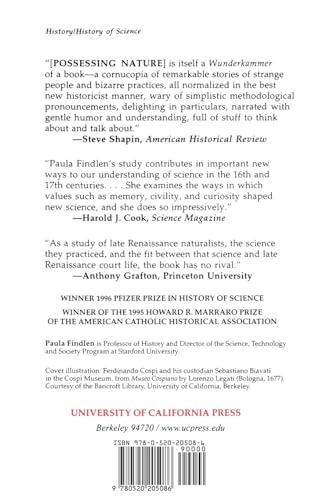
In 1500 Few Europeans Regarded Nature As A Subject Worthy Of Inquiry. Yet Fifty Years Later The First Museums Of Natural History Had Appeared In Italy, Dedicated To The Marvels Of Nature. Italian Patricians, Their Curiosity Fueled By New Voyages Of Exploration And The Humanist Rediscovery Of Nature, Created Vast Collections As A Means Of Knowing The World And Used This Knowledge To Their Greater Glory.Drawing On Extensive Archives Of Visitors' Books, Letters, Travel Journals, Memoirs, And Pleas For Patronage, Paula Findlen Reconstructs The Lost Social World Of Renaissance And Baroque Museums. She Follows The New Study Of Natural History As It Moved Out Of The Universities And Into Sixteenth And Seventeenthcentury Scientific Societies, Religious Orders, And Princely Courts. Findlen Argues Convincingly That Natural History As A Discipline Blurred The Border Between The Ancients And The Moderns, Between Collecting In Order To Recover Ancient Wisdom And The Development Of New Textual And Experimental Scholarship. Her Vivid Account Reveals How The Scientific Revolution Grew From The Constant Mediation Between The Old Forms Of Knowledge And The New.
⚠️ WARNING (California Proposition 65):
This product may contain chemicals known to the State of California to cause cancer, birth defects, or other reproductive harm.
For more information, please visit www.P65Warnings.ca.gov.
- Q: How many pages does the book have? A: The book contains four hundred sixty-eight pages. This length allows for an in-depth exploration of its themes and subjects.
- Q: What is the binding type of this book? A: The book is available in paperback binding. This makes it lightweight and easy to handle for reading.
- Q: What are the dimensions of the book? A: The book measures five point ninety-eight inches in length, one point eighteen inches in width, and eight point eighty-two inches in height. These dimensions make it a convenient size for storage and transport.
- Q: Who is the author of 'Possessing Nature'? A: The author of the book is Paula Findlen. She is known for her research in the history of science and museums.
- Q: What is the main theme of the book? A: The main theme revolves around the evolution of natural history and collecting in early modern Italy. It highlights the cultural significance of museums during the Renaissance.
- Q: What type of audience is this book suitable for? A: This book is suitable for readers interested in history, science, and Italian culture. It appeals to both scholars and general readers.
- Q: How can I use this book effectively? A: You can use this book as a resource for understanding the history of museums and collecting. It's also great for academic research and personal interest.
- Q: Is this book suitable for children? A: No, this book is not specifically aimed at children. It is more appropriate for adults and older teens due to its complex themes.
- Q: How should I store this book? A: Store this book in a cool, dry place, upright on a shelf. This will help maintain its condition over time.
- Q: What if the book arrives damaged? A: If the book arrives damaged, contact the seller to initiate a return or exchange. Most retailers have a policy for such issues.
- Q: Can I find this book in digital format? A: Yes, this book may be available in digital format. Check with major online retailers for eBook options.
- Q: What are the key topics covered in the book? A: Key topics include the rise of natural history museums, the role of collecting in society, and the intersection of ancient and modern knowledge.
- Q: Is there a bibliography or references in the book? A: Yes, the book includes a bibliography and references for further reading. This is helpful for academic pursuits.
- Q: What is the publication date of the book? A: The book was published as part of the 'Studies on the History of Society and Culture' series. The specific publication date can usually be found in the book's details.
- Q: Does this book include illustrations or images? A: Yes, the book may include illustrations or images related to the topics discussed. These visual aids enhance the reader's understanding.