
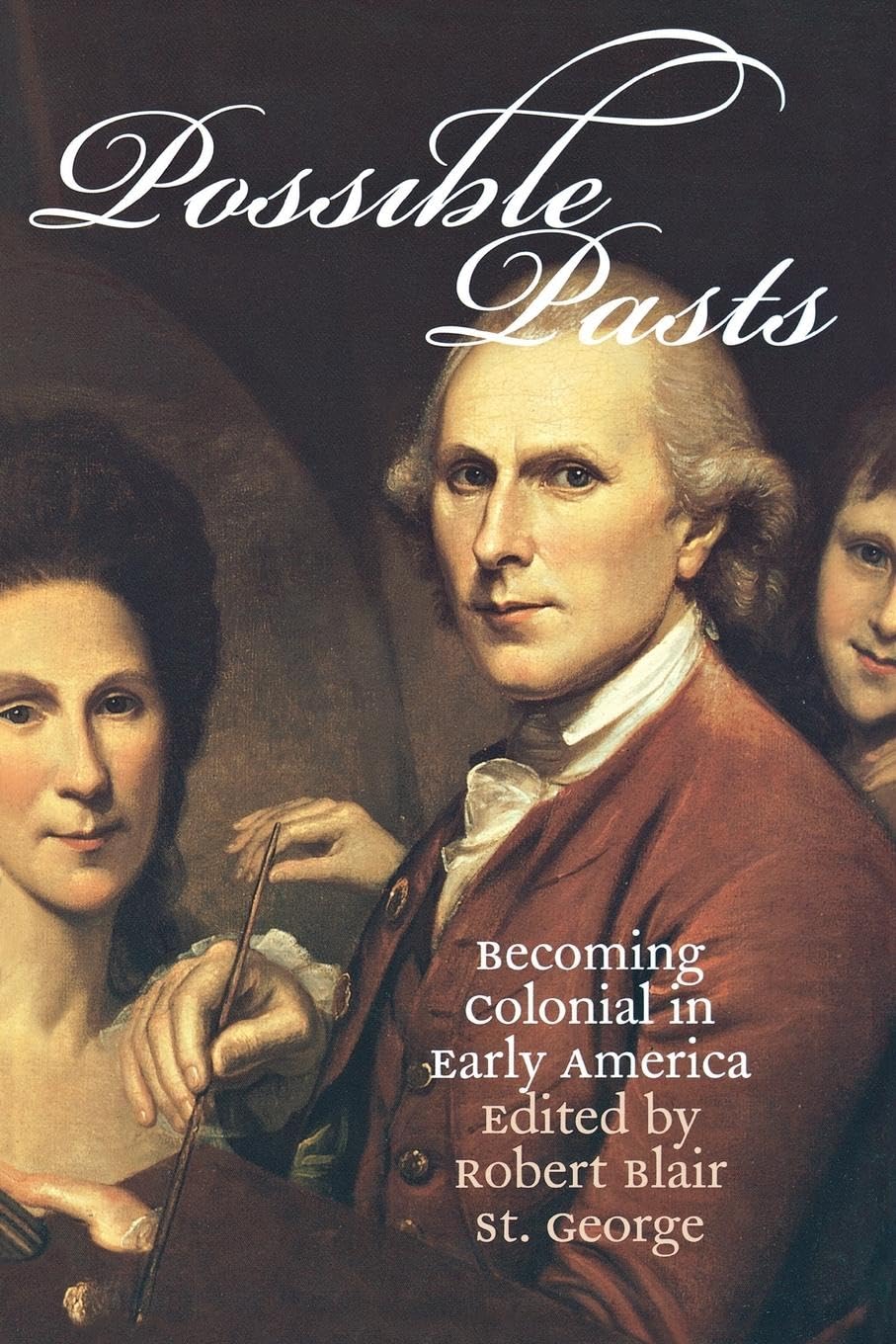
Title
Possible Pasts: Becoming Colonial In Early America
Sold by Ergodebooks, an authorized reseller.
Returns accepted within 30 days | support@ergodebooks.com
Shipping Information
- Free Standard Shipping — United States only
- Processing Time: 3–5 business days
- Estimated Delivery: 6–10 business days after dispatch
- Double-boxed, fully insured & discreetly packaged
- Tracking number sent via email once dispatched
Returns & Refund
Returns accepted within 30 days of delivery.
Damaged or Defective Item
Free return shipping + replacement or full refund
Wrong Item Received
Free return shipping + replacement or full refund
Change of Mind
Return shipping at customer's expense · 25% restocking fee applies
Payment Option

Possible Pasts Represents A Landmark In Early American Studies, Bringing To That Field The Theoretical Richness And Innovative Potential Of The Scholarship On Colonial Discourse And Postcolonial Theory. Drawing On The Methods And Interpretive Insights Of History, Anthropology, History Of Art, Folklore, And Textual Analysis, Its Authors Explore The Cultural Processes By Which Individuals And Societies Become Colonial. Rather Than Define Early America In Terms Of Conventional Geographical, Chronological, Or Subdisciplinary Boundaries, Their Essays Span Landscapes From New England To Peru, Time Periods From The Sixteenth To The Midnineteenth Century, And Topics From Religion To Race And Novels To Nationalism.In His Introduction Robert Blair St. George Offers An Overview Of The Genealogy Of Ideas And Key Terms Appearing In The Book. Part I, Interrogating America, Then Challenges Readers To Rethink The Meaning Of Early America And Its Relation To Postcolonial Theory. In Part Ii, Translation And Transculturation, Essays Explore How Both Europeans And Native Peoples Viewed Such Concepts As Dissent, Witchcraft, Family Piety, And Race. The Construction Of Individual Identity And Agency In Philadelphia Is The Focus Of Part Iii, Shaping Subjectivities. Finally, Part Iv, Oral Performance And Personal Power, Considers The Ways In Which Political Authority And Gendered Resistance Were Established In Early America.
⚠️ WARNING (California Proposition 65):
This product may contain chemicals known to the State of California to cause cancer, birth defects, or other reproductive harm.
For more information, please visit www.P65Warnings.ca.gov.
- Q: How many pages does the book have? A: This book has four hundred thirty-two pages. It offers extensive insights into early American studies and cultural processes.
- Q: What is the binding type of the book? A: The book is a paperback. This makes it lightweight and portable for easy reading.
- Q: What are the dimensions of the book? A: The dimensions are six inches in length, one point twelve inches in width, and nine point zero two inches in height. These measurements make it manageable for typical shelving.
- Q: Who is the author of 'Possible Pasts'? A: The author is Robert Blair St. George. He provides a comprehensive introduction to the themes explored in the book.
- Q: What is the main subject matter of 'Possible Pasts'? A: The main subject matter is early American studies through the lens of colonial discourse and postcolonial theory. The essays challenge conventional definitions of early America.
- Q: Is this book suitable for academic research? A: Yes, this book is suitable for academic research. It incorporates methods from history, anthropology, and more, making it a valuable resource.
- Q: Can this book be used for high school studies? A: Yes, this book can be used for high school studies. It covers significant themes in early American history that can enrich a curriculum.
- Q: What topics are covered in 'Possible Pasts'? A: Topics include religion, race, nationalism, and cultural identity. The essays span various historical periods and geographic locations.
- Q: How should I store this paperback book? A: Store this paperback book in a cool, dry place, away from direct sunlight. This helps maintain its condition over time.
- Q: Is there a specific way to clean the book? A: Yes, to clean the book, gently wipe the cover with a dry cloth. Avoid using liquids to prevent damage to the pages.
- Q: What if the book arrives damaged? A: If the book arrives damaged, you should contact the seller for a return or exchange. Most sellers have a return policy for such issues.
- Q: Is this book a good gift for history enthusiasts? A: Yes, this book makes a great gift for history enthusiasts. Its unique perspective on early America is engaging and thought-provoking.
- Q: Does this book include illustrations or images? A: No, this book does not include illustrations or images. It focuses on textual analysis and theoretical discussions.
- Q: What is the intended audience for 'Possible Pasts'? A: The intended audience includes scholars, students, and anyone interested in early American history. It is both academic and accessible.
- Q: Is there a glossary of terms in the book? A: No, there is no glossary of terms in the book. However, the introduction provides context for key ideas discussed.
- Q: What is the main thesis of the introduction? A: The introduction presents an overview of the genealogy of ideas related to early American studies. It sets the stage for the essays that follow.