
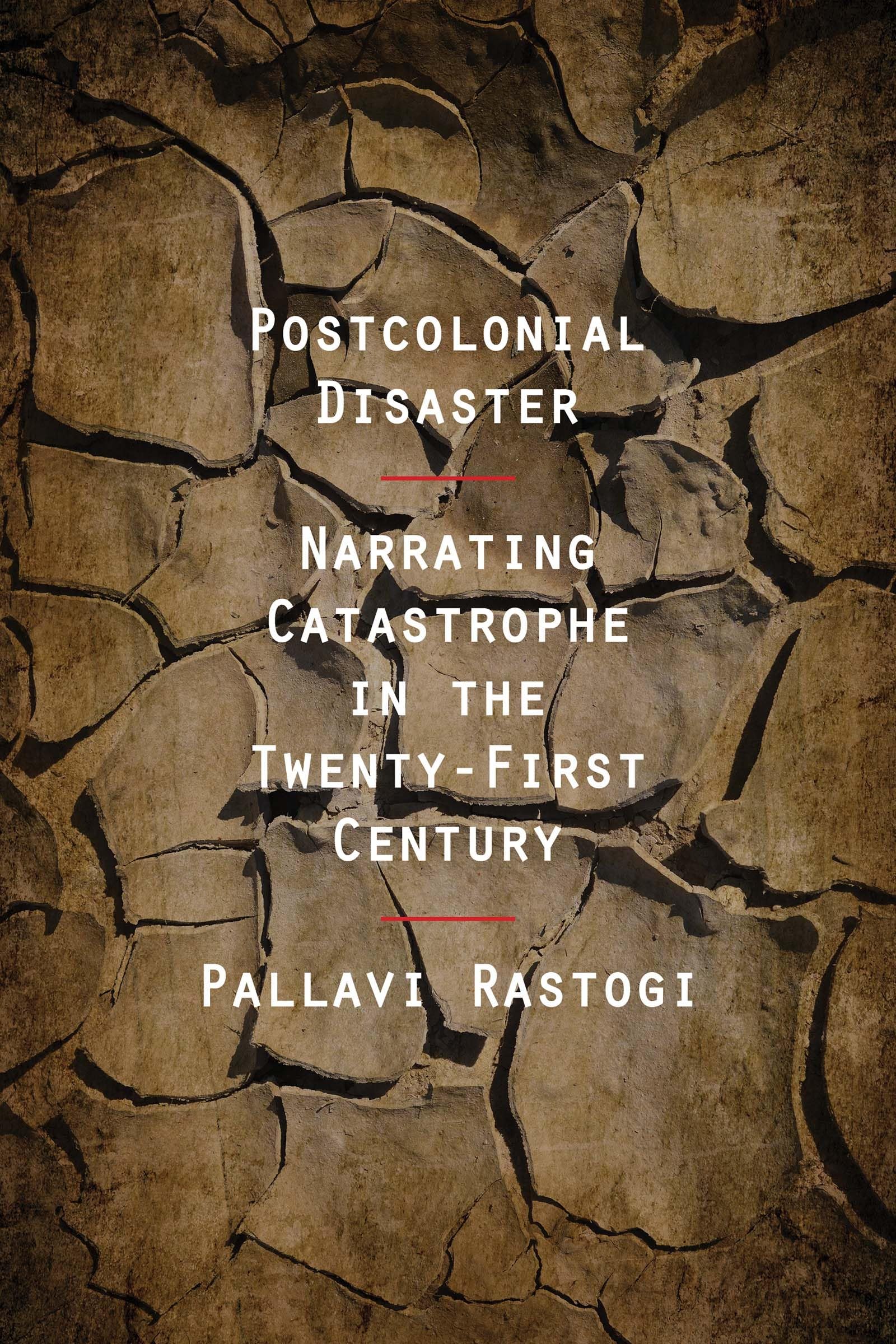
Title
Postcolonial Disaster: Narrating Catastrophe In The Twentyfirst Century (Critical Insurgencies)
Sold by Ergodebooks, an authorized reseller.
Returns accepted within 30 days | support@ergodebooks.com
Shipping Information
- Free Standard Shipping — United States only
- Processing Time: 3–5 business days
- Estimated Delivery: 6–10 business days after dispatch
- Double-boxed, fully insured & discreetly packaged
- Tracking number sent via email once dispatched
Returns & Refund
Returns accepted within 30 days of delivery.
Damaged or Defective Item
Free return shipping + replacement or full refund
Wrong Item Received
Free return shipping + replacement or full refund
Change of Mind
Return shipping at customer's expense · 25% restocking fee applies
Payment Option

Postcolonial Disaster Studies Literary Fiction About Crises Of Epic Proportions In Contemporary South Asia And Southern Africa: The Oceanic Disaster In Sri Lanka, The Economic Disaster In Zimbabwe, The Medical Disaster In South Africa And Botswana, And The Geopolitical Disaster In India And Pakistan. Pallavi Rastogi Argues That Postcolonial Fiction About Catastrophe Is Underpinned By A Disaster Unconscious, A Buried But Mobile Agenda That Forces Disastrous Events To Narrate Themselves. She Writes That In Disaster Fiction, A Literary Story And Its Reallife Event Are In Constant Dialectic Tension. In Recent Disasters, Story And Event Are Tied Together As The Urgency To Circulate Information And Rebuild In The Aftermath Of The Disaster Dictates The Flow Of The Narrative. As The Story Acquires Temporal Distance From The Event, Such As The Seventythree Years Since The Partition Of India In 1947, It Plays More With Form And Theme, To Expand Beyond A Tale About An Allconsuming Tragedy. Story And Event Are In A Constant Dance With Each Other, And The Disaster Unconscious Plays The Tune To Which They Move.Rastogi Creates A Narratology For Postcolonial Disaster Fiction And Brings Concepts From Disaster Studies Into The Realm Of Literary Analysis.
⚠️ WARNING (California Proposition 65):
This product may contain chemicals known to the State of California to cause cancer, birth defects, or other reproductive harm.
For more information, please visit www.P65Warnings.ca.gov.
- Q: How many pages does 'Postcolonial Disaster' have? A: This book has three hundred four pages. It provides an in-depth analysis of postcolonial disaster fiction.
- Q: What are the dimensions of 'Postcolonial Disaster'? A: The book measures six inches in length, zero point ninety-eight inches in width, and nine point zero two inches in height.
- Q: What type of binding does 'Postcolonial Disaster' have? A: The book is available in paperback binding. This makes it lightweight and easy to handle.
- Q: What themes are explored in 'Postcolonial Disaster'? A: The book explores themes of catastrophe and its representation in literary fiction. It specifically focuses on South Asia and Southern Africa.
- Q: Who is the author of 'Postcolonial Disaster'? A: The author is Pallavi Rastogi. She examines the relationship between storytelling and real-life events in disaster contexts.
- Q: What is the reading level for 'Postcolonial Disaster'? A: This book is suitable for adult readers, particularly those interested in literary analysis and postcolonial studies.
- Q: How can I apply the insights from 'Postcolonial Disaster'? A: You can use the book's insights for academic research or personal exploration of postcolonial literature. It offers a narratology framework for understanding disaster fiction.
- Q: Is 'Postcolonial Disaster' suitable for students? A: Yes, it is suitable for graduate-level students studying literature or postcolonial studies. The analysis is rigorous and thought-provoking.
- Q: What can I learn from 'Postcolonial Disaster'? A: You can learn about the interplay between disaster narratives and real-life events. The book provides critical insights into how stories shape our understanding of catastrophe.
- Q: How do I care for 'Postcolonial Disaster'? A: To keep the book in good condition, store it in a dry place and avoid exposure to direct sunlight. This will help preserve the quality of the pages.
- Q: What should I do if 'Postcolonial Disaster' arrives damaged? A: If the book arrives damaged, contact the seller for a replacement or refund. Ensure to keep the original packaging for returns.
- Q: Is there a warranty for 'Postcolonial Disaster'? A: Typically, books do not come with a warranty. However, return policies may vary by retailer.
- Q: Can I return 'Postcolonial Disaster' if I don’t like it? A: Yes, you can return the book if it is within the retailer's return policy period. Check their specific guidelines for details.
- Q: How is 'Postcolonial Disaster' different from other literary analyses? A: It offers a unique perspective by integrating concepts from Disaster Studies with literary analysis. This focus sets it apart from conventional literary critiques.
- Q: What audience is 'Postcolonial Disaster' intended for? A: The book is intended for academics, students, and readers interested in postcolonial literature and disaster narratives. It provides valuable insights for these groups.