
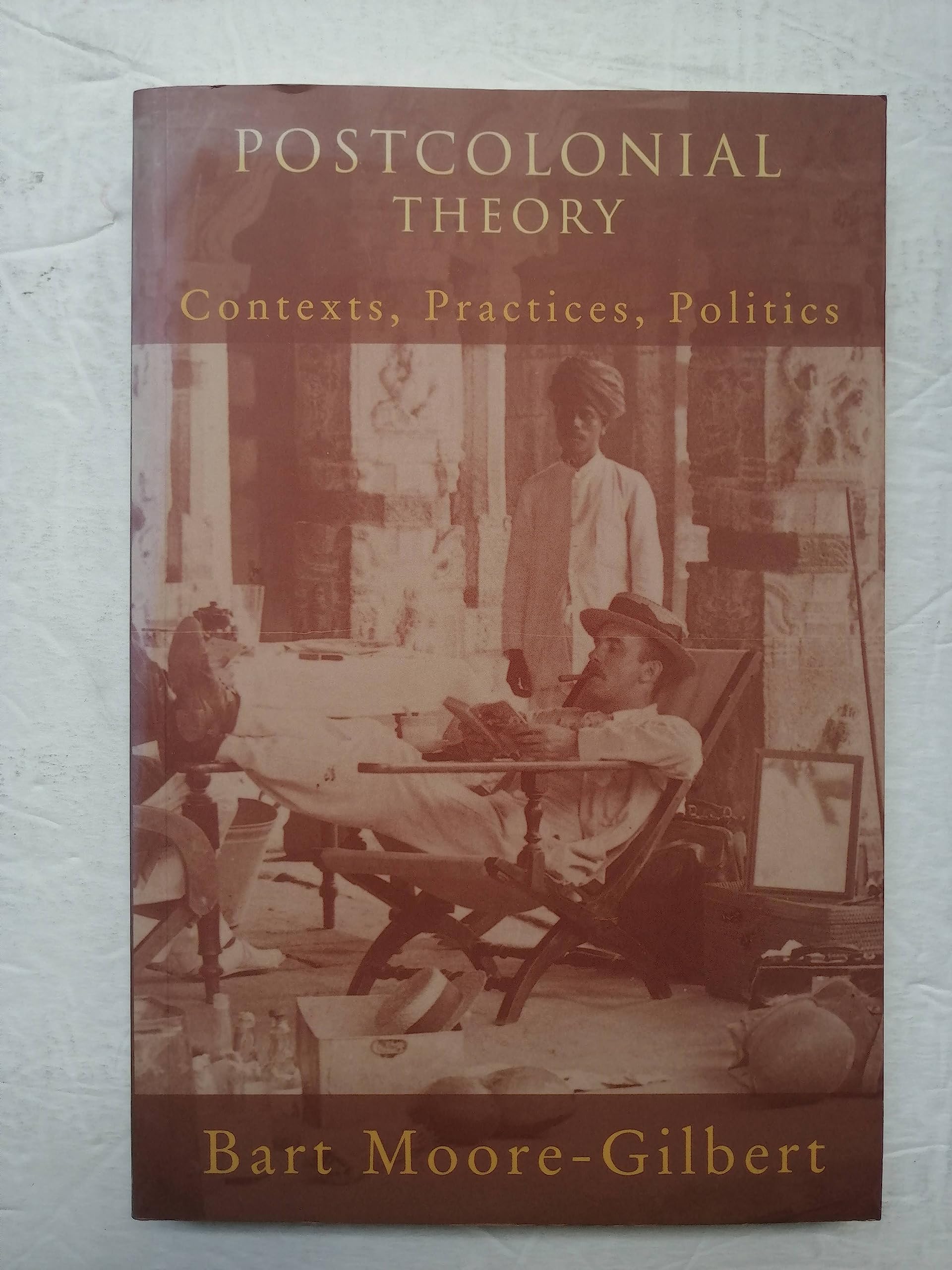
Title
Postcolonial Theory: Contexts, Practices, Politics,New
Sold by Ergodebooks, an authorized reseller.
Returns accepted within 30 days | support@ergodebooks.com
Shipping Information
- Free Standard Shipping — United States only
- Processing Time: 3–5 business days
- Estimated Delivery: 6–10 business days after dispatch
- Double-boxed, fully insured & discreetly packaged
- Tracking number sent via email once dispatched
Returns & Refund
Returns accepted within 30 days of delivery.
Damaged or Defective Item
Free return shipping + replacement or full refund
Wrong Item Received
Free return shipping + replacement or full refund
Change of Mind
Return shipping at customer's expense · 25% restocking fee applies
Payment Option

Much controversy has recently come to surround the status and value of postcolonial modes of cultural analysis. Postcolonial theory has been challenged on several fronts: on its interdisciplinary competence, on the politics of its institutional location, and its implicit will to have power over other kinds of postcolonial analysis, many of which have been established for much longer than postcolonial theory itself. The ensuing debate has often become so heated, even personalized, that the issues at stake have been obscured.In what is the most comprehensive and accessible survey of the field to date, Bart MooreGilbert systematically examines the objections that have been raised against postcolonial theory, revealing the simplifications and exaggerations on both sides of the argument. He provides a detailed institutional history of the ways in which the relationship between culture and colonialism was traditionally studied in the West, then traces the emergence of alternative forms of postcolonial analysis of such questions. He gives an extremely careful presentation of the complex and elusive work of the three principal representatives of postcolonial theory, Gayatri Spivak, Edward Said and Homi Bhabha, and considers the criticisms they have faced, from an alleged Eurocentrism to an obfuscatory prose style. And he assesses the overlaps and differences between postcolonial theory and other forms of postcolonial criticism. Finally he considers the ways in which postcolonial analysis may be connected with different histories of oppression, and looks at how such a heterogeneous theory can be reconciled with political questions of solidarity and alliance in the continuing struggle for cultural decolonization.
⚠️ WARNING (California Proposition 65):
This product may contain chemicals known to the State of California to cause cancer, birth defects, or other reproductive harm.
For more information, please visit www.P65Warnings.ca.gov.
- Q: How many pages does this book have? A: This book has two hundred fifty-six pages. It's a comprehensive examination of postcolonial theory and its critiques.
- Q: What is the binding type of this book? A: The book is paperback. This makes it lightweight and easy to handle for readers.
- Q: Who is the author of this book? A: The author is Bart Moore-Gilbert. He provides a thorough analysis of postcolonial theory in this work.
- Q: What themes does this book cover? A: The book covers themes of postcolonial analysis, cultural critique, and the politics of representation. It discusses the complexities of colonial and cultural relationships.
- Q: Is this book suitable for beginners? A: Yes, this book is suitable for beginners. It offers a comprehensive and accessible overview of postcolonial theory.
- Q: What is the main focus of the book? A: The main focus is to examine and critique postcolonial theory. It addresses various objections and offers a historical context for understanding the field.
- Q: How should I care for this book? A: To care for this book, keep it in a dry place and avoid exposing it to direct sunlight. This will help preserve its condition.
- Q: Can I read this book if I am not familiar with postcolonial theory? A: Yes, you can read this book without prior knowledge of postcolonial theory. It is written to be accessible to a broad audience.
- Q: What is the publication year of this book? A: The publication year of this book is not specified in the details. However, it is a recent survey of postcolonial theory.
- Q: Does this book include critiques of major theorists? A: Yes, the book includes critiques of major theorists like Gayatri Spivak, Edward Said, and Homi Bhabha. It discusses their contributions and criticisms.
- Q: Is this book appropriate for academic study? A: Yes, this book is appropriate for academic study. It provides a detailed analysis suitable for students and researchers.
- Q: What is the genre of this book? A: The genre of this book is literature and cultural studies. It delves into postcolonial literature and theory.
- Q: What criticisms does the author address? A: The author addresses criticisms regarding Eurocentrism, prose style, and the institutional politics of postcolonial theory. He provides a balanced view of the debates.
- Q: What type of audience is this book intended for? A: This book is intended for students, scholars, and anyone interested in cultural studies and postcolonial theory. It appeals to a wide range of readers.
- Q: How does this book connect postcolonial analysis with political questions? A: The book connects postcolonial analysis with political questions of solidarity and cultural decolonization. It explores how theory impacts activism.