
Title
Postcolonial Thought and Social Theory,Used
Sold by Ergodebooks, an authorized reseller.
Returns accepted within 30 days | support@ergodebooks.com
Shipping Information
- Free Standard Shipping — United States only
- Processing Time: 3–5 business days
- Estimated Delivery: 6–10 business days after dispatch
- Double-boxed, fully insured & discreetly packaged
- Tracking number sent via email once dispatched
Returns & Refund
Returns accepted within 30 days of delivery.
Damaged or Defective Item
Free return shipping + replacement or full refund
Wrong Item Received
Free return shipping + replacement or full refund
Change of Mind
Return shipping at customer's expense · 25% restocking fee applies
Payment Option

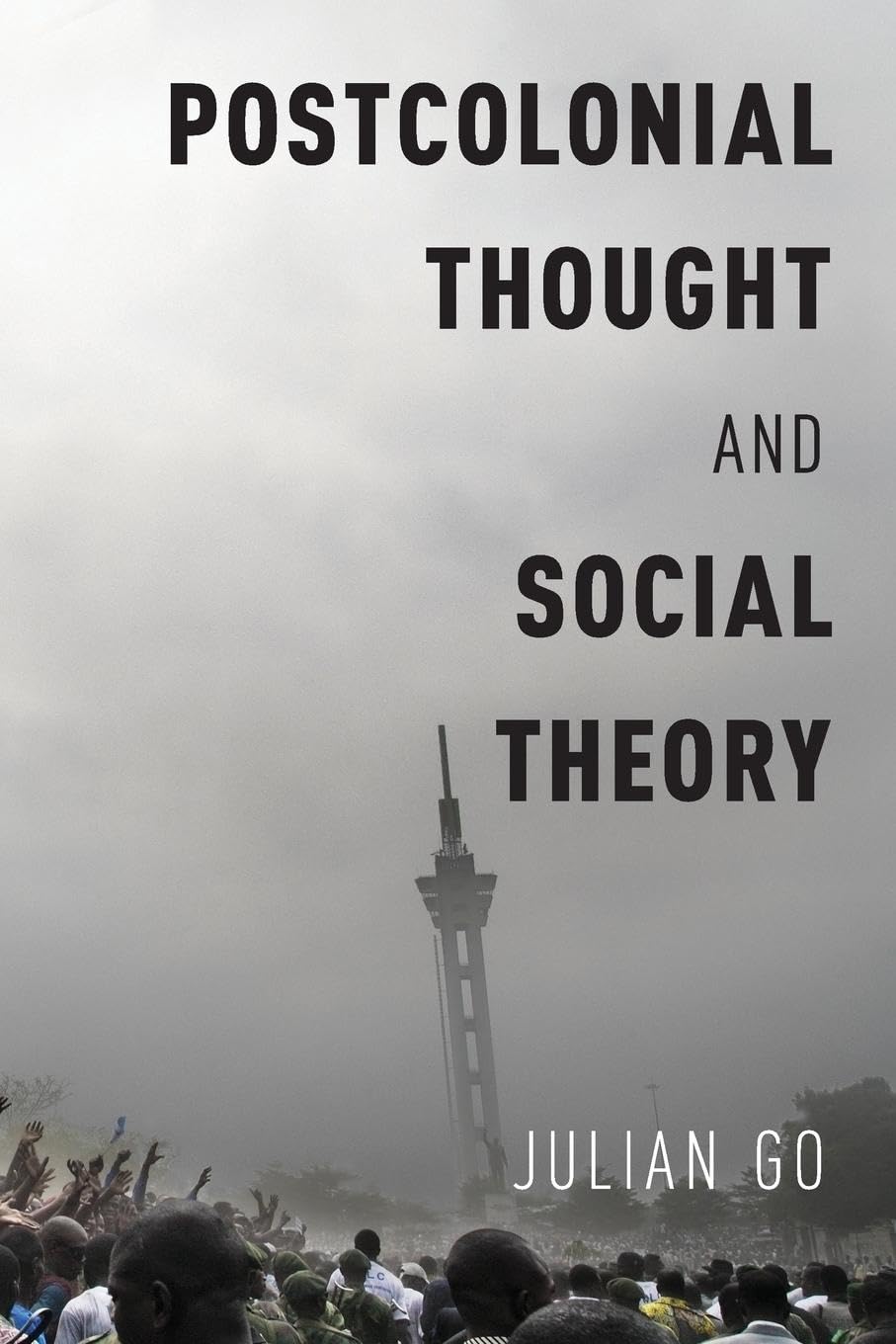
Social scientists have long resisted the radical ideas known as postcolonial thought, while postcolonial scholars have critiqued the social sciences for their Eurocentric focus. However, in Postcolonial Thought and Social Theory, Julian Go attempts to reconcile the two seemingly contradictory fields by crafting a postcolonial social science. Contrary to claims that social science is incompatible with postcolonial thought, this book argues that the two are mutually beneficial, drawing upon the works of thinkers such as Franz Fanon, Amilcar Cabral, Edward Said, Homi Bhabha, and Gayatri Spivak. Go concludes with a call for a "third wave" of postcolonial thought emerging from social science and surmounting the narrow confines of disciplinary boundaries.
⚠️ WARNING (California Proposition 65):
This product may contain chemicals known to the State of California to cause cancer, birth defects, or other reproductive harm.
For more information, please visit www.P65Warnings.ca.gov.
- Q: What is the page count of 'Postcolonial Thought and Social Theory'? A: This book contains two hundred sixty-four pages. It offers an in-depth exploration of postcolonial thought and social theory.
- Q: What are the dimensions of this book? A: The dimensions are six point one inches in length, zero point six inches in width, and nine point one inches in height. This makes it a compact paperback suitable for easy handling.
- Q: What type of binding does this book have? A: This book has a paperback binding. This makes it lightweight and easy to carry.
- Q: How do I read 'Postcolonial Thought and Social Theory' effectively? A: To read this book effectively, engage with the text actively by taking notes and reflecting on the themes. It is suitable for both academic and personal exploration.
- Q: Is this book suitable for beginners in social theory? A: Yes, this book is suitable for beginners. Julian Go presents complex ideas in an accessible manner, making it a good starting point.
- Q: What audience is this book intended for? A: This book is intended for students, scholars, and anyone interested in political theory or social sciences. It bridges postcolonial thought and social science.
- Q: How should I store this book? A: Store this book in a cool, dry place to prevent damage. Keep it upright on a shelf to maintain its shape.
- Q: Can this book be cleaned if it gets dirty? A: Yes, you can clean this book gently. Use a dry cloth to wipe the cover and avoid using water or cleaning solutions.
- Q: Does this book contain adult content? A: No, this book does not contain adult content. It focuses on academic discussions and theories.
- Q: What should I do if the book arrives damaged? A: If the book arrives damaged, contact the seller for a return or exchange. Make sure to keep the original packaging for any potential returns.
- Q: Is there a warranty for this book? A: Typically, there is no warranty for books. However, you can check the return policy with the seller.
- Q: What if I have issues understanding the concepts in the book? A: If you have issues understanding the concepts, consider discussing them with peers or looking for supplementary resources. Joining a study group can also be helpful.
- Q: How does this book compare to others in political theory? A: This book uniquely combines postcolonial thought with social science, setting it apart from traditional political theory texts. It offers a fresh perspective on established ideas.
- Q: Is this book appropriate for high school students? A: Yes, this book can be appropriate for advanced high school students. It provides a foundational understanding of postcolonial thought.
- Q: What are the main themes covered in this book? A: The main themes include the intersection of social sciences and postcolonial thought, critiques of Eurocentrism, and the call for a new wave of postcolonial theory.