
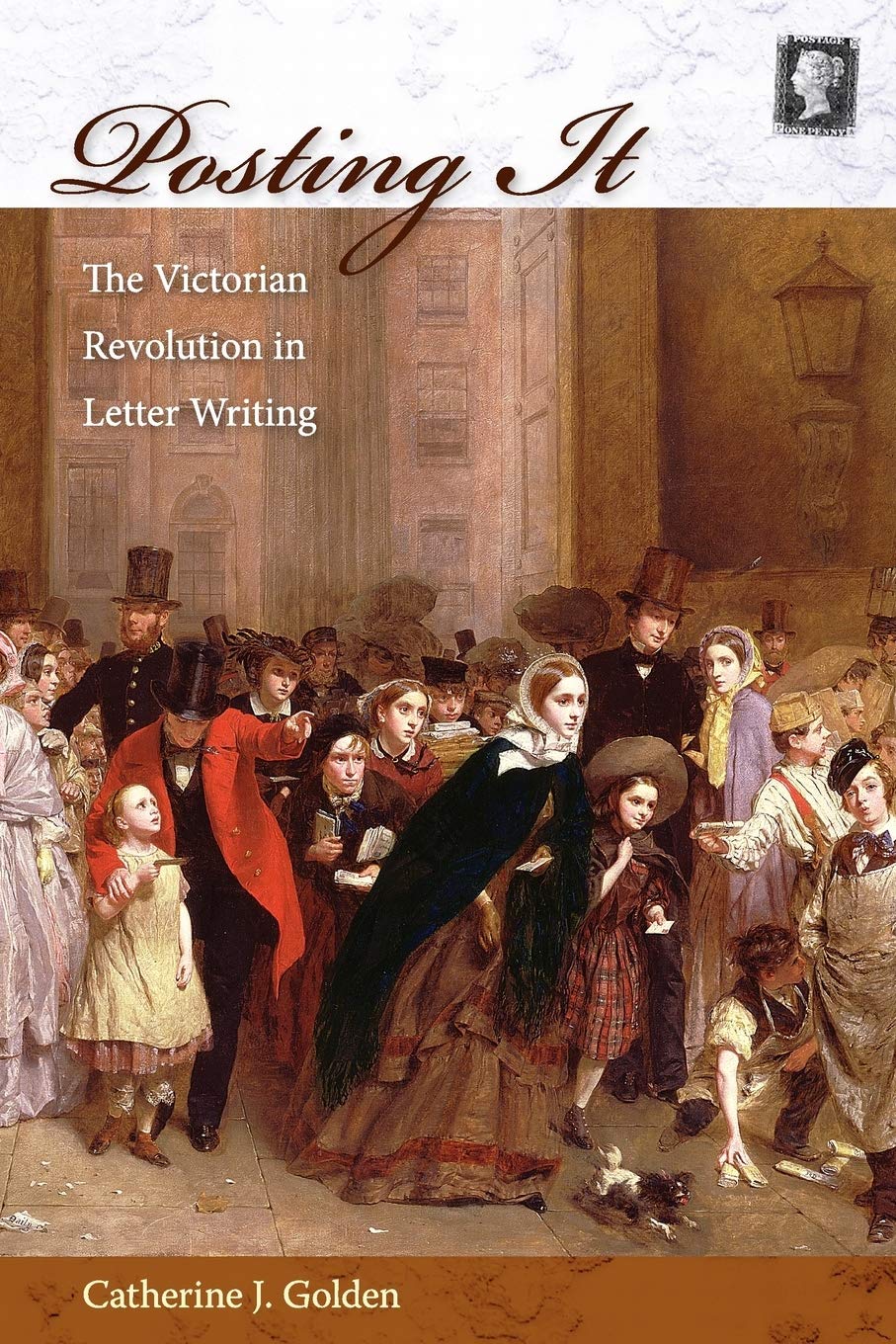
Title
Posting It: The Victorian Revolution In Letter Writing,New
Sold by Ergodebooks, an authorized reseller.
Returns accepted within 30 days | support@ergodebooks.com
Shipping Information
- Free Standard Shipping — United States only
- Processing Time: 3–5 business days
- Estimated Delivery: 6–10 business days after dispatch
- Double-boxed, fully insured & discreetly packaged
- Tracking number sent via email once dispatched
Returns & Refund
Returns accepted within 30 days of delivery.
Damaged or Defective Item
Free return shipping + replacement or full refund
Wrong Item Received
Free return shipping + replacement or full refund
Change of Mind
Return shipping at customer's expense · 25% restocking fee applies
Payment Option

A beautifully researched study of how the Victorian Penny Post altered human relations. As Golden eloquently documents, family and friends could, at last, easily keep in touch with distant relatives, but cheap postage also provided new opportunities for blackmailers and con artists. In her richly textured study, we learn not only about the pervasive use of letters as a literary device in fiction, but also the immense increase in paraphernalia related to the writing and sending of a letter or that new invention, the postcard. Anyone interested in the complex relationship between material and cultural change will find this book illuminating.'Martha Vicinus, University of Michigan'Just as the Penny Post revolutionized communications, Catherine Goldens meticulous and imaginative analysis of its cultural effects transforms our reading experience of Victorian fiction. From the blackmail plot to the writing desk, the paraphernalia of the Victorian novel takes on new meaning and contemporary parallels.'Elaine Showalter, Princeton University'Provides an engaging and comprehensive account of the context and spirit of Victorian postal reform and the resulting rise in affective correspondence that continues to this day.'Eileen Cleere, Southwestern University'Combines historical perspective, social context, and literary criticism. It goes beyond the standard historical or literary work in that it provides insights into the daily lives and values of Victorians of all classes. As such it makes a significant contribution to Victorian cultural studies. Golden explains the impact of the Penny Post on the nineteenth century and draws parallels to the communications revolution of today.'Richard Fantina, Vermont State CollegesAlthough 'snail mail' may seem old fashioned and outdated in the twentyfirst century, Catherine Golden argues that the creation of the Penny Post in Victorian England was just as revolutionary in its time as email and text messages are today.Until Queen Victoria instituted the Postal Reform Act of 1839, mail was a luxury affordable only by the rich. Allowing anyone, from any social class, to send a letter anywhere in the country for only a penny had multiple and profound cultural impacts.Golden demonstrates how cheap postagewhich was quickly adopted in other countriesled to a postal 'network' that can be viewed as a forerunner of computermediated communications. Indeed, the revolution in letter writing of the nineteenth century led to blackmail, frauds, unsolicited mass mailings, and junk mailproblems that remain with us today.Catherine J. Golden is professor of English at Skidmore College.
⚠️ WARNING (California Proposition 65):
This product may contain chemicals known to the State of California to cause cancer, birth defects, or other reproductive harm.
For more information, please visit www.P65Warnings.ca.gov.
- Q: How many pages does this book have? A: This book has three hundred twenty pages. It provides a comprehensive look into the Victorian Revolution in letter writing.
- Q: What is the binding type of this book? A: The binding type is paperback. This makes it lightweight and easy to handle.
- Q: What are the dimensions of this book? A: The book measures six point one four inches in length, zero point seven five inches in width, and nine point two one inches in height.
- Q: Who is the author of this book? A: The author is Catherine J. Golden. She is a professor of English at Skidmore College.
- Q: What genre does this book belong to? A: This book belongs to the genre of historical studies and literary criticism. It focuses on the cultural impact of the Victorian Penny Post.
- Q: Is this book suitable for all ages? A: Yes, this book is suitable for a general audience. It covers historical and cultural themes relevant to various readers.
- Q: How can I use this book for research? A: You can use this book as a source for understanding Victorian culture and communication. It offers insights into the impact of letter writing on society.
- Q: Can this book be used in academic settings? A: Yes, this book is suitable for academic settings. It provides valuable analyses for literature and cultural studies courses.
- Q: How should I store this book to keep it in good condition? A: Store this book in a cool, dry place away from direct sunlight. This will help preserve its condition over time.
- Q: Is there any specific care needed for this book? A: No specific care is needed beyond standard book care. Avoid bending the spine and keep it clean.
- Q: What if I receive a damaged copy of this book? A: If you receive a damaged copy, you should contact the seller for a return or replacement. Most sellers have a return policy in place.
- Q: How does this book compare to other Victorian literature studies? A: This book provides a unique analysis by focusing on the Penny Post, unlike many other Victorian literature studies that may not address this specific theme.
- Q: Is this book a good choice for someone interested in communication history? A: Yes, this book is an excellent choice for anyone interested in the history of communication. It details the transformative effects of the Penny Post.
- Q: Does this book include illustrations or images? A: No, this book does not mention any illustrations. It focuses on textual analysis and historical context.
- Q: What makes this book stand out in its field? A: This book stands out due to its interdisciplinary approach, combining historical perspective, social context, and literary criticism.
- Q: Are there any notable reviews of this book? A: Yes, it has received positive reviews from scholars such as Martha Vicinus and Elaine Showalter, highlighting its insightful analysis.