If you have any questions, you are always welcome to contact us. We'll get back to you as soon as possible, withing 24 hours on weekdays.
Customer service
All questions about your order, return and delivery must be sent to our customer service team by e-mail at yourstore@yourdomain.com
Sale & Press
If you are interested in selling our products, need more information about our brand or wish to make a collaboration, please contact us at press@yourdomain.com
Help
If you have any questions, you are always welcome to contact us. We'll get back to you as soon as possible, withing 24 hours on weekdays.
Customer service
All questions about your order, return and delivery must be sent to our customer service team by e-mail at yourstore@yourdomain.com
Sale & Press
If you are interested in selling our products, need more information about our brand or wish to make a collaboration, please contact us at press@yourdomain.com
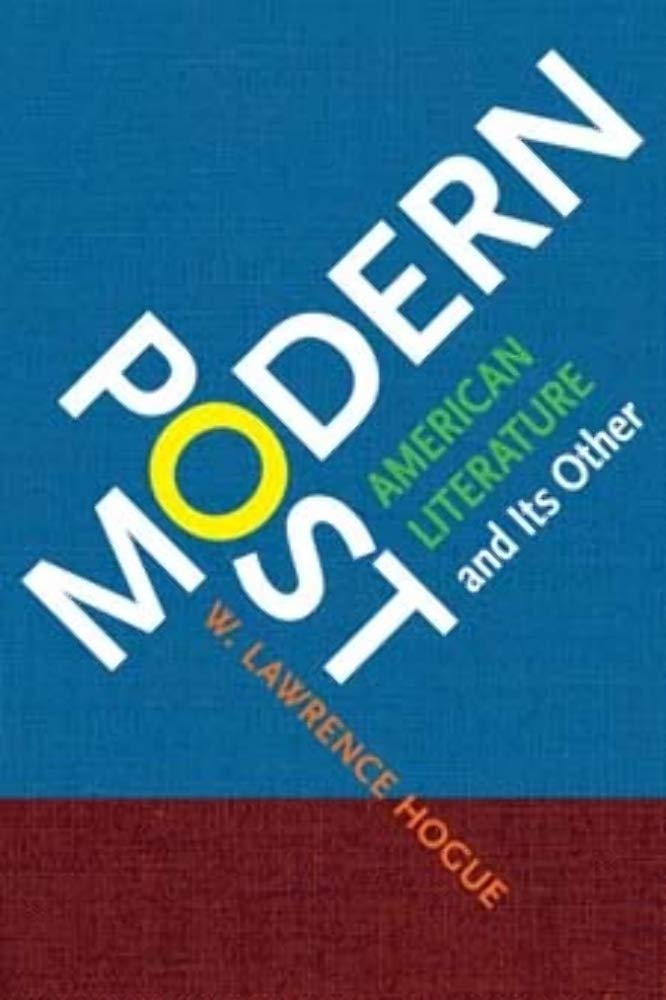
Although literary postmodernism has been defined in terms of difference, multiplicity, heterogeneity, and plurality, some of the most vaunted authors of postmodern American fictionsuch as Thomas Pynchon, Paul Auster, and other white male authorsoften fail to adequately represent the distinct subjectivities of African Americans, American Indians, Latinos and Latinas, women, the poor of the center, and the global periphery. In this groundbreaking study, W. Lawrence Hogue exposes the ways in which much postmodern American literature privileges a typically Eurocentric, maleoriented type of subjectivity, often at the expense of victimizing or objectifying the ethnic or gendered Other.In contrast to the dominant white male perspective on postmodernism, Hogue points to African American, American Indian, and women authors within the American postmodern canonRikki Ducornet, Kathy Acker, Ishmael Reed, and Gerald Vizenorwho work against these structures of stereotype and bias, resulting in a literary postmodernism that more genuinely respects and represents difference. He argues that most postmodern African American, American Indian, and women writers experience and write about postmodernity in ways that are substantially different from white men, since they are intimately concerned with the existence of racism and sexism. These Other authors, who are searching for new cultural forms and paradigms to describe themselves outside modernitys conventions, define themselves according to their own logic, one that eschews fixed notions of identity in favor of a network of contextual, partial, contradictory, and shifting identifications.
⚠️ WARNING (California Proposition 65):
This product may contain chemicals known to the State of California to cause cancer,
birth defects, or other reproductive harm.
For MAP (Minimum Advertised Price) violations and Intellectual Property (IP) or Trademark concerns, please contact:
support@ergodebooks.com
⚠️ California Proposition 65 Warning: Some products sold on this website may expose you to chemicals known to the State of California to cause cancer, birth defects, or other reproductive harm. For more information, visit www.P65Warnings.ca.gov.