
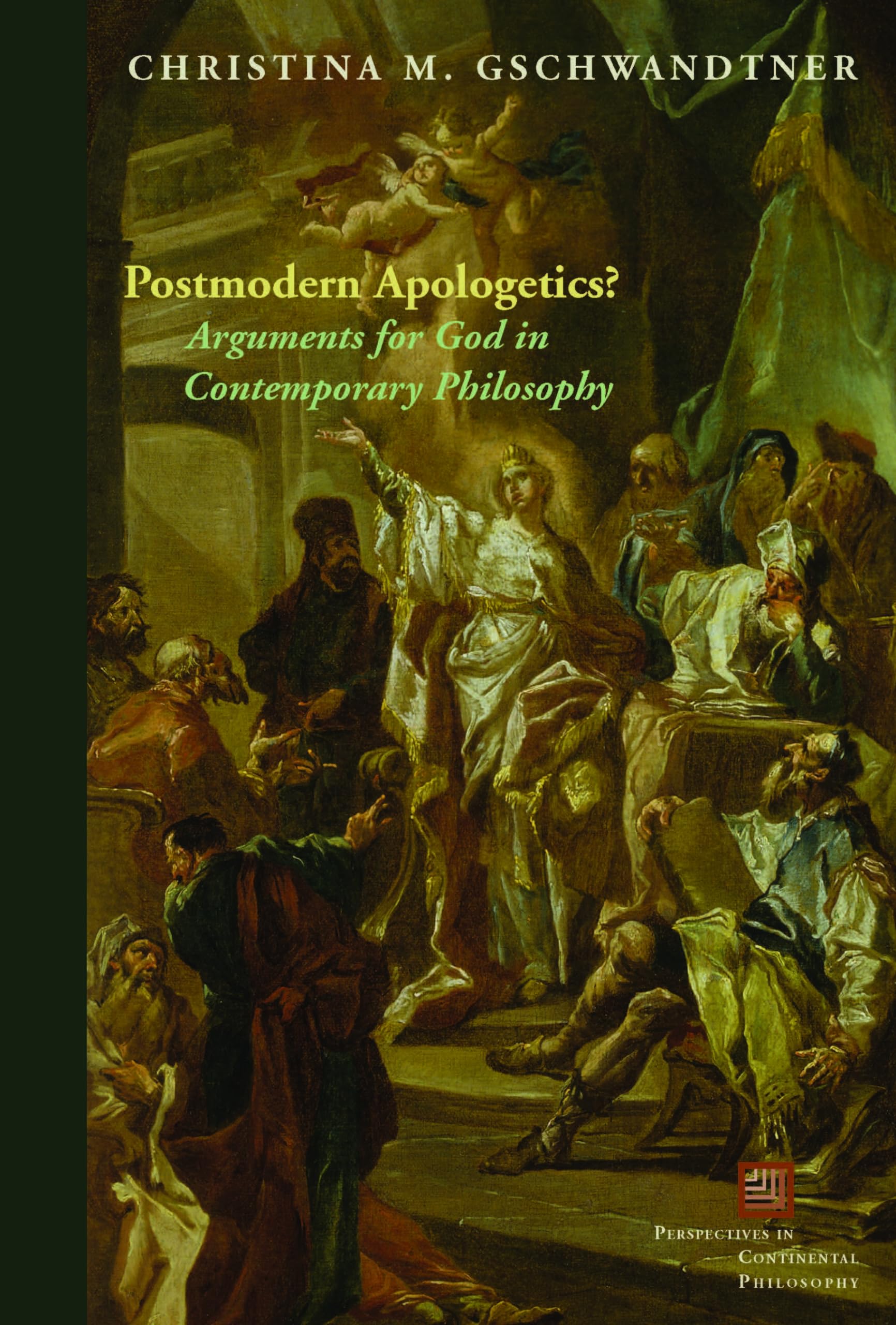
Title
Postmodern Apologetics?: Arguments for God in Contemporary Philosophy (Perspectives in Continental Philosophy),Used
Sold by Ergodebooks, an authorized reseller.
Returns accepted within 30 days | support@ergodebooks.com
Shipping Information
- Free Standard Shipping — United States only
- Processing Time: 3–5 business days
- Estimated Delivery: 6–10 business days after dispatch
- Double-boxed, fully insured & discreetly packaged
- Tracking number sent via email once dispatched
Returns & Refund
Returns accepted within 30 days of delivery.
Damaged or Defective Item
Free return shipping + replacement or full refund
Wrong Item Received
Free return shipping + replacement or full refund
Change of Mind
Return shipping at customer's expense · 25% restocking fee applies
Payment Option

This book provides an introduction to the emerging field of continental philosophy of religion by treating the thought of its most important representatives, including its appropriations by several thinkers in the United States.Part I provides context by examining religious aspects of the thought of Martin Heidegger, Emmanuel Levinas, and Jacques Derrida. Christina Gschwandtner contends that, although the work of these thinkers is not apologetic in nature (i.e., it does not provide an argument for religion, whether Christianity or Judaism), it prepares the ground for the more religiously motivated work of more recent thinkers by giving religious language and ideas some legitimacy in philosophical discussions.Part II devotes a chapter to each of the contemporary French thinkers who articulate a phenomenology of religious experience: Paul Ricoeur, JeanLuc Marion, Michel Henry, JeanLouis Chrtien, JeanYves Lacoste, and Emmanuel Falque. In it, the author argues that their respective philosophies can be read as an apologetics of sortsnamely, as arguments for the coherence of thought about God and the viability of religious experiencethough each thinker does so in a different fashion and to a different degree.Part III considers the three major thinkers who have popularized and extended this phenomenology in the U.S. context: John D. Caputo, Merold Westphal, and Richard Kearney.The book thus both provides an introduction to important contemporary thinkers, many of whom have not yet received much treatment in English, and also argues that their philosophies can be read as providing an argument for Christian faith.
⚠️ WARNING (California Proposition 65):
This product may contain chemicals known to the State of California to cause cancer, birth defects, or other reproductive harm.
For more information, please visit www.P65Warnings.ca.gov.