
Title
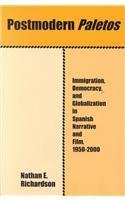
Postmodern Paletos: Immigration, Democracy, And Globalization In Spanish Narrative And Film, 19502000,Used
Sold by Ergodebooks, an authorized reseller.
Returns accepted within 30 days | support@ergodebooks.com
Shipping Information
- Free Standard Shipping — United States only
- Processing Time: 3–5 business days
- Estimated Delivery: 6–10 business days after dispatch
- Double-boxed, fully insured & discreetly packaged
- Tracking number sent via email once dispatched
Returns & Refund
Returns accepted within 30 days of delivery.
Damaged or Defective Item
Free return shipping + replacement or full refund
Wrong Item Received
Free return shipping + replacement or full refund
Change of Mind
Return shipping at customer's expense · 25% restocking fee applies
Payment Option

When Spanish Dictator Francisco Franco Legalized Internal Immigration In 1947 He Unwittingly Inaugurated The Greatest Period Of Urban Expansion And Rural Depopulation That Spain Had Known. During The Next Two Decades, Nearly Four Million Citizens Would Move From Spain'S Traditional Pueblos Perdidos To Overburdened Urban Metropolises. Along With Wooden Trunks And Baskets Of Chickens, The Immigrants (Or Paletos, As They Were Often Called) Bore On Their Journey The Weight Of Centuries Of Ideological Meaning Tied To The Geographic Regions They Were Traversing. To Abandon Rural Spain Had Come To Signify A Rejection Of Manhood, Wealth, Christian Values, And Even Spanishness Itself. Paletos, However Innocent They May Have Appeared, Were Not Ideologically Neutral. In The Coming Decades The Weight And Complexity Of The Meanings Behind Immigration, The Country, And The City Would Only Grow As Spain Advanced From Economic Under Development, Social Ignorance, And Political Reaction To Fullfledged Participation In Global Economics And Politics, Activities That Would Reshape What It Meant To Be An Immigrant And Paleto Both Within And Across The Geographic Border That Had Traditionally Defined The Spanish Nation.
⚠️ WARNING (California Proposition 65):
This product may contain chemicals known to the State of California to cause cancer, birth defects, or other reproductive harm.
For more information, please visit www.P65Warnings.ca.gov.
- Q: What is the page count of the book? A: The book has two hundred sixty pages. This length provides a thorough exploration of its themes, making it ideal for readers interested in Spanish narrative and film.
- Q: What are the dimensions of the book? A: The book measures six point twenty-six inches in length, one inch in width, and nine point twenty-five inches in height. These dimensions make it a suitable size for both reading and display.
- Q: What type of binding does this book have? A: This book is bound in hardcover. Hardcover bindings are known for their durability and ability to withstand frequent handling.
- Q: Who is the author of this book? A: The author of the book is Nathan E. Richardson. His expertise in Spanish narrative and film enriches the content.
- Q: What is the genre of this book? A: The book falls under the genre of Postmodernism. It examines themes of immigration, democracy, and globalization through a postmodern lens.
- Q: Is this book suitable for academic study? A: Yes, this book is suitable for academic study. It provides in-depth analysis and is relevant for courses on immigration and globalization in literature.
- Q: What themes does the book explore? A: The book explores themes of immigration, urban expansion, and cultural identity. These themes reflect significant historical and social changes in Spain.
- Q: Is there any adult content in this book? A: No, there is no adult content in this book. It is appropriate for a general audience interested in the subject matter.
- Q: How can I best utilize this book for research? A: You can utilize this book for research by referencing its analysis of immigration and globalization. It serves as a scholarly resource for understanding these topics.
- Q: What is the best way to care for this hardcover book? A: To care for this hardcover book, keep it in a dry, cool place and avoid direct sunlight. This will help preserve its condition over time.
- Q: Can this book be stored on a bookshelf? A: Yes, this book can be stored on a bookshelf. Its hardcover design allows it to stand upright and remain in good condition.
- Q: What should I do if the book arrives damaged? A: If the book arrives damaged, you should contact the seller for a return or exchange. Most sellers have policies in place for such issues.
- Q: Is there a warranty or guarantee on this book? A: No, there is generally no warranty on books. However, you should check the seller's return policy for any guarantees.
- Q: What if I have questions about the content of the book? A: If you have questions about the content, consider reaching out to academic forums or book clubs focused on Spanish literature for discussion.
- Q: Is this book a good choice for casual readers? A: Yes, this book is a good choice for casual readers. Its engaging narrative style makes complex themes accessible to a wider audience.
- Q: How does this book compare to other works in Spanish literature? A: This book offers a unique perspective on immigration in Spanish literature, distinguishing itself with its focus on postmodern themes and historical context.