
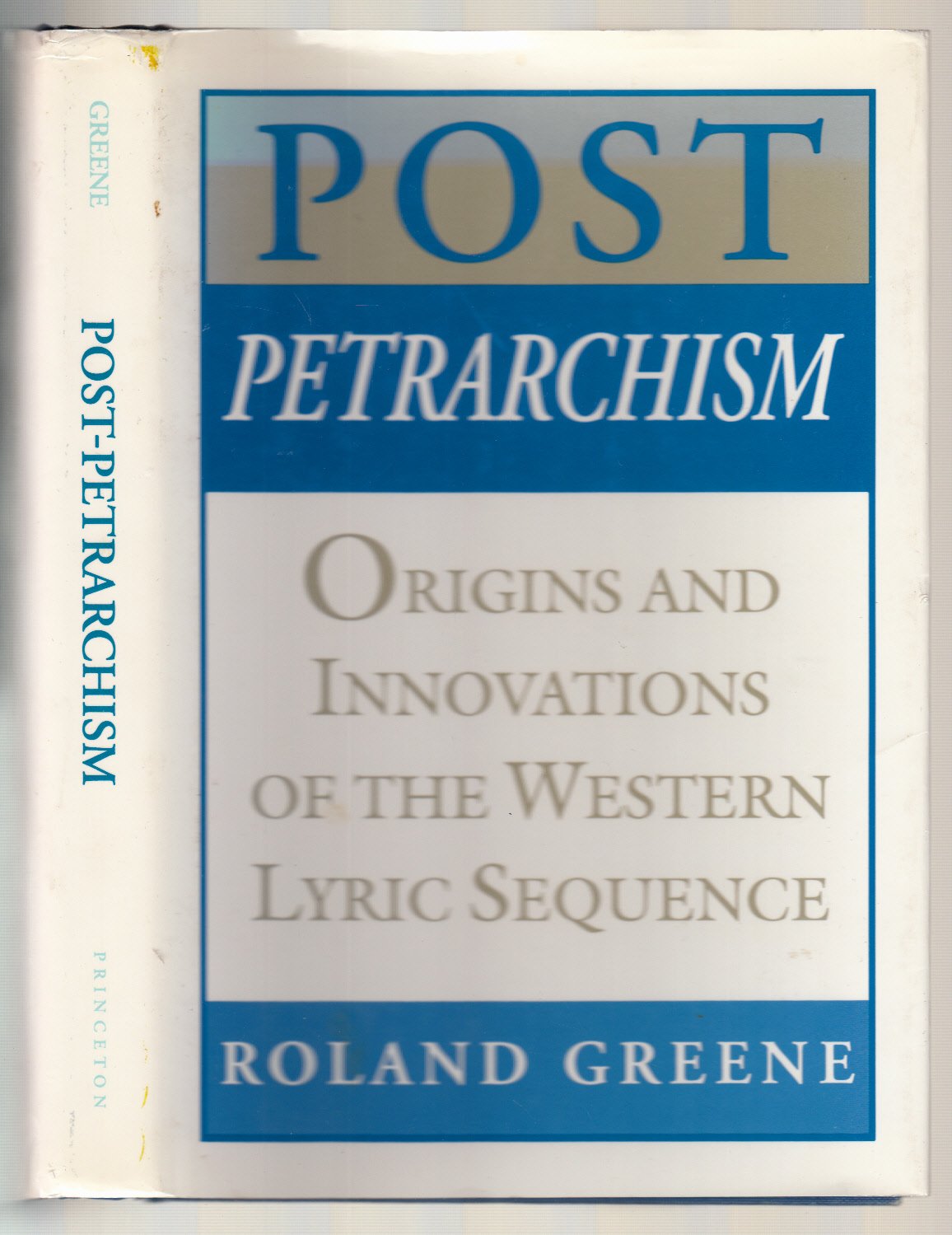
Title
Postpetrarchism: Origins And Innovations Of The Western Lyric Sequence (Princeton Legacy Library, 1163),Used
Sold by Ergodebooks, an authorized reseller.
Returns accepted within 30 days | support@ergodebooks.com
Shipping Information
- Free Standard Shipping — United States only
- Processing Time: 3–5 business days
- Estimated Delivery: 6–10 business days after dispatch
- Double-boxed, fully insured & discreetly packaged
- Tracking number sent via email once dispatched
Returns & Refund
Returns accepted within 30 days of delivery.
Damaged or Defective Item
Free return shipping + replacement or full refund
Wrong Item Received
Free return shipping + replacement or full refund
Change of Mind
Return shipping at customer's expense · 25% restocking fee applies
Payment Option

Postpetrarchism Offers A Theoretical Study Of Lyric Poetry Through One Of Its Most Longlived And Widely Practiced Models: The Lyric Sequence, Originated By Francis Petrarch In His Canzoniere Of The Late Fourteenth Century. A Framework In Which Poems Are Suspended According To Some Organizing Or Unifying Principle, The Lyric Sequence Emerges From European Humanist Culture As A Poetic Discourse That Represents Personal Experience And Operates As A Kind Of Fiction. Here Roland Greene Proposes That Since Petrarch The Lyric Sequence Has Survived In European And American Literaturesfrom Shakespeare'S Sonnets To The Waste Land To Trilceas A Complex In Which Formal, Generic, And Cultural Designs Intersect, And As An Embodiment Of Lyric Discourse At Its Most Extensive, Inclusive, And Ambitious. Enabled By A Theoretical Introduction To The Genre At Large, The Book Treats The Founding And Elaboration Of The Vernacular Sequence In Six Major Texts By Petrarch, Philip Sidney, Edward Taylor, Walt Whitman, W. B. Yeats, Pablo Neruda, And Martin Adan. Throughout Greene Shows How Petrarchism Has Evolved As Lyric Discourse Through Its Exposure To Such Events As The Reformation And Puritanism, The Settlement Of The New World, And The Various Modernisms Of Europe And The Americas.Originally Published In 1991.The Princeton Legacy Library Uses The Latest Printondemand Technology To Again Make Available Previously Outofprint Books From The Distinguished Backlist Of Princeton University Press. These Editions Preserve The Original Texts Of These Important Books While Presenting Them In Durable Paperback And Hardcover Editions. The Goal Of The Princeton Legacy Library Is To Vastly Increase Access To The Rich Scholarly Heritage Found In The Thousands Of Books Published By Princeton University Press Since Its Founding In 1905.
⚠️ WARNING (California Proposition 65):
This product may contain chemicals known to the State of California to cause cancer, birth defects, or other reproductive harm.
For more information, please visit www.P65Warnings.ca.gov.
- Q: What is the binding type of this book? A: This book is a hardcover edition. Hardcover bindings are durable and provide better protection for the pages.
- Q: How many pages does this book have? A: This book contains three hundred four pages. It offers an in-depth exploration of lyric poetry across various texts.
- Q: What are the dimensions of this book? A: The dimensions of this book are six point seventy-five inches in length, zero point seventy-five inches in width, and nine point seventy-six inches in height. These measurements make it a manageable size for reading.
- Q: Who is the author of this book? A: The author of this book is Roland Greene. He provides a theoretical study of lyric poetry and its evolution.
- Q: What genre does this book belong to? A: This book belongs to the Criticism and Theory genre. It focuses on the analysis of lyric poetry and its historical context.
- Q: How do I read this book effectively? A: To read this book effectively, consider taking notes on key themes and historical contexts as you go. This can enhance your understanding of the evolution of lyric poetry.
- Q: Is this book suitable for beginners in poetry analysis? A: Yes, this book is suitable for beginners in poetry analysis. It provides foundational insights into the lyric sequence while discussing significant texts.
- Q: What age group is this book intended for? A: This book is intended for adults and older teens interested in literary criticism. It explores complex themes and historical contexts.
- Q: How should I store this book? A: Store this book in a cool, dry place, upright on a shelf to maintain its shape. Avoid exposing it to direct sunlight to prevent fading.
- Q: Can I clean the cover of this book? A: Yes, you can clean the cover of this book. Use a dry, soft cloth to gently wipe the surface to remove dust or smudges.
- Q: What if the book arrives damaged? A: If the book arrives damaged, contact the seller for a return or replacement. Most sellers have policies for handling damaged goods.
- Q: Is there a warranty available for this book? A: No, there is typically no warranty for books. However, check the seller's return policy for any guarantees on quality.
- Q: Does this book contain illustrations or images? A: No, this book does not contain illustrations or images. It focuses on textual analysis and theoretical discussions.
- Q: How does this book compare to other poetry criticism works? A: This book provides a unique theoretical perspective on the lyric sequence, distinguishing it from other poetry criticism works that may focus on different forms.
- Q: What is the main theme of this book? A: The main theme of this book is the evolution of the lyric sequence in poetry, exploring its historical context and major contributors.