If you have any questions, you are always welcome to contact us. We'll get back to you as soon as possible, withing 24 hours on weekdays.
Customer service
All questions about your order, return and delivery must be sent to our customer service team by e-mail at yourstore@yourdomain.com
Sale & Press
If you are interested in selling our products, need more information about our brand or wish to make a collaboration, please contact us at press@yourdomain.com
Help
If you have any questions, you are always welcome to contact us. We'll get back to you as soon as possible, withing 24 hours on weekdays.
Customer service
All questions about your order, return and delivery must be sent to our customer service team by e-mail at yourstore@yourdomain.com
Sale & Press
If you are interested in selling our products, need more information about our brand or wish to make a collaboration, please contact us at press@yourdomain.com
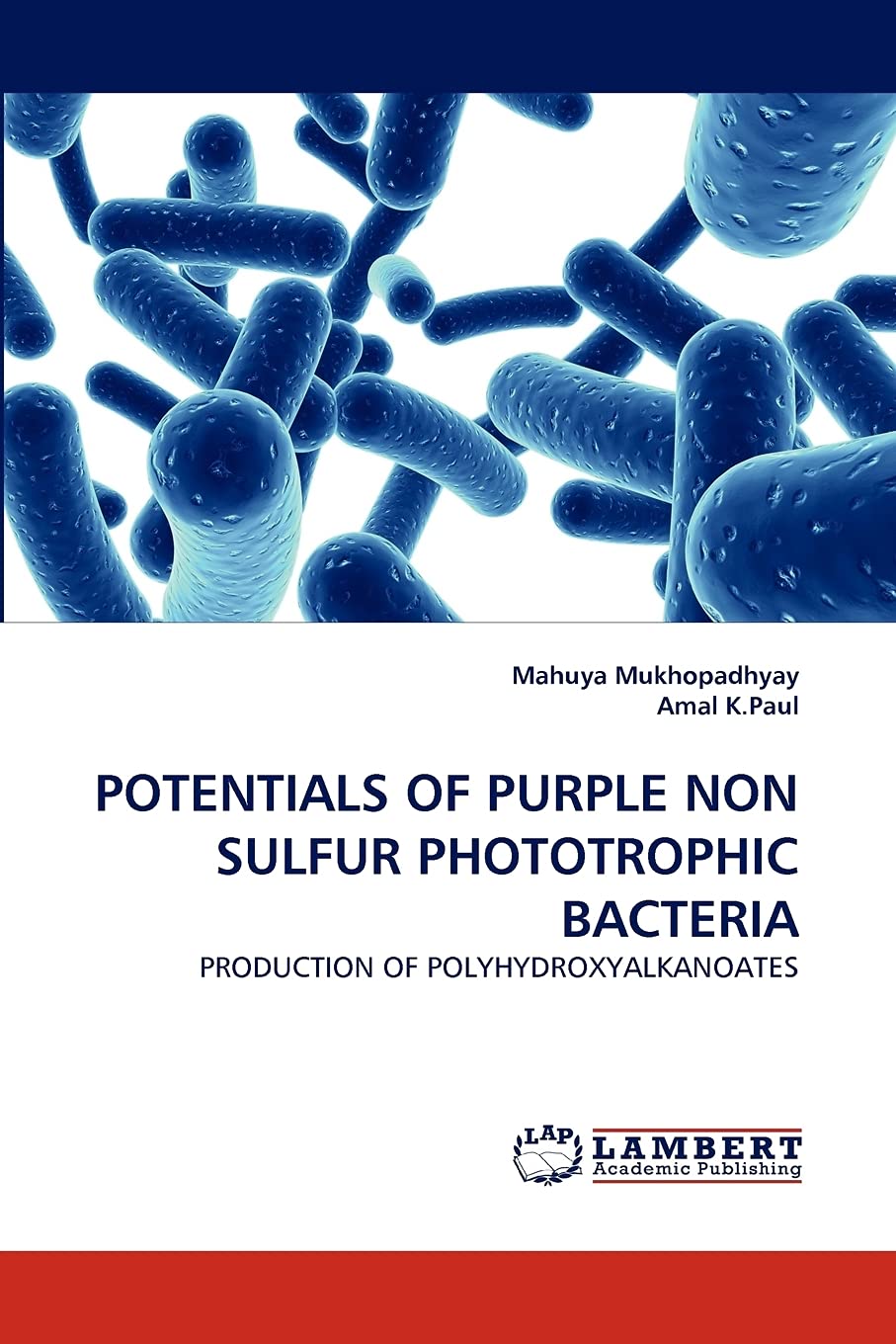
Purple non sulfur bacteria (PNSB), metabolically versatile group can grow as photoheterotrophs, photoautotrophs or chemoheterotrophs and has attracted scientists for their biotechnological potentials. They are capable of producing intracellular carbon storage compounds, polyhydroxyalkanoates (PHAs). Poly (3 hydroxybutyrate) [P(3HB)] and copolymers of other hydroxyalkanoic acids produced by wide variety of bacteria including the PNSB have received attention as ecofriendly thermoplastics. The book is a comprehensive account of enrichment and isolation of PNSB from aquatic environments of West Bengal, India and evaluation of their potential, particularly those belonging to Rhodopseudomonas and Rhodobacter for production of P(3HB). Rps. palustris SP5212 also produced high amount (55%,w/v of dry biomass) of copolymers of 3hydroxybutyric acid and 3 hydroxyvaleric acid following optimized conditions. The findings presented in this book could be an accessible resource for students of microbiology and researchers engaged in applied and environmental microbiology and will serve as an invaluable overview of this field for professional scientists and biotechnologists.
⚠️ WARNING (California Proposition 65):
This product may contain chemicals known to the State of California to cause cancer,
birth defects, or other reproductive harm.
For MAP (Minimum Advertised Price) violations and Intellectual Property (IP) or Trademark concerns, please contact:
support@ergodebooks.com
⚠️ California Proposition 65 Warning: Some products sold on this website may expose you to chemicals known to the State of California to cause cancer, birth defects, or other reproductive harm. For more information, visit www.P65Warnings.ca.gov.