
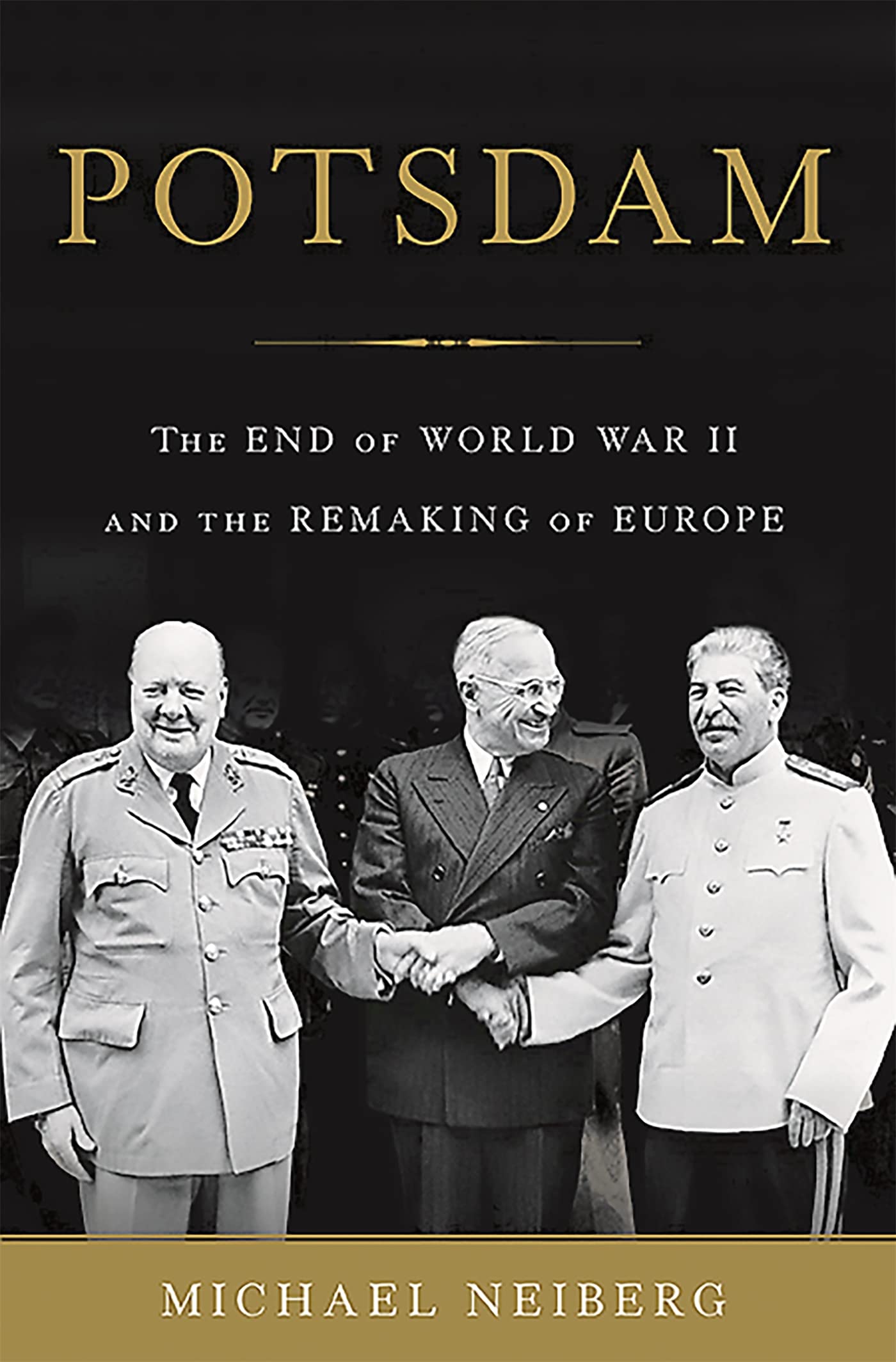
Title
Potsdam: The End of World War II and the Remaking of Europe,Used
Sold by Ergodebooks, an authorized reseller.
Returns accepted within 30 days | support@ergodebooks.com
Shipping Information
- Free Standard Shipping — United States only
- Processing Time: 3–5 business days
- Estimated Delivery: 6–10 business days after dispatch
- Double-boxed, fully insured & discreetly packaged
- Tracking number sent via email once dispatched
Returns & Refund
Returns accepted within 30 days of delivery.
Damaged or Defective Item
Free return shipping + replacement or full refund
Wrong Item Received
Free return shipping + replacement or full refund
Change of Mind
Return shipping at customer's expense · 25% restocking fee applies
Payment Option

The definitive account of the 1945 Potsdam Conference: the historic summit where Truman, Stalin, and Churchill met to determine the fate of postWorld War II EuropeAfter Germany's defeat in World War II, Europe lay in tatters. Millions of refugees were dispersed across the continent. Food and fuel were scarce. Britain was bankrupt, while Germany had been reduced to rubble. In July of 1945, Harry Truman, Winston Churchill, and Joseph Stalin gathered in a quiet suburb of Berlin to negotiate a lasting peace: a peace that would finally put an end to the conflagration that had started in 1914, a peace under which Europe could be rebuilt.The awardwinning historian Michael Neiberg brings the turbulent Potsdam conference to life, vividly capturing the delegates' personalities: Truman, trying to escape from the shadow of Franklin Roosevelt, who had died only months before; Churchill, bombastic and seemingly out of touch; Stalin, cunning and meticulous. For the first week, negotiations progressed relatively smoothly. But when the delegates took a recess for the British elections, Churchill was replacedboth as prime minster and as Britain's representative at the conferencein an unforeseen upset by Clement Attlee, a man Churchill disparagingly described as 'a sheep in sheep's clothing.' When the conference reconvened, the power dynamic had shifted dramatically, and the delegates struggled to find a new balance. Stalin took advantage of his strong position to demand control of Eastern Europe as recompense for the suffering experienced by the Soviet people and armies. The final resolutions of the Potsdam Conference, notably the division of Germany and the Soviet annexation of Poland, reflected the uneasy geopolitical equilibrium between East and West that would come to dominate the twentieth century.As Neiberg expertly shows, the delegates arrived at Potsdam determined to learn from the mistakes their predecessors made in the Treaty of Versailles. But, riven by tensions and dramatic debates over how to end the most recent war, they only dimly understood that their discussions of peace were giving birth to a new global conflict.
⚠️ WARNING (California Proposition 65):
This product may contain chemicals known to the State of California to cause cancer, birth defects, or other reproductive harm.
For more information, please visit www.P65Warnings.ca.gov.
- Q: What is the main focus of the book 'Potsdam: The End of World War II and the Remaking of Europe'? A: The book provides a definitive account of the 1945 Potsdam Conference, detailing the negotiations between Truman, Stalin, and Churchill as they determined the future of post-World War II Europe.
- Q: Who is the author of this book? A: The author of 'Potsdam: The End of World War II and the Remaking of Europe' is Michael Neiberg, an award-winning historian known for his work on World War II.
- Q: What is the publication date of this book? A: The book was published on May 5, 2015.
- Q: How many pages does this book have? A: The book contains 336 pages.
- Q: What type of binding does this book have? A: This book is available in a hardcover binding.
- Q: Is this book a first edition? A: Yes, this book is the first edition.
- Q: What historical events does the book discuss? A: The book discusses the Potsdam Conference and the resulting geopolitical changes in Europe after World War II, including the division of Germany and Soviet control over Eastern Europe.
- Q: What themes are explored in the book? A: Themes such as the complexities of international diplomacy, the personalities of key leaders, and the lessons learned from past treaties are explored throughout the book.
- Q: Is this book suitable for readers without a background in history? A: Yes, the book is written in an accessible style, making it suitable for general readers as well as those with a background in history.
- Q: Can this book be used as a reference for academic studies? A: Yes, the book provides detailed accounts and analyses that can serve as a valuable reference for academic studies related to World War II and international relations.