
Title
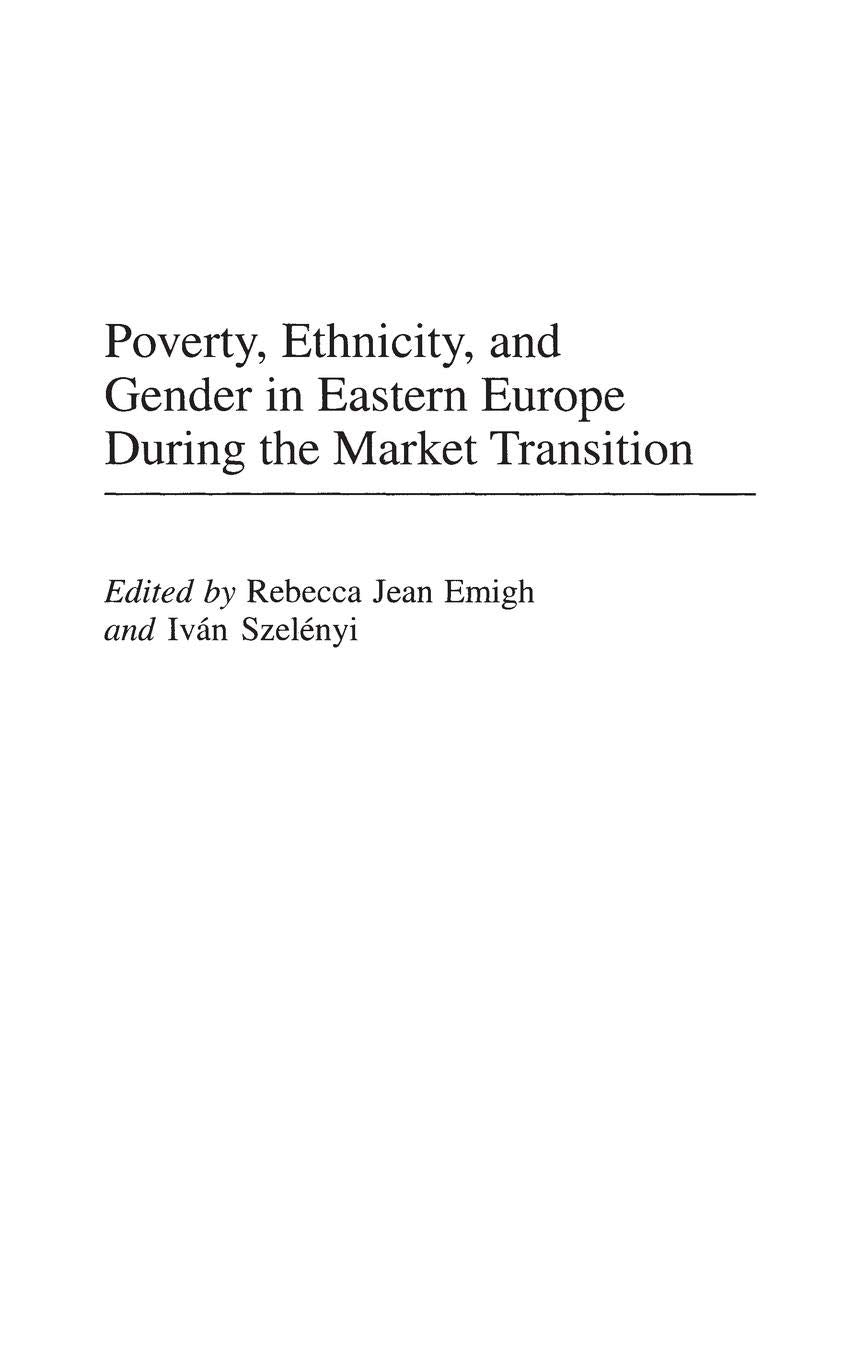
Poverty, Ethnicity, and Gender in Eastern Europe During the Market Transition,Used
Sold by Ergodebooks, an authorized reseller.
Returns accepted within 30 days | support@ergodebooks.com
Shipping Information
- Free Standard Shipping — United States only
- Processing Time: 3–5 business days
- Estimated Delivery: 6–10 business days after dispatch
- Double-boxed, fully insured & discreetly packaged
- Tracking number sent via email once dispatched
Returns & Refund
Returns accepted within 30 days of delivery.
Damaged or Defective Item
Free return shipping + replacement or full refund
Wrong Item Received
Free return shipping + replacement or full refund
Change of Mind
Return shipping at customer's expense · 25% restocking fee applies
Payment Option

This provocative volume is the first book to offer an extensive examination of the nature of poverty and its relationship to gender and ethnicity in five postcommunist societies. As nations make the difficult transition from socialism to capitalism, the extent and nature of poverty tends to change and, because of this, the proportion of the population living in poverty tends to change. As a result, the proportion of the population living in poverty has increased sharply in these countries. The contributors contend that a new poverty is in the making and that the growing underclass is strongly related to ethnicity, as such an underclass is more likely to form if there is a sizeable Roma (Gypsy) minority. The question of whether gender interacts with poverty the same way ethnicity does is the subject of intense controversy and is addressed here in lucid, accessible prose. In this comprehensive analysis of the interaction between poverty, ethnicity, and gender in East European transitional societies, the contributors thoughtfully address the relevant issues and relationships and conclude that poverty has become deeper and increasingly longterm in Eastern European nations.Although it is clear that poverty increased in Eastern Europe during the market transition, the extent and nature of the changes have not yet been illuminated. Covering Bulgaria, Hungary, Poland, Romania, and Slovakia, the contributors analyze the interaction between poverty, ethnicity, and gender in an effort to explain the changing nature of poverty and the formation of an underclass in these countries. Roma (Gypsies) arise as the most likely candidates for membership in the new underclass, as they were always economically disadvantaged and the targets of discriminatory practices. On the other hand, however because they were often better educated than men during socialism, women may have been relatively advantaged, at least temporarily, during the market transition. Thus while poverty may be racialized during the transformation, it may not yet be feminized. In this comparative assessment of social trends in this region, the contributors consider what they mean for the countries where they occur.
⚠️ WARNING (California Proposition 65):
This product may contain chemicals known to the State of California to cause cancer, birth defects, or other reproductive harm.
For more information, please visit www.P65Warnings.ca.gov.