If you have any questions, you are always welcome to contact us. We'll get back to you as soon as possible, withing 24 hours on weekdays.
Customer service
All questions about your order, return and delivery must be sent to our customer service team by e-mail at yourstore@yourdomain.com
Sale & Press
If you are interested in selling our products, need more information about our brand or wish to make a collaboration, please contact us at press@yourdomain.com
Help
If you have any questions, you are always welcome to contact us. We'll get back to you as soon as possible, withing 24 hours on weekdays.
Customer service
All questions about your order, return and delivery must be sent to our customer service team by e-mail at yourstore@yourdomain.com
Sale & Press
If you are interested in selling our products, need more information about our brand or wish to make a collaboration, please contact us at press@yourdomain.com
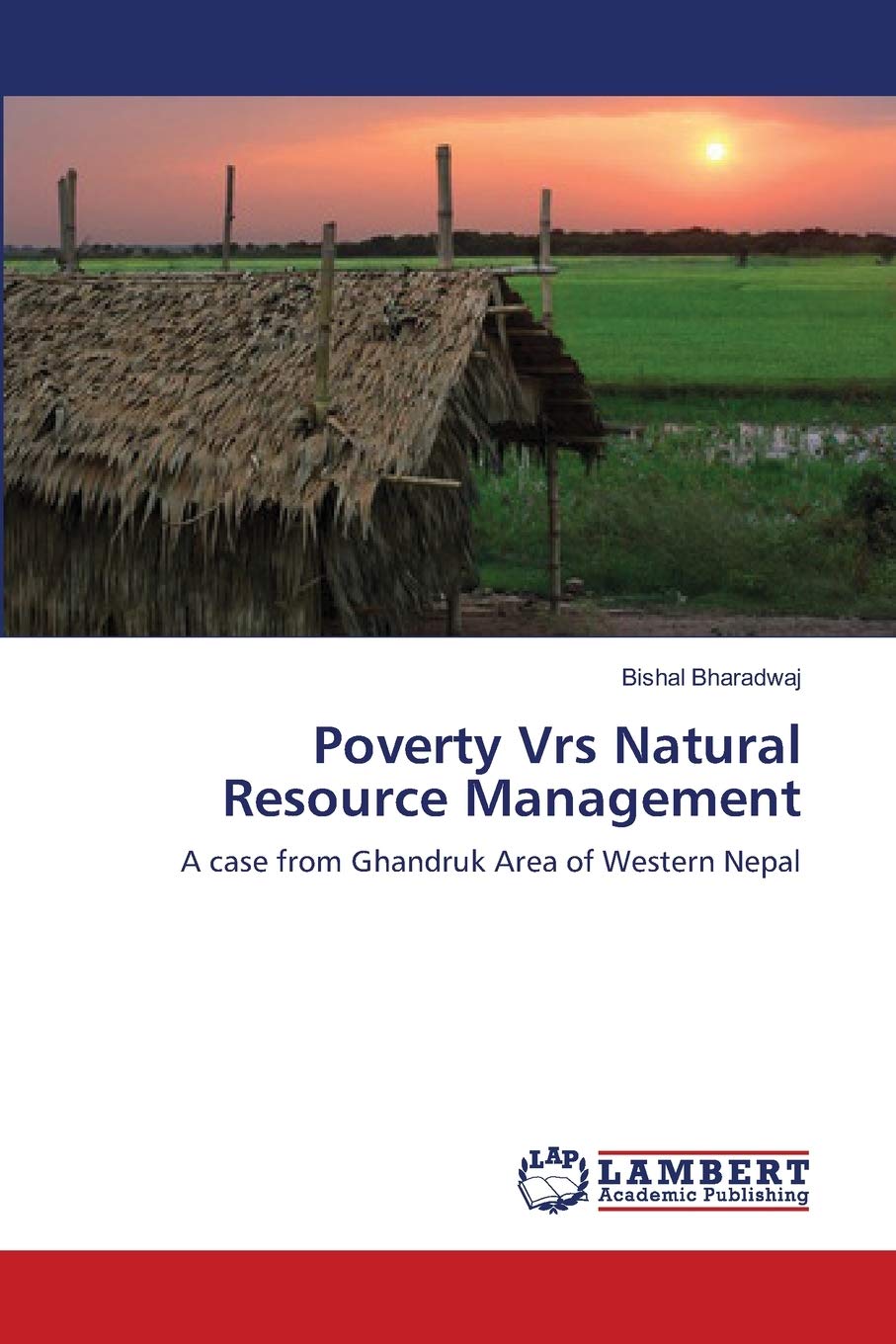
About 25 percent of Nepalese is living under the poverty line. Most of the rural population depends on natural resource for livelihood. Increasing population and massive consumption have created high pressure in natural resource in rural areas. In this connection we were interested in the relationship between natural resource management and poverty in the Ghandruk area of Western Nepal. We considered income, consumption and social poverty based on the revised poverty line. Head count and poverty gap were calculated, Lorenz Curve was constructed and Gini coefficient was estimated. We observed natural resource management through weighted criterion and categorized the natural resources (forest, water etc.) into well, normal and under managed. About 54 percent of households were poor. Gini coefficient was 0.68. Social poverty was highly correlated with natural resource mismanagement. However, poor household is probable of mismanaging resource. It was because of high dependency, low access to management skill and technology adoption. Moreover poor house owned poor natural resource. The domain of transferability was weak. This resulted in fewer benefits; ultimately causing poverty.
⚠️ WARNING (California Proposition 65):
This product may contain chemicals known to the State of California to cause cancer,
birth defects, or other reproductive harm.
For MAP (Minimum Advertised Price) violations and Intellectual Property (IP) or Trademark concerns, please contact:
support@ergodebooks.com
⚠️ California Proposition 65 Warning: Some products sold on this website may expose you to chemicals known to the State of California to cause cancer, birth defects, or other reproductive harm. For more information, visit www.P65Warnings.ca.gov.