
Title
Power And People: The Benefits Of Renewable Energy In Nepal (World Bank Studies) (World Bank Study),New
Sold by Ergodebooks, an authorized reseller.
Returns accepted within 30 days | support@ergodebooks.com
Shipping Information
- Free Standard Shipping — United States only
- Processing Time: 3–5 business days
- Estimated Delivery: 6–10 business days after dispatch
- Double-boxed, fully insured & discreetly packaged
- Tracking number sent via email once dispatched
Returns & Refund
Returns accepted within 30 days of delivery.
Damaged or Defective Item
Free return shipping + replacement or full refund
Wrong Item Received
Free return shipping + replacement or full refund
Change of Mind
Return shipping at customer's expense · 25% restocking fee applies
Payment Option

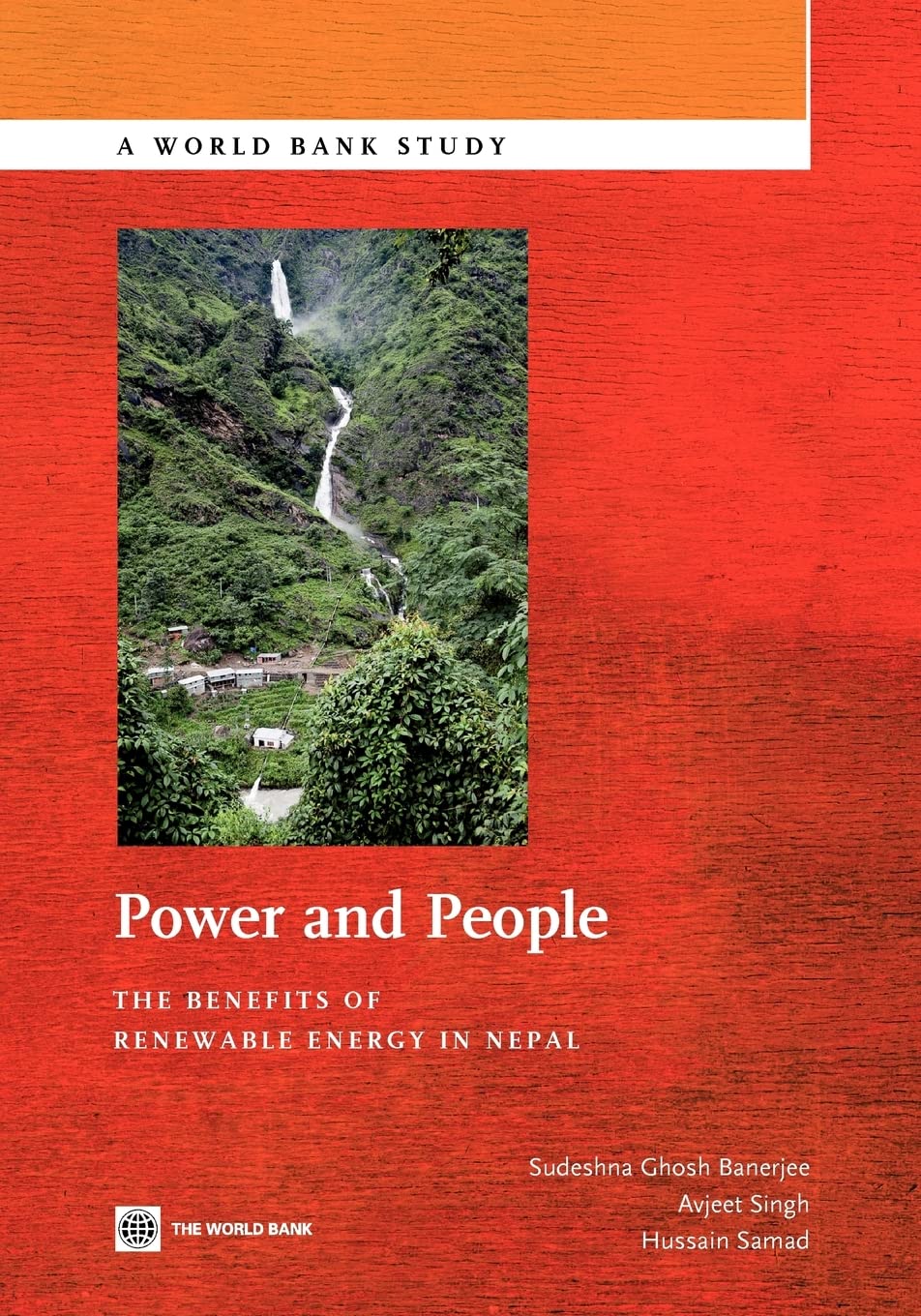
This report is an output of the technical assistance activity carried out over 20082010 to Alternative Energy Promotion Center (AEPC), which is the nodal renewable energy agency of Nepal. This study has been designed to establish a monitoring system for AEPC to continually measure the results of the renewable energy programs against the targets and to organize an evaluation system that measures the impact of microhydro installations on rural livelihoods. Given AEPC s highly visible role, the need to develop a system that provides information on a wide range of technical, operational, and financial parameters is similarly high. This study developed a robust yet simple M and E framework for all the programs of AEPC that is focused on the needs of the decisionmakers, as well as the interests of the relevant stakeholders. The integrated M and E system encompasses all of AEPC s programs in microhydro, solar, biomass, improved water mills, and biogas, and builds its capacity to execute it. The focus has been to develop performance indicators across the entire causal chain from project intervention to ontheground impacts. The M and E framework incorporates not only the activities undertaken and the outputs but also the impact on the beneficiaries which is critical to gain a better perspective of the impact of the interventions and to support future planning processes and decisionmaking. The final impacts of electrification on households and businesses are evaluated using a primary household and enterprise survey. A wide range of outcomes including quality of lighting, income generation, health, education, fertility, women s empowerment, and greenhouse gas emissions reduction are considered. AEPC is now equipped with not only the stateoftheart monitoring system but also with a trained staff to sustainably manage and add to the system, as required.
⚠️ WARNING (California Proposition 65):
This product may contain chemicals known to the State of California to cause cancer, birth defects, or other reproductive harm.
For more information, please visit www.P65Warnings.ca.gov.