If you have any questions, you are always welcome to contact us. We'll get back to you as soon as possible, withing 24 hours on weekdays.
Customer service
All questions about your order, return and delivery must be sent to our customer service team by e-mail at yourstore@yourdomain.com
Sale & Press
If you are interested in selling our products, need more information about our brand or wish to make a collaboration, please contact us at press@yourdomain.com
Help
If you have any questions, you are always welcome to contact us. We'll get back to you as soon as possible, withing 24 hours on weekdays.
Customer service
All questions about your order, return and delivery must be sent to our customer service team by e-mail at yourstore@yourdomain.com
Sale & Press
If you are interested in selling our products, need more information about our brand or wish to make a collaboration, please contact us at press@yourdomain.com
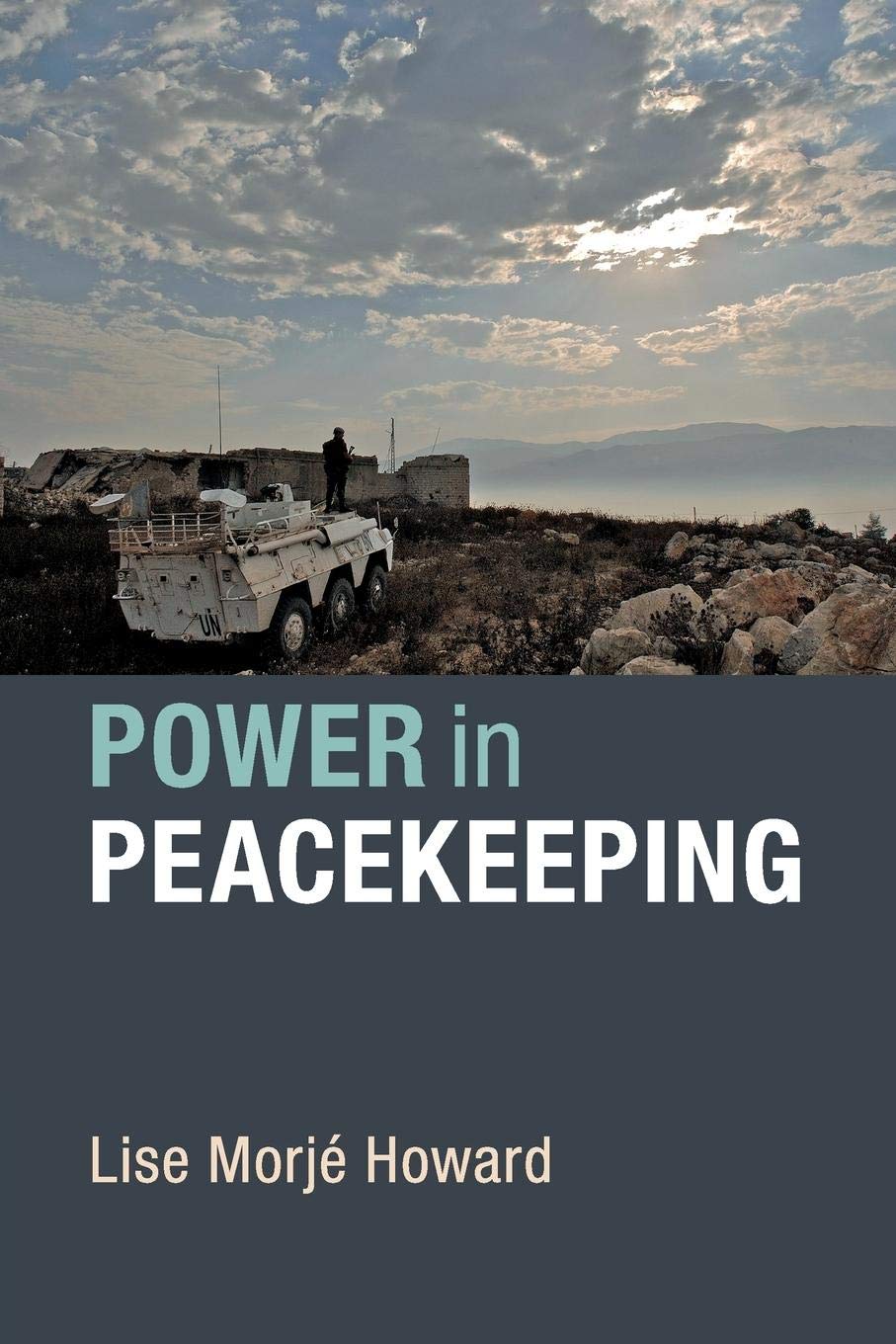
United Nations peacekeeping has proven remarkably effective at reducing the death and destruction of civil wars. But how peacekeepers achieve their ends remains underexplored. This book presents a typological theory of how peacekeepers exercise power. If power is the ability of A to get B to behave differently, peacekeepers convince the peacekept to stop fighting in three basic ways: they persuade verbally, induce financially, and coerce through deterrence, surveillance and arrest. Based on more than two decades of study, interviews with peacekeepers, unpublished records on Namibia, and ethnographic observation of peacekeepers in Lebanon, DR Congo, and the Central African Republic, this book explains how peacekeepers achieve their goals, and differentiates peacekeeping from its less effective cousin, counterinsurgency. It recommends a new international division of labor, whereby actual military forces hone their effective use of compulsion, while UN peacekeepers build on their strengths of persuasion, inducement, and coercion short of offensive force.
⚠️ WARNING (California Proposition 65):
This product may contain chemicals known to the State of California to cause cancer,
birth defects, or other reproductive harm.
For MAP (Minimum Advertised Price) violations and Intellectual Property (IP) or Trademark concerns, please contact:
support@ergodebooks.com
⚠️ California Proposition 65 Warning: Some products sold on this website may expose you to chemicals known to the State of California to cause cancer, birth defects, or other reproductive harm. For more information, visit www.P65Warnings.ca.gov.