If you have any questions, you are always welcome to contact us. We'll get back to you as soon as possible, withing 24 hours on weekdays.
Customer service
All questions about your order, return and delivery must be sent to our customer service team by e-mail at yourstore@yourdomain.com
Sale & Press
If you are interested in selling our products, need more information about our brand or wish to make a collaboration, please contact us at press@yourdomain.com
Help
If you have any questions, you are always welcome to contact us. We'll get back to you as soon as possible, withing 24 hours on weekdays.
Customer service
All questions about your order, return and delivery must be sent to our customer service team by e-mail at yourstore@yourdomain.com
Sale & Press
If you are interested in selling our products, need more information about our brand or wish to make a collaboration, please contact us at press@yourdomain.com
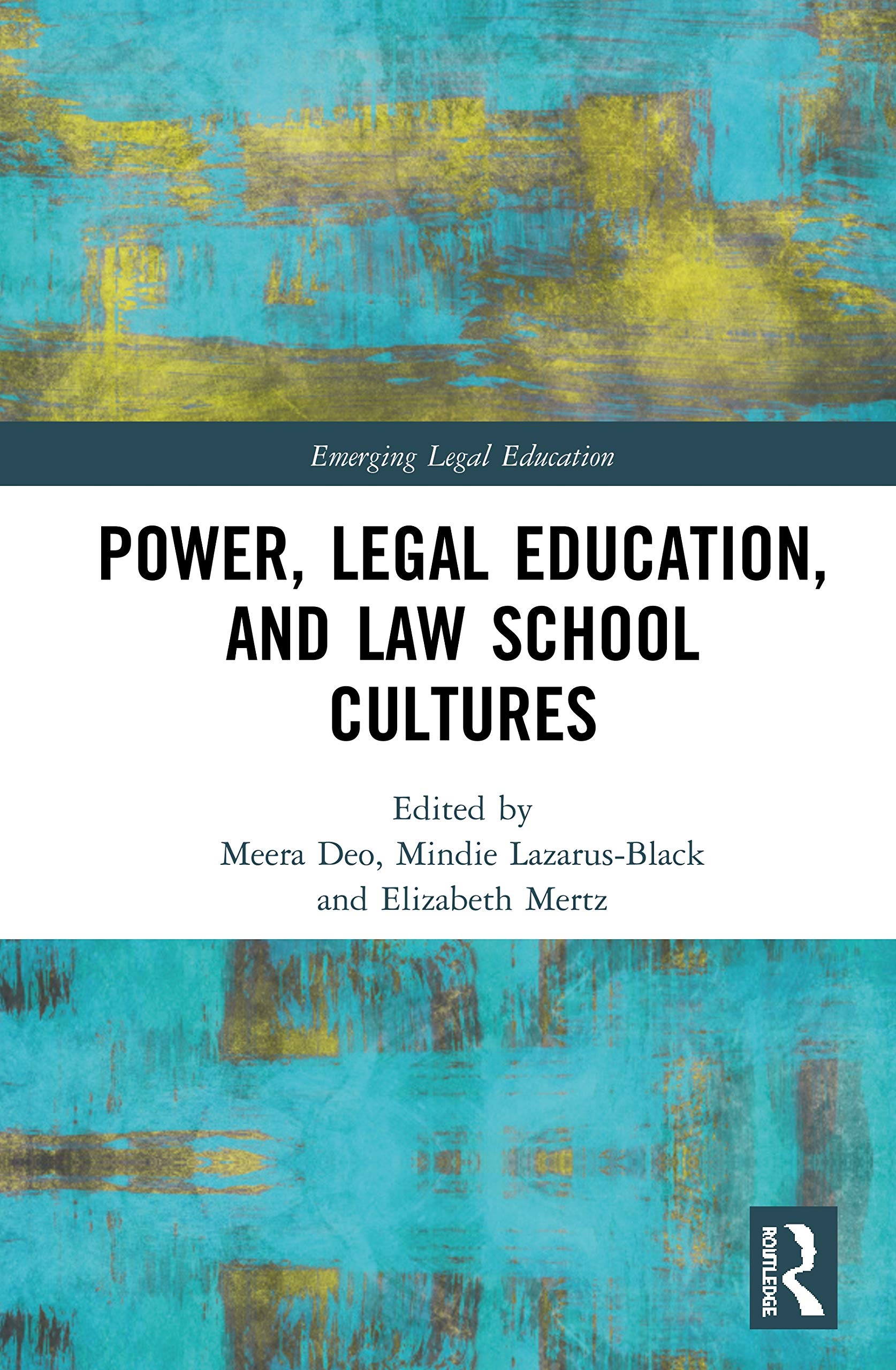
There is a myth that lingers around legal education in many democracies. That myth would have us believe that law students are admitted and then succeed based on raw merit, and that law schools are neutral settings in which professors (also selected and promoted based on merit) use their expertise to train those students to become lawyers. Based on original, empirical research, this book investigates this myth from myriad perspectives, diverse settings, and in different nations, revealing that hierarchies of power and cultural norms shape and maintain inequities in legal education.Embedded within law school cultures are assumptions that also stymie efforts at reform. The book examines hidden pedagogical messages, showing how presumptions about theorys relation to practice are refracted through the obfuscating lens of curricula. The contributors also tackle questions of class and market as they affect law training.Finally, this collection examines how structural barriers replicate injustice even within institutions representing themselves as democratic and open, revealing common dynamics across cultural and institutional forms. The chapters speak to similar issues and to one another about the influence of context, images of law and lawyers, the political economy of legal education, and the agency of students and faculty.
⚠️ WARNING (California Proposition 65):
This product may contain chemicals known to the State of California to cause cancer,
birth defects, or other reproductive harm.
For MAP (Minimum Advertised Price) violations and Intellectual Property (IP) or Trademark concerns, please contact:
support@ergodebooks.com
⚠️ California Proposition 65 Warning: Some products sold on this website may expose you to chemicals known to the State of California to cause cancer, birth defects, or other reproductive harm. For more information, visit www.P65Warnings.ca.gov.