
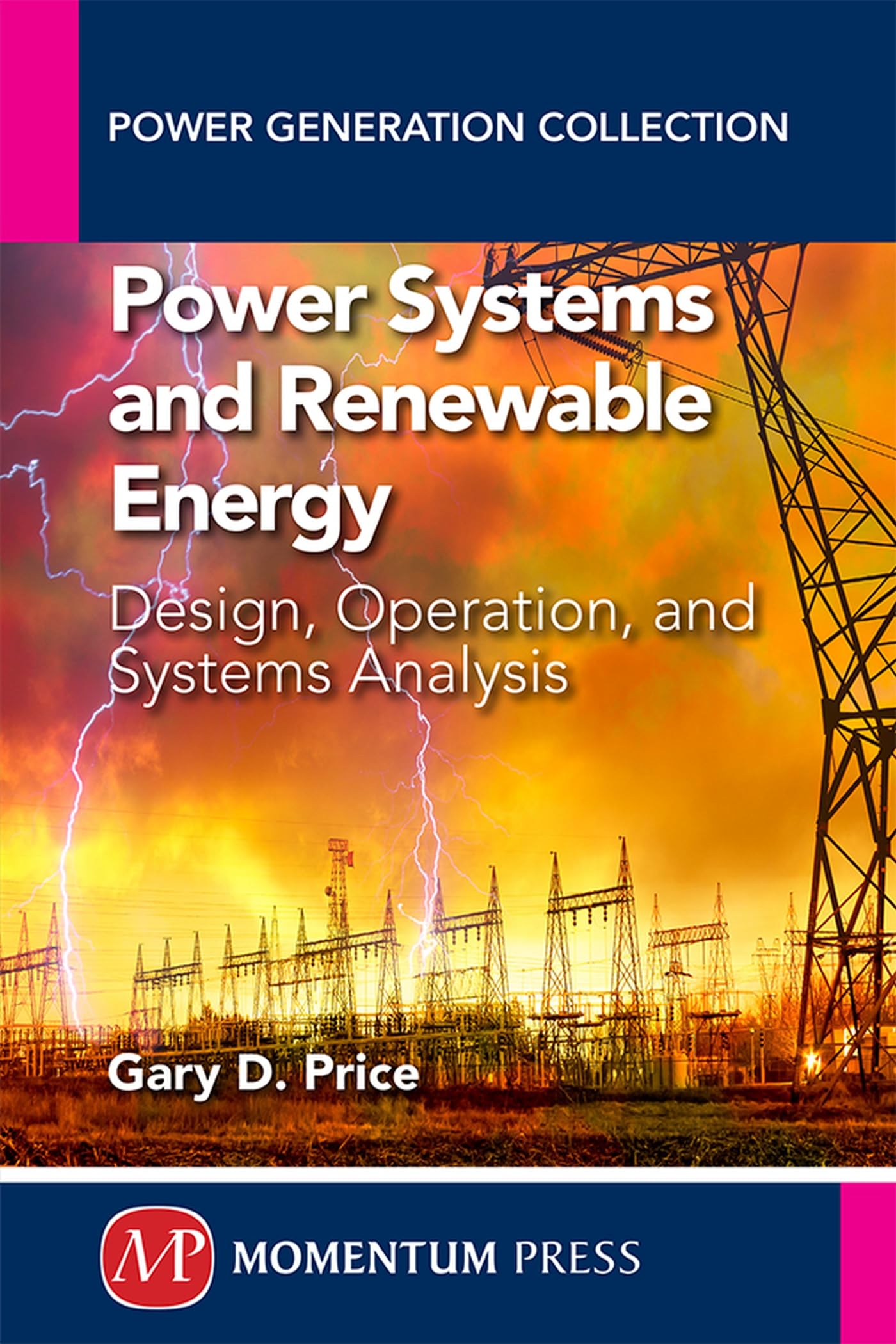
Title
Power Systems and Renewable Energy: Design, Operation, and Systems Analysis (Power Generation Collection),Used
Sold by Ergodebooks, an authorized reseller.
Returns accepted within 30 days | support@ergodebooks.com
Shipping Information
- Free Standard Shipping — United States only
- Processing Time: 3–5 business days
- Estimated Delivery: 6–10 business days after dispatch
- Double-boxed, fully insured & discreetly packaged
- Tracking number sent via email once dispatched
Returns & Refund
Returns accepted within 30 days of delivery.
Damaged or Defective Item
Free return shipping + replacement or full refund
Wrong Item Received
Free return shipping + replacement or full refund
Change of Mind
Return shipping at customer's expense · 25% restocking fee applies
Payment Option

The goal of this proposed text is to provide a recourse for engineering students interested in the design and operation of solar electric, solar thermal, wind, and other renewable systems. Solar and wind energy systems have flourished throughout the United States in the last few years as the public calls for reduced dependence on foreign oil. Government programs have been established to meet the public demand. Many states have passed legislation that requires electric utilities to include a portfolio of renewable energy sources in their generation mix. The resulting public demand has stimulated the growth of an industry that provides wind and solar systems, and many small businesses have grown to install these systems. Training programs and courses are now ubiquitous as the demand for designers and installer's increases. Almost every educational institution offers renewable energy classes or curriculum. The organization of this book begins with concepts and terminology for power and energy the basics needed to communicate and understand the subject. Conventional power systems are briefly discussed to understand the concepts used in the integration of renewable power systems. Discussion then moves to the design and installation of a small residential photovoltaic system and wind generator connected to the electric utility grid. With this background, the student is able to begin developing ideas for a class project. The chapters following concepts and background review delve into the details of photovoltaic and wind systems as interconnected or standalone designs. Estimating and predicating energy production is presented using industry distribution functions and online programs. Concepts of temperature coefficients, synchronization, power conversion, and system protection are explained and practiced. These concepts are applied to residential and small commercial systems and later extrapolated to large system design. Economic analysis is presented using basic methodologies such as payback and rate of return. The methodology to develop advanced analysis is introduced using spreadsheets. The remainder of the text explores other renewable technologies, energy storage systems, thermal systems, and renewable related topics.
⚠️ WARNING (California Proposition 65):
This product may contain chemicals known to the State of California to cause cancer, birth defects, or other reproductive harm.
For more information, please visit www.P65Warnings.ca.gov.