If you have any questions, you are always welcome to contact us. We'll get back to you as soon as possible, withing 24 hours on weekdays.
Customer service
All questions about your order, return and delivery must be sent to our customer service team by e-mail at yourstore@yourdomain.com
Sale & Press
If you are interested in selling our products, need more information about our brand or wish to make a collaboration, please contact us at press@yourdomain.com
Help
If you have any questions, you are always welcome to contact us. We'll get back to you as soon as possible, withing 24 hours on weekdays.
Customer service
All questions about your order, return and delivery must be sent to our customer service team by e-mail at yourstore@yourdomain.com
Sale & Press
If you are interested in selling our products, need more information about our brand or wish to make a collaboration, please contact us at press@yourdomain.com
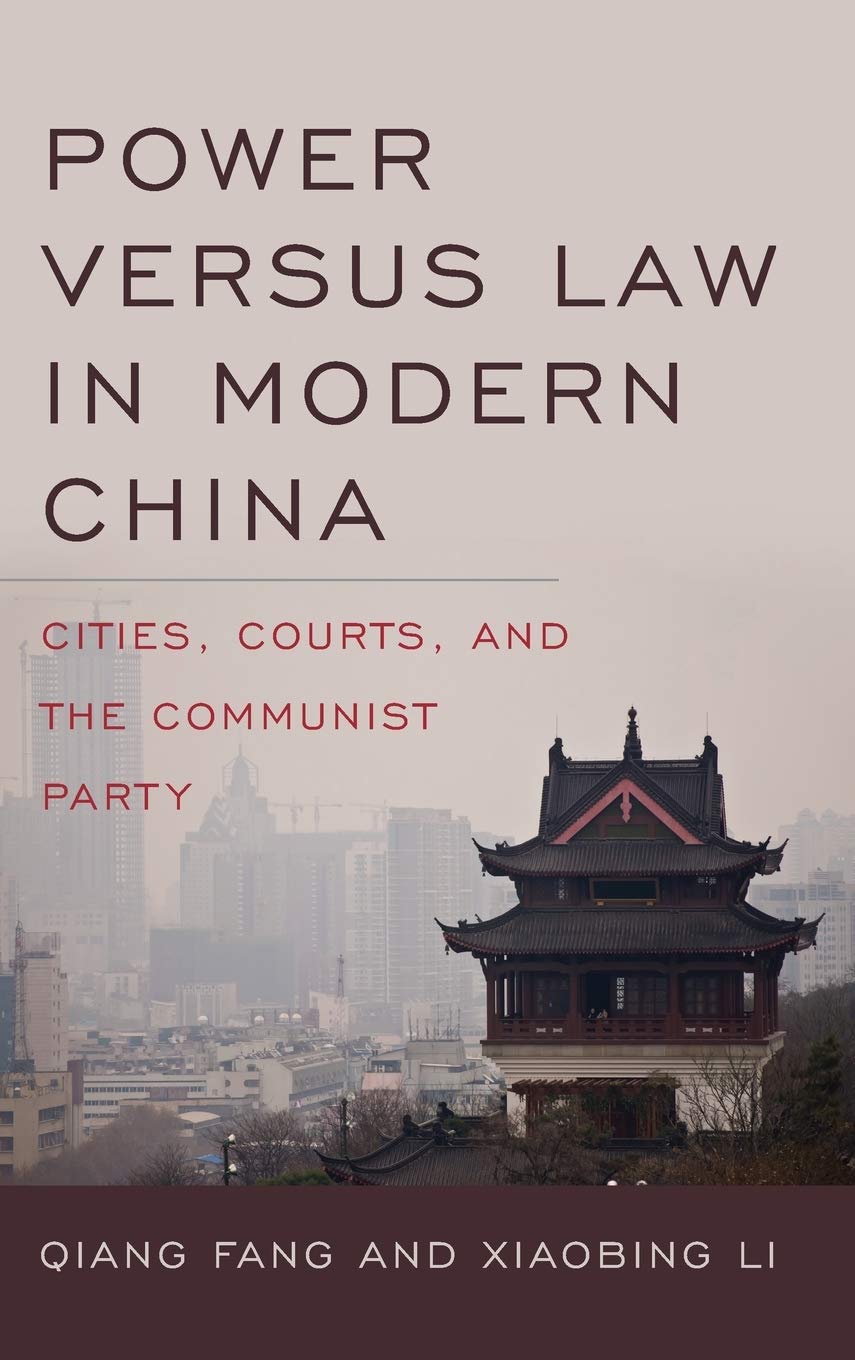
Today 700 million Chinese citizensmore than fiftyfour percent of the populationlive in cities. The mass migration of rural populations to urban centers increased rapidly following economic reforms of the 1990s, and serious problems such as overcrowding, lack of health services, and substandard housing have arisen in these areas since. China's urban citizens have taken to the courts for redress and fought battles over failed urban renewal projects, denial of civil rights, corruption, and abuse of power.In Power versus Law in Modern China, Qiang Fang and Xiaobing Li examine four important legal cases that took place from 1995 to 2013 in the major cities of Wuhan, Xuzhou, Shanghai, and Chongqing. In these cases, citizens protested demolition of property, as well as corruption among city officials, developers, and landlords; but were repeatedly denied protection or compensation from the courts. Fang and Li explore how new interest groups comprised of entrepreneurs and Chinese graduates of Western universities have collaborated with the CCPcontrolled local governments to create new power bases in cities. Drawing on newly available official sources, private collections, and interviews with Chinese administrators, judges, litigants, petitioners, and legal experts, this interdisciplinary analysis reveals the powerful and privileged will most likely continue to exploit the legal asymmetry that exists between the courts and citizens.
⚠️ WARNING (California Proposition 65):
This product may contain chemicals known to the State of California to cause cancer,
birth defects, or other reproductive harm.
For MAP (Minimum Advertised Price) violations and Intellectual Property (IP) or Trademark concerns, please contact:
support@ergodebooks.com
⚠️ California Proposition 65 Warning: Some products sold on this website may expose you to chemicals known to the State of California to cause cancer, birth defects, or other reproductive harm. For more information, visit www.P65Warnings.ca.gov.