
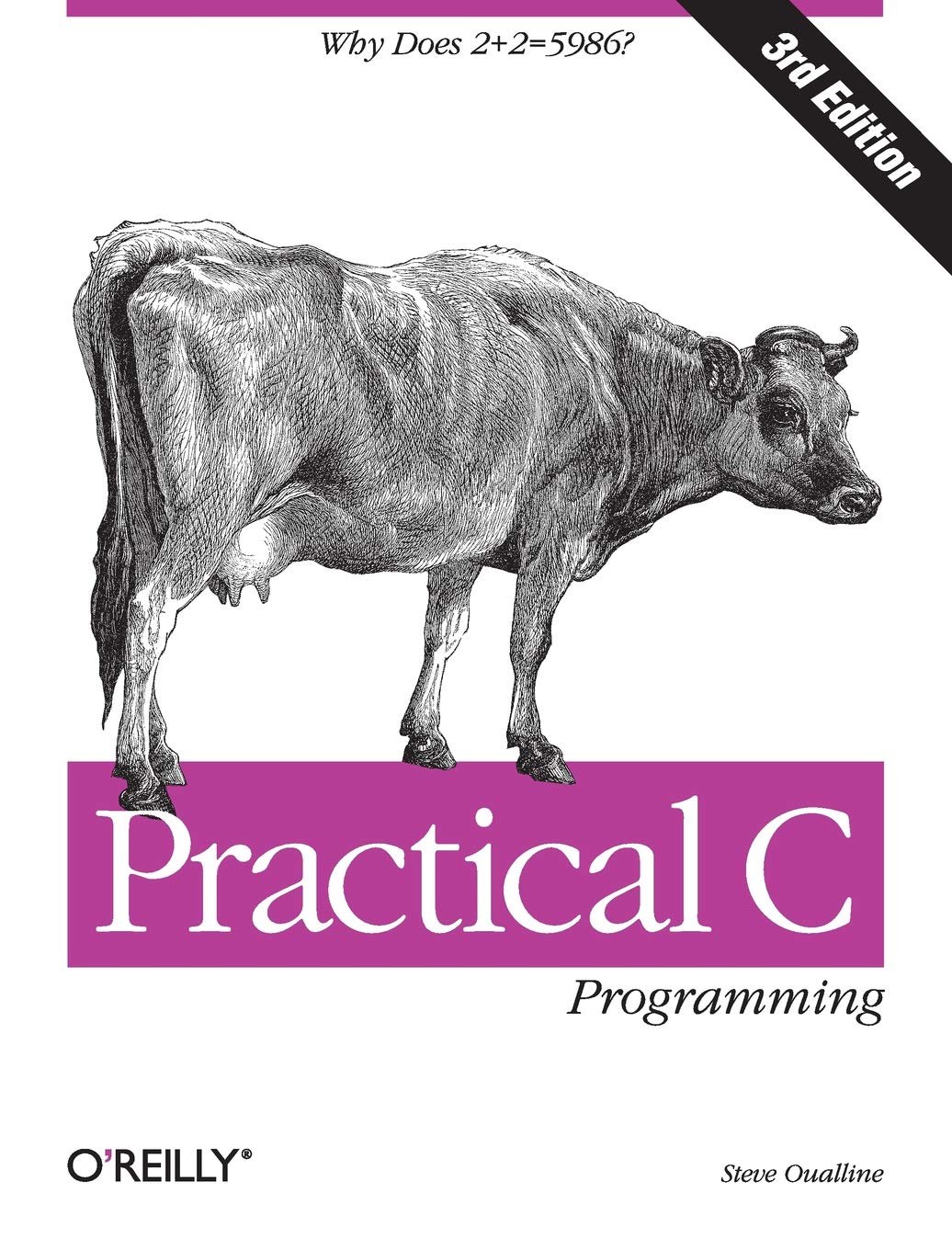
Title
Practical C Programming: Why Does 2+2 = 5986? (Nutshell Handbooks),Used
Sold by Ergodebooks, an authorized reseller.
Returns accepted within 30 days | support@ergodebooks.com
Shipping Information
- Free Standard Shipping — United States only
- Processing Time: 3–5 business days
- Estimated Delivery: 6–10 business days after dispatch
- Double-boxed, fully insured & discreetly packaged
- Tracking number sent via email once dispatched
Returns & Refund
Returns accepted within 30 days of delivery.
Damaged or Defective Item
Free return shipping + replacement or full refund
Wrong Item Received
Free return shipping + replacement or full refund
Change of Mind
Return shipping at customer's expense · 25% restocking fee applies
Payment Option

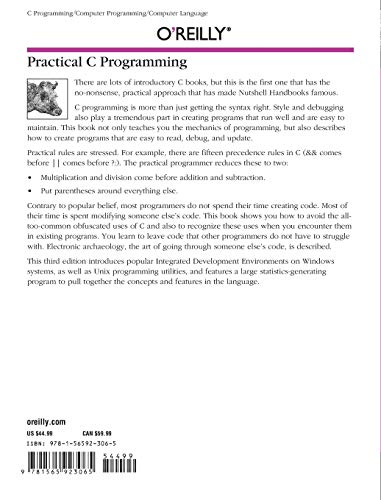
There are lots of introductory C books, but this is the first one that has the nononsense, practical approach that has made Nutshell Handbooks(R) famous. C programming is more than just getting the syntax right. Style and debugging also play a tremendous part in creating programs that run well and are easy to maintain. This book teaches you not only the mechanics of programming, but also describes how to create programs that are easy to read, debug, and update. Practical rules are stressed. For example, there are fifteen precedence rules in C (&& comes before comes before ?:). The practical programmer reduces these to two: Multiplication and division come before addition and subtraction. Contrary to popular belief, most programmers do not spend most of their time creating code. Most of their time is spent modifying someone else's code. This books shows you how to avoid the alltoocommon obfuscated uses of C (and also to recognize these uses when you encounter them in existing programs) and thereby to leave code that the programmer responsible for maintenance does not have to struggle with. Electronic Archaeology, the art of going through someone else's code, is described. This third edition introduces popular Integrated Development Environments on Windows systems, as well as UNIX programming utilities, and features a large statisticsgenerating program to pull together the concepts and features in the language.
⚠️ WARNING (California Proposition 65):
This product may contain chemicals known to the State of California to cause cancer, birth defects, or other reproductive harm.
For more information, please visit www.P65Warnings.ca.gov.
- Q: What is the page count of this book? A: This book has four hundred fifty-four pages. It provides an in-depth exploration of practical C programming techniques.
- Q: What are the dimensions of this book? A: The book measures seven point zero one inches in length, one point one inches in width, and nine point one nine inches in height. These dimensions make it easy to handle and store.
- Q: What type of binding does this book have? A: This book features paperback binding. This makes it lightweight and portable for readers.
- Q: How do I effectively use this book? A: You can use this book to learn practical C programming. It covers not just syntax but also style and debugging, making it suitable for both beginners and experienced programmers.
- Q: Is this book suitable for beginners? A: Yes, this book is suitable for beginners. It emphasizes practical rules and provides clear explanations, helping newcomers grasp programming concepts easily.
- Q: Can I use this book for self-study? A: Yes, this book is excellent for self-study. Its practical approach and real-world examples allow learners to progress at their own pace.
- Q: How should I care for this book? A: To keep this book in good condition, store it in a dry place away from direct sunlight. Avoid bending the pages to prevent damage.
- Q: Is this book safe for children? A: There are no explicit adult themes, making it generally safe for older children. However, parental guidance is recommended for younger readers.
- Q: What if the book arrives damaged? A: If the book arrives damaged, you should contact the seller for return instructions. Most sellers offer a return policy for damaged items.
- Q: Does this book include examples and exercises? A: Yes, this book includes practical examples and exercises. These are designed to reinforce the concepts discussed throughout the chapters.
- Q: Who is the author of this book? A: The author of this book is Steve Oualline. He brings a wealth of experience in programming to the content.
- Q: Is there a digital version of this book available? A: Yes, a digital version may be available through various platforms. It's advisable to check online retailers for availability.
- Q: What programming environments does this book cover? A: This book covers popular Integrated Development Environments on Windows and UNIX programming utilities. It helps readers familiarize themselves with various tools.
- Q: Does this book discuss debugging techniques? A: Yes, this book discusses debugging techniques. It emphasizes the importance of writing maintainable code to simplify the debugging process.
- Q: Can this book help improve my coding style? A: Yes, this book offers insights into improving coding style. It stresses readability and maintainability, which are crucial for effective programming.