
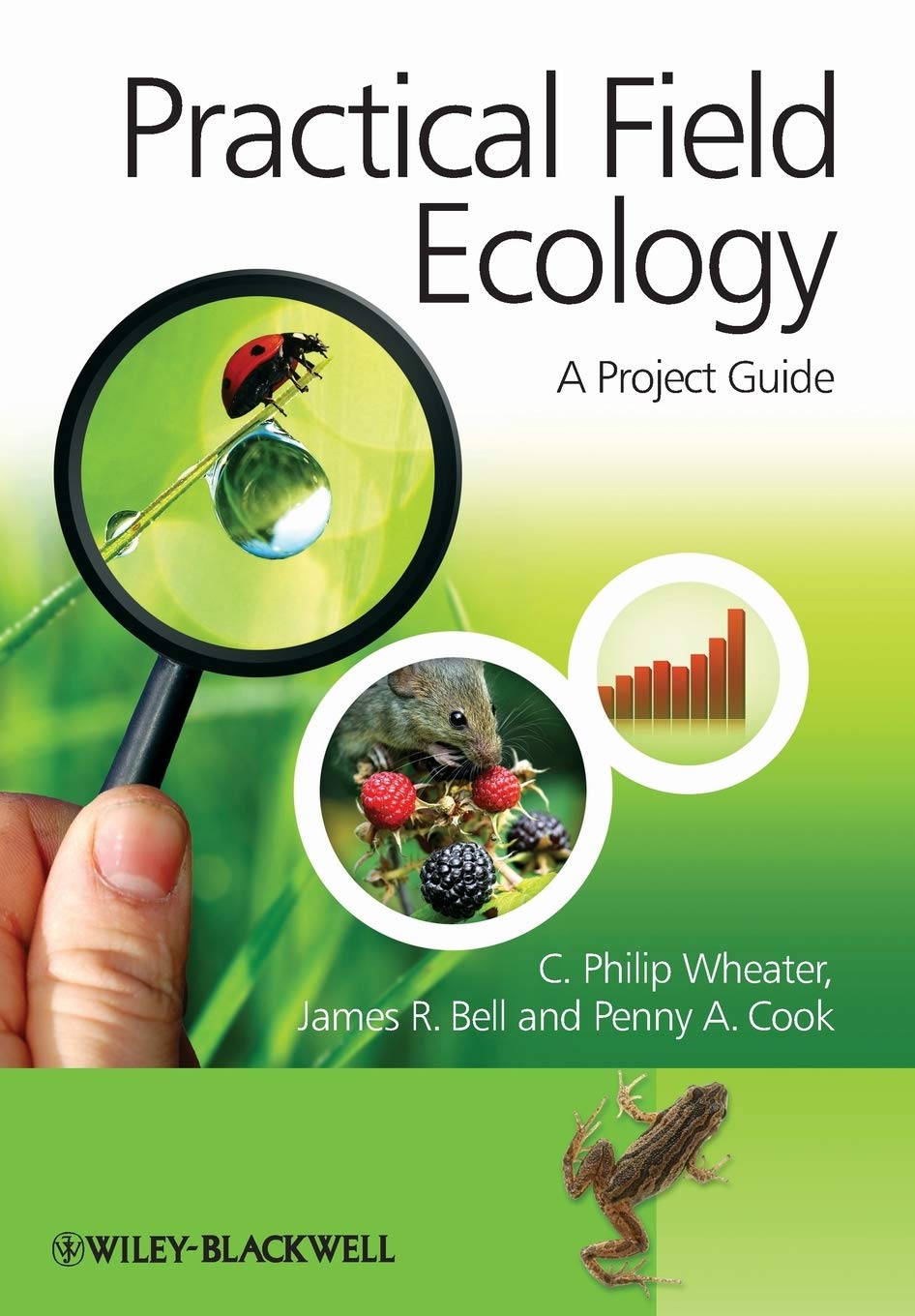
Title
Practical Field Ecology: A Project Guide
Sold by Ergodebooks, an authorized reseller.
Returns accepted within 30 days | support@ergodebooks.com
Shipping Information
- Free Standard Shipping — United States only
- Processing Time: 3–5 business days
- Estimated Delivery: 6–10 business days after dispatch
- Double-boxed, fully insured & discreetly packaged
- Tracking number sent via email once dispatched
Returns & Refund
Returns accepted within 30 days of delivery.
Damaged or Defective Item
Free return shipping + replacement or full refund
Wrong Item Received
Free return shipping + replacement or full refund
Change of Mind
Return shipping at customer's expense · 25% restocking fee applies
Payment Option

This Book Introduces Experimental Design And Data Analysis / Interpretation As Well As Field Monitoring Skills For Both Plants And Animals. Clearly Structured Throughout And Written In A Studentfriendly Manner, The Main Emphasis Of The Book Concentrates On The Techniques Required To Design A Field Based Ecological Survey And Shows How To Execute An Appropriate Sampling Regime. The Book Evaluates Appropriate Methods, Including The Problems Associated With Various Techniques And Their Inherent Flaws (E.G. Low Sample Sizes, Large Amount Of Field Or Laboratory Work, High Cost Etc). This Provides A Resource Base Outlining Details From The Planning Stage, Into The Field, Guiding Through Sampling And Finally Through Organism Identification In The Laboratory And Computer Based Data Analysis And Interpretation.The Text Is Divided Into Six Distinct Chapters. The First Chapter Covers Planning, Including Health And Safety Together With Information On A Variety Of Statistical Techniques For Examining And Analysing Data. Following A Chapter Dealing With Site Characterisation And General Aspects Of Species Identification, Subsequent Chapters Describe The Techniques Used To Survey And Census Particular Groups Of Organisms. The Final Chapter Covers Interpreting And Presenting Data And Writing Up The Research. The Emphasis Here Is On Appropriate Wording Of Interpretation And Structure And Content Of The Report.
⚠️ WARNING (California Proposition 65):
This product may contain chemicals known to the State of California to cause cancer, birth defects, or other reproductive harm.
For more information, please visit www.P65Warnings.ca.gov.
- Q: How many pages does this book have? A: This book has four hundred pages. It offers a thorough exploration of field ecology techniques and data analysis.
- Q: What is the binding type of this book? A: The binding type is paperback. This makes it flexible and lightweight for easy handling in fieldwork.
- Q: What are the dimensions of this book? A: The dimensions are six point six five inches in length, nine point six one inches in height, and zero point nine one inches in width. This size is convenient for carrying in a bag.
- Q: What is the author’s name? A: The author is Penny A. Cook. She has expertise in ecology and contributes valuable insights throughout the book.
- Q: What is the main focus of the book? A: The main focus is on experimental design and ecological survey techniques. It also covers data analysis and organism identification.
- Q: How can I use this book effectively? A: You can use this book as a guide for planning ecological surveys. It provides detailed methodologies and techniques for conducting fieldwork.
- Q: Is this book suitable for beginners? A: Yes, this book is suitable for beginners. It presents concepts in a student-friendly manner, making it accessible for new learners.
- Q: Are there any safety considerations mentioned in the book? A: Yes, it discusses health and safety in the planning chapter. This is crucial for conducting safe field surveys.
- Q: How do I apply the techniques mentioned in the book? A: You can apply the techniques by following the structured chapters. Each section guides you through specific ecological survey methods.
- Q: What should I do to maintain this book? A: To maintain this book, store it in a dry place and avoid exposing it to direct sunlight. This helps preserve the quality of the pages.
- Q: Are there cleaning instructions for this book? A: No specific cleaning instructions are provided. However, keeping it clean and dry will help maintain its condition.
- Q: Can I return the book if I'm not satisfied? A: Yes, you can return the book if you are not satisfied, provided you follow the return policy of the retailer.
- Q: What if my book arrives damaged? A: If your book arrives damaged, you should contact customer support for assistance with a return or replacement.
- Q: Is there a warranty for this book? A: No, there is no warranty for this book. However, the return policy typically covers issues related to damage during shipping.
- Q: What topics does the final chapter cover? A: The final chapter covers interpreting and presenting data. It focuses on the structure and content of research reports.
- Q: How does this book compare to others in the field of ecology? A: This book stands out due to its practical approach and structured layout. It combines theory with hands-on techniques for effective learning.