
Title
Practical Instructions for Millers and Carpenters for Constructing Mills,Used
Processing time: 1-3 days
US Orders Ships in: 3-5 days
International Orders Ships in: 8-12 days
Return Policy: 15-days return on defective items
Payment Option

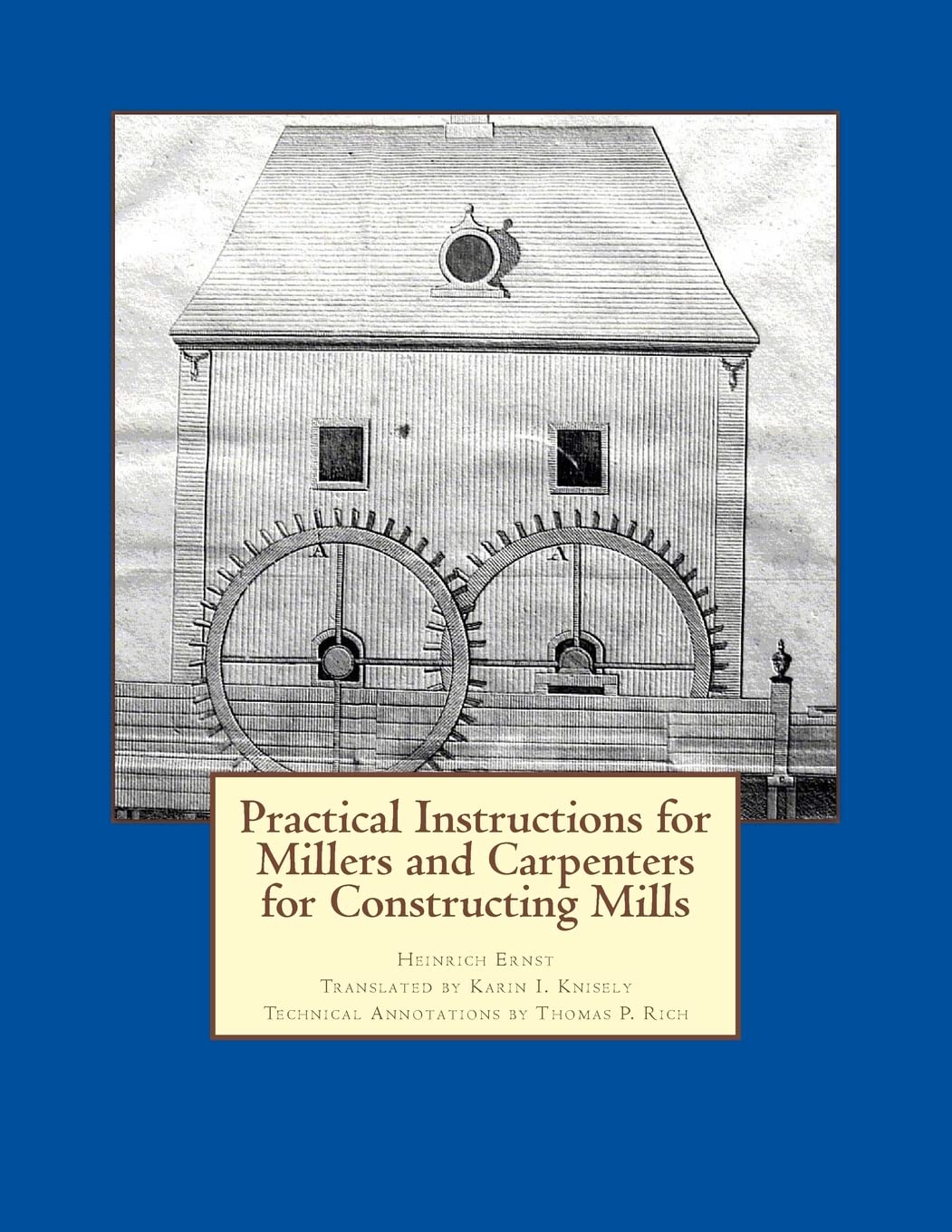
The book presented here gives a comprehensive, period guide for the design and construction of waterpowered gristmills based upon 18th century German technology. As such, it shows a likely template for the early American, colonial gristmills built by German speaking and trained settlers. It also illustrates the more complex mills used in Europe at that time. A full English translation is given along with numerous technical annotations for the 18th century technology. Seventeen original copper plate, detailed drawings are reproduced of the mill designs and equipment. One of the first significant industries in North America was the refining of grains in waterpowered gristmills. Many gristmills were built in the early colonial settlements. Records of the Virginia Company show a waterpowered mill under construction in 1621. A gristmill is on record as built in New Amsterdam in 1634. The Jenney Grist Mill was first built in 1636 at Plymouth, Massachusetts. The first known gristmill in Pennsylvania came on William Penns ship that arrived up the Delaware River in 1682. It was ready framed in England for grinding grains and sawing boards in the new province. As the settlers arrived in the New World and pushed into the interior of the original 13 colonies, they built gristmills as soon as their agriculture became established. Often, a gristmill was the first major building built in an area after cabins and barns. Many towns in rural communities then grew up around these mills. A question arises concerning these early pioneer gristmills. Was there a template for their design and construction? Many students of molinology attribute the design of early American waterpowered gristmills to Oliver Evans, who published his wellknown book, The Young MillWright and Millers Guide, in 1834. His design was seen in the typical, threestoried, integrated mills that were built across 19th century America. However, the mills on the American countryside of the 1600s and 1700s were generally not of such sophisticated design. They were often little more than log or simple frame structures with a design based upon a water wheel, axle, power transmission, and a set of mill stones. The book presented here gives a template for that simple design with specific instructions for construction. It was written by Heinrich Ernst and published in Leipzig, Germany in 1805. Not only is the template given more suited to a rural and undeveloped environment, but many of the early mills were built and operated by men who emigrated from Germany at that time. A copy of the original book was found recently in Mifflinburg, Pennsylvania, which was in the heart of an area settled by German mill wrights and millers around the turn of the 19th century. Since this book represents 18th century, European milling technology, it includes additional and more complex designs used in the Old World at that time. They include mills with multiple and adjustable water wheels and multiple millstone sets. There are also interesting sections on flow and fall measurements of the period and weir and sluice design and construction.
⚠️ WARNING (California Proposition 65):
This product may contain chemicals known to the State of California to cause cancer, birth defects, or other reproductive harm.
For more information, please visit www.P65Warnings.ca.gov.