
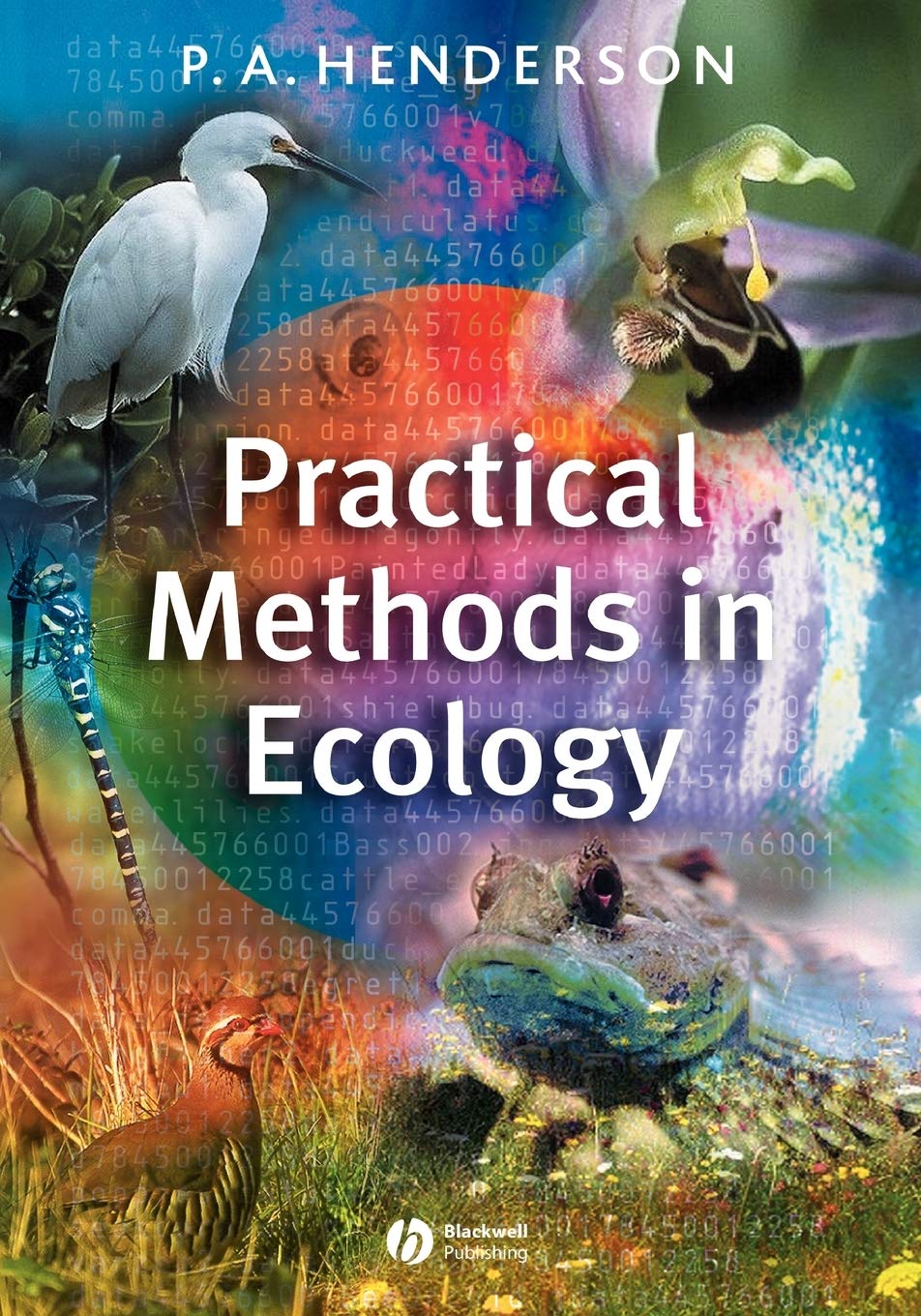
Title
Practical Methods in Ecology,New
Sold by Ergodebooks, an authorized reseller.
Returns accepted within 30 days | support@ergodebooks.com
Shipping Information
- Free Standard Shipping — United States only
- Processing Time: 3–5 business days
- Estimated Delivery: 6–10 business days after dispatch
- Double-boxed, fully insured & discreetly packaged
- Tracking number sent via email once dispatched
Returns & Refund
Returns accepted within 30 days of delivery.
Damaged or Defective Item
Free return shipping + replacement or full refund
Wrong Item Received
Free return shipping + replacement or full refund
Change of Mind
Return shipping at customer's expense · 25% restocking fee applies
Payment Option

There are few books available that provide a good introduction to the methods and techniques for ecological research. This book will be invaluable to lecturers teaching field courses and students undertaking project work in ecology.Each chapter will focus on an ecological technique. It will have an introductory section that describes the ecological principles and theory. This will then be followed by example applications. These will focus on three most common habitats where teachers take students for fieldwork; the seashore, ponds and lakes, fields and woodland. Gives specific worked examples from the main ecosystems used for undergraduate study seashore, lakes/ponds, field and woodland. Only introductory text specifically focused on field techniques. Great 'howto' guide that will show student exactly how to carry out each method. Only text to emphasise the principles behind the techniques taking a methods based approach rather than a taxonomic approach (eg chapters split into population measures, biodiversity measures, species richness measures rather than methods for invertebrates, methods for mammals, methods for birds etc). Greater emphasis on the equipment involved how to make it, where to buy it. Good references to further reading and advanced techniques.
⚠️ WARNING (California Proposition 65):
This product may contain chemicals known to the State of California to cause cancer, birth defects, or other reproductive harm.
For more information, please visit www.P65Warnings.ca.gov.
- Q: How many pages does 'Practical Methods in Ecology' have? A: The book has one hundred seventy-six pages. It provides detailed insights into ecological research methods.
- Q: What type of binding does 'Practical Methods in Ecology' have? A: The book is available in paperback binding. This makes it lightweight and easy to carry for fieldwork.
- Q: Who is the author of 'Practical Methods in Ecology'? A: The author is Peter A. Henderson. He offers valuable perspectives on ecological techniques throughout the book.
- Q: What ecological techniques are covered in the book? A: The book focuses on various ecological techniques used in field studies. It emphasizes methods for seashores, ponds, and woodlands.
- Q: Is 'Practical Methods in Ecology' suitable for beginners? A: Yes, the book is suitable for beginners. It provides a clear introduction to ecological research methods.
- Q: What habitats does the book discuss for fieldwork? A: The book discusses three common habitats: seashores, ponds, and woodlands. These are ideal for teaching field courses.
- Q: How should I care for 'Practical Methods in Ecology'? A: To care for the book, keep it in a dry place and avoid direct sunlight. This will help maintain its condition over time.
- Q: Can 'Practical Methods in Ecology' be used for advanced studies? A: Yes, it includes references for further reading and advanced techniques. This makes it beneficial for both students and lecturers.
- Q: Is the book appropriate for fieldwork? A: Yes, it serves as a practical guide for fieldwork. It emphasizes how to carry out ecological methods effectively.
- Q: What makes this book unique in its field? A: It is the only introductory text focused specifically on field techniques. It emphasizes a methods-based approach rather than a taxonomic one.
- Q: Does the book provide any specific examples? A: Yes, it includes specific worked examples from major ecosystems. This helps students understand practical applications.
- Q: Are there references for further reading in the book? A: Yes, the book contains good references for further reading. This supports deeper exploration of advanced ecological techniques.
- Q: Is there an emphasis on equipment in this book? A: Yes, there is a greater emphasis on the equipment involved in ecological research. It discusses how to make or acquire necessary tools.
- Q: What age group is 'Practical Methods in Ecology' suitable for? A: The book is suitable for university students and lecturers. It's designed for those undertaking project work in ecology.
- Q: Is 'Practical Methods in Ecology' a used book? A: Yes, it is a used book in good condition. This makes it an affordable option for students.