If you have any questions, you are always welcome to contact us. We'll get back to you as soon as possible, withing 24 hours on weekdays.
Customer service
All questions about your order, return and delivery must be sent to our customer service team by e-mail at yourstore@yourdomain.com
Sale & Press
If you are interested in selling our products, need more information about our brand or wish to make a collaboration, please contact us at press@yourdomain.com
Help
If you have any questions, you are always welcome to contact us. We'll get back to you as soon as possible, withing 24 hours on weekdays.
Customer service
All questions about your order, return and delivery must be sent to our customer service team by e-mail at yourstore@yourdomain.com
Sale & Press
If you are interested in selling our products, need more information about our brand or wish to make a collaboration, please contact us at press@yourdomain.com
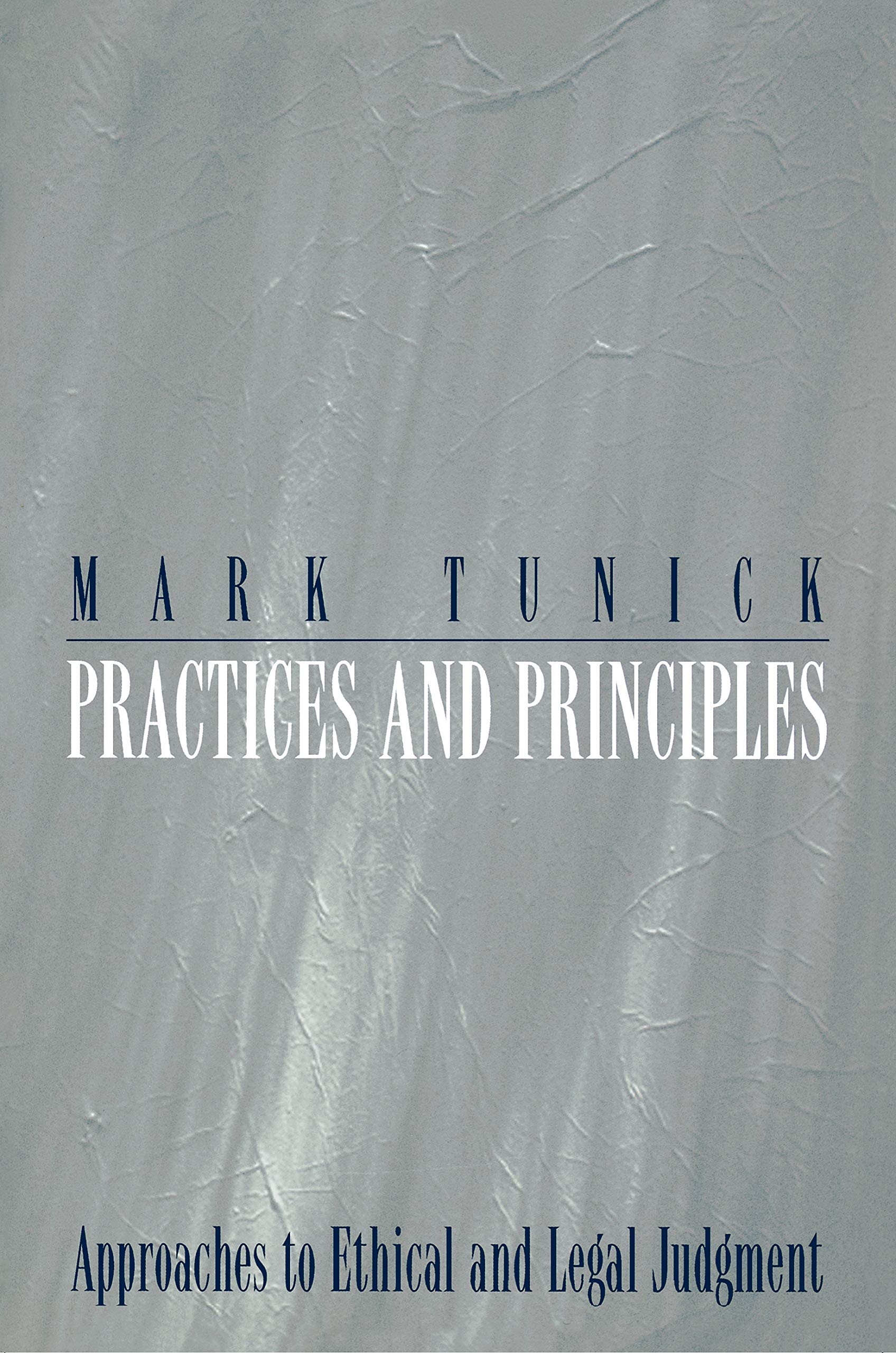
A Japanese woman living in California attempts parentchild suicide, an ancient Japanese custom called 'oyakoshinju,' in order to rid herself of shame upon learning that her husband has a mistress. She survives, but her two children are drowned in the attempt. Since her attempt was made in accordance with the standards of Japanese culture, should she be tried by the standards and laws of the United States? Are there universally valid moral principles that dictate what is right? Or are moral judgments culturally relative, ultimately dictated by conventions and practices that vary among societies? In Practices and Principles, Mark Tunick takes up the debate between universalists and relativists, and, in political philosophy, between communitarians and liberals, each of which has roots in an earlier debate between Kant and Hegel.Tunick focuses on three case studies: promises, contract law, and the Fourth Amendment issue of privacy. In his analysis, he rejects both uncritical deference to social practice and draconian adherence to principles when making legal and ethical judgments. He argues that we do not always need to choose between abstract principles and social practices. Sometimes we appeal to both; sometimes we need to appeal to shared social norms; and sometimes, where there is no ethical community, we can appeal only to principles. Ultimately, Tunick rejects simplified arguments that force us to choose between either practices or principles, universalism or relativism, and liberalism or communitarianism.
⚠️ WARNING (California Proposition 65):
This product may contain chemicals known to the State of California to cause cancer,
birth defects, or other reproductive harm.
For MAP (Minimum Advertised Price) violations and Intellectual Property (IP) or Trademark concerns, please contact:
support@ergodebooks.com
⚠️ California Proposition 65 Warning: Some products sold on this website may expose you to chemicals known to the State of California to cause cancer, birth defects, or other reproductive harm. For more information, visit www.P65Warnings.ca.gov.