If you have any questions, you are always welcome to contact us. We'll get back to you as soon as possible, withing 24 hours on weekdays.
Customer service
All questions about your order, return and delivery must be sent to our customer service team by e-mail at yourstore@yourdomain.com
Sale & Press
If you are interested in selling our products, need more information about our brand or wish to make a collaboration, please contact us at press@yourdomain.com
Help
If you have any questions, you are always welcome to contact us. We'll get back to you as soon as possible, withing 24 hours on weekdays.
Customer service
All questions about your order, return and delivery must be sent to our customer service team by e-mail at yourstore@yourdomain.com
Sale & Press
If you are interested in selling our products, need more information about our brand or wish to make a collaboration, please contact us at press@yourdomain.com
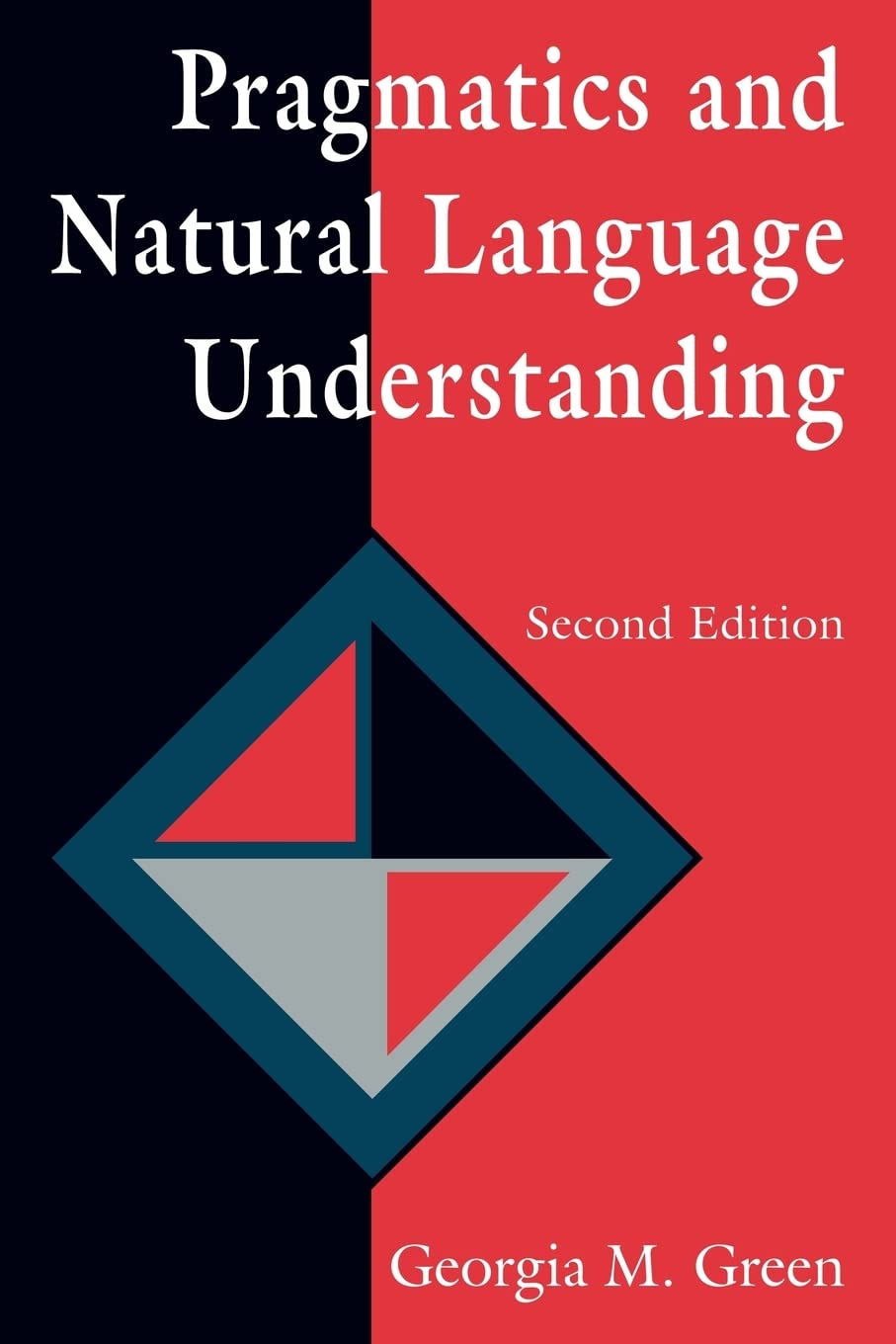
This book differs from other introductions to pragmatics in approaching the problems of interpreting language use in terms of interpersonal modelling of beliefs and intentions. It is intended to make issues involved in language understanding, such as speech, text, and discourse, accessible to the widest group possible not just specialists in linguistics or communication theorists but all scholars and researchers whose enterprises depend on having a useful model of how communicative agents understand utterances and expect their own utterances to be understood.Based on feedback from readers over the past seven years, explanations in every chapter have been improved and updated in this thoroughly revised version of the original text published in 1989. The most extensive revisions concern the relevance of technical notions of mutual and normal belief, and the futility of using the notion 'null context' to describe meaning. In addition, the discussion of implicature now includes an extended explication of 'Grice's Cooperative Principle' which attempts to put it in the context of his theory of meaning and rationality, and to preclude misinterpretations which it has suffered over the past 20 years. The revised chapter exploits the notion of normal belief to improve the account of conversational implicature.
⚠️ WARNING (California Proposition 65):
This product may contain chemicals known to the State of California to cause cancer,
birth defects, or other reproductive harm.
For MAP (Minimum Advertised Price) violations and Intellectual Property (IP) or Trademark concerns, please contact:
support@ergodebooks.com
⚠️ California Proposition 65 Warning: Some products sold on this website may expose you to chemicals known to the State of California to cause cancer, birth defects, or other reproductive harm. For more information, visit www.P65Warnings.ca.gov.