
Title
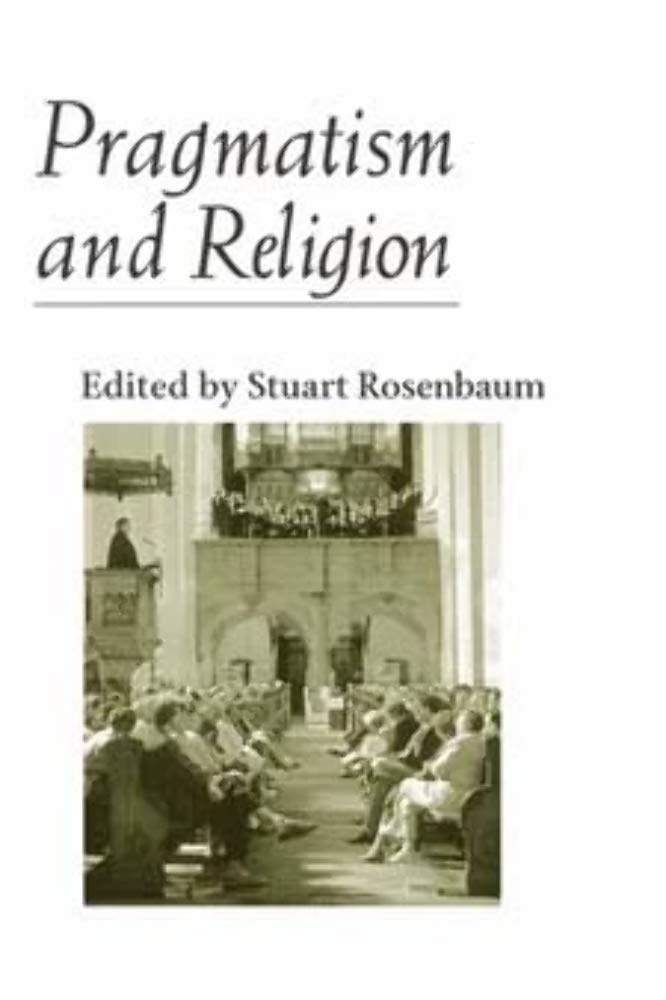
Pragmatism and Religion: CLASSICAL SOURCES AND ORIGINAL ESSAYS,New
Sold by Ergodebooks, an authorized reseller.
Returns accepted within 30 days | support@ergodebooks.com
Shipping Information
- Free Standard Shipping — United States only
- Processing Time: 3–5 business days
- Estimated Delivery: 6–10 business days after dispatch
- Double-boxed, fully insured & discreetly packaged
- Tracking number sent via email once dispatched
Returns & Refund
Returns accepted within 30 days of delivery.
Damaged or Defective Item
Free return shipping + replacement or full refund
Wrong Item Received
Free return shipping + replacement or full refund
Change of Mind
Return shipping at customer's expense · 25% restocking fee applies
Payment Option

This distinctive collection of classical and contemporary readings comes at a time when pragmatism is undergoing a renaissance across a spectrum of disciplines. Pragmatism and Religion addresses an important but overlooked issue: whether or not the deep passions and commitments of American pragmatism's central figures are independent of Western religious traditions.The first of the book's three sections samples pragmatism's religious roots. 'Classical Sources' includes works by John Winthrop, Jonathan Edwards, Henry David Thoreau, and Ralph Waldo Emerson, as well as Charles Sanders Peirce's 'Evolutionary Love,' William James's 'Philosophy' (chapter 18 of The Varieties of Religious Experience), and selections by John Dewey, W. E. B. Du Bois, John McDermott, and Richard Rorty.Part 2, 'Contemporary Essays on the American Tradition of Religious Thought,' features Richard Bernstein's 'Pragmatism's Common Faith,' Stuart Rosenbaum's 'Morality and Religion,' and Robert Westbrook's 'Uncommon Faith,' among others.Part 3, 'Theism, Secularism, and Religion: Seeking a Common Faith' includes Raymond D. Boisvert's 'What Is Religion?' Sandra B. Rosenthal's 'Spirituality and the Spirit of American Pragmatism,' Carl Vaught's 'Dewey's Conception of the Religious Dimension of Experience,' and Steven C. Rockefeller's 'Faith and Ethics in an Interdependent World,' among others.Stuart Rosenbaum's contemporary contributors are among the best in the fields of pragmatism and pragmatism in religion. A unique resource, Pragmatism and Religion will serve students of religion, history, and philosophy, as well as those in interdisciplinary core courses.
⚠️ WARNING (California Proposition 65):
This product may contain chemicals known to the State of California to cause cancer, birth defects, or other reproductive harm.
For more information, please visit www.P65Warnings.ca.gov.
- Q: How many pages does this book have? A: This book has three hundred thirty-six pages. It offers a comprehensive exploration of pragmatism and its relation to religion.
- Q: What is the binding type of this book? A: This book is available in paperback binding. This makes it lightweight and easy to handle for reading or transport.
- Q: What are the dimensions of this book? A: The dimensions of this book are six inches in width, one inch in depth, and nine point zero two inches in height. These measurements make it a standard-sized paperback.
- Q: Who is the author of this book? A: The author of this book is Stuart E. Rosenbaum. He is known for his expertise in pragmatism and religion.
- Q: What topics are covered in this book? A: This book covers the intersection of pragmatism and religion. It includes classical sources and contemporary essays from various scholars.
- Q: Is this book suitable for philosophy students? A: Yes, this book is suitable for philosophy students. It serves as a unique resource for those studying religion, history, and philosophy.
- Q: How can I use this book in my studies? A: You can use this book as a reference for understanding the relationship between pragmatism and religious thought. It includes essays that can enhance discussions in academic settings.
- Q: Is this book appropriate for beginners in philosophy? A: Yes, this book is appropriate for beginners. It provides foundational essays and classical sources that are accessible to new learners.
- Q: Can I use this book for interdisciplinary studies? A: Yes, this book is ideal for interdisciplinary studies. It integrates perspectives from philosophy, religion, and history.
- Q: How should I store this book? A: You should store this book in a cool, dry place. Keeping it away from direct sunlight will help preserve its condition.
- Q: How do I clean this book? A: You can clean this book by gently wiping the cover with a dry cloth. Avoid using water or cleaning solutions to maintain its quality.
- Q: What if my book arrives damaged? A: If your book arrives damaged, you should contact the seller for a return or replacement. Most sellers have policies in place for damaged items.
- Q: Is there a warranty for this book? A: No, there is typically no warranty for books. However, check with the seller for any return policies that may apply.
- Q: What is the main theme of this book? A: The main theme of this book is the exploration of the relationship between pragmatism and religious traditions. It delves into how these concepts influence each other.
- Q: Are there contributions from various authors in this book? A: Yes, this book features contributions from various prominent authors in the fields of pragmatism and religion. This diversity enriches the discussions presented.
- Q: Does this book include classical sources? A: Yes, this book includes classical sources from influential figures like John Winthrop and Ralph Waldo Emerson. These sources provide historical context to the discussions.