
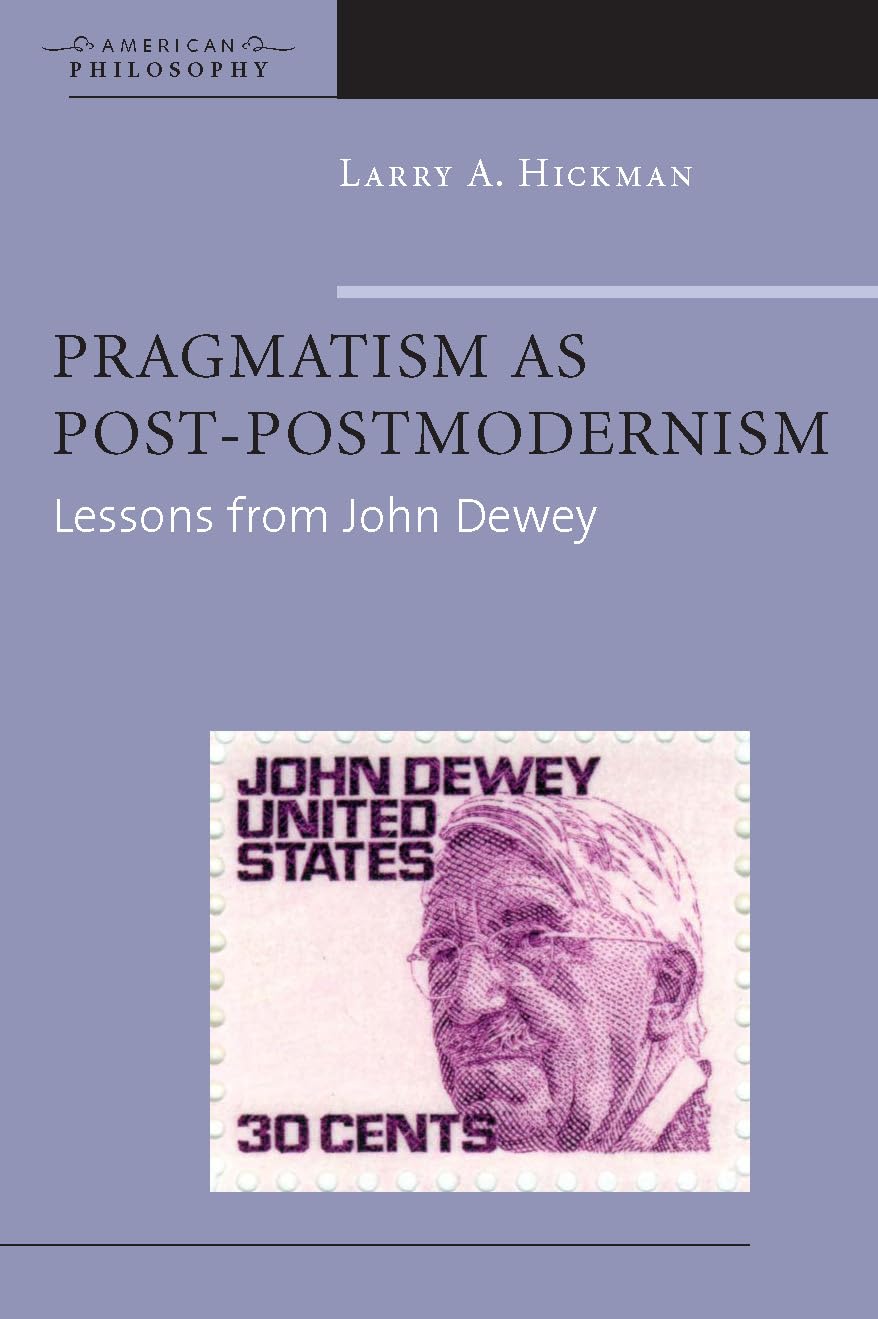
Title
Pragmatism as PostPostmodernism: Lessons from John Dewey (American Philosophy),Used
Sold by Ergodebooks, an authorized reseller.
Returns accepted within 30 days | support@ergodebooks.com
Shipping Information
- Free Standard Shipping — United States only
- Processing Time: 3–5 business days
- Estimated Delivery: 6–10 business days after dispatch
- Double-boxed, fully insured & discreetly packaged
- Tracking number sent via email once dispatched
Returns & Refund
Returns accepted within 30 days of delivery.
Damaged or Defective Item
Free return shipping + replacement or full refund
Wrong Item Received
Free return shipping + replacement or full refund
Change of Mind
Return shipping at customer's expense · 25% restocking fee applies
Payment Option

Larry A. Hickman presents John Dewey as very much at home in the busy mix of contemporary philosophyas a thinker whose work now, more than fifty years after his death, still furnishes fresh insights into cuttingedge philosophical debates. Hickman argues that it is precisely the rich, pluralistic mix of contemporary philosophical discourse, with its competing research programs in Frenchinspired postmodernism, phenomenology, Critical Theory, Heidegger studies, analytic philosophy, and neopragmatismall busily engaging, challenging, and informing one anotherthat invites renewed examination of Deweys central ideas.Hickman offers a Dewey who both anticipated some of the central insights of Frenchinspired postmodernism and, if he were alive today, would certainly be one of its most committed critics, a Dewey who foresaw some of the most trenchant problems associated with fostering global citizenship, and a Dewey whose core ideas are often at odds with those of some of his most ardent neopragmatist interpreters.In the trio of essays that launch this book, Dewey is an observer and critic of some of the central features of Frenchinspired postmodernism and its American cousin, neopragmatism. In the next four, Dewey enters into dialogue with contemporary critics of technology, including Jrgen Habermas, Andrew Feenberg, and Albert Borgmann. The next two essays establish Dewey as an environmental philosopher of the first ranka worthy conversation partner for Holmes Ralston, III, Baird Callicott, Bryan G. Norton, and Aldo Leopold. The concluding essays provide novel interpretations of Deweys views of religious belief, the psychology of habit, philosophical anthropology, and what he termed the epistemology industry.Pragmatism as PostPostmodernism: Lessons from John Dewey is available from the publisher on an openaccess basis.
⚠️ WARNING (California Proposition 65):
This product may contain chemicals known to the State of California to cause cancer, birth defects, or other reproductive harm.
For more information, please visit www.P65Warnings.ca.gov.