
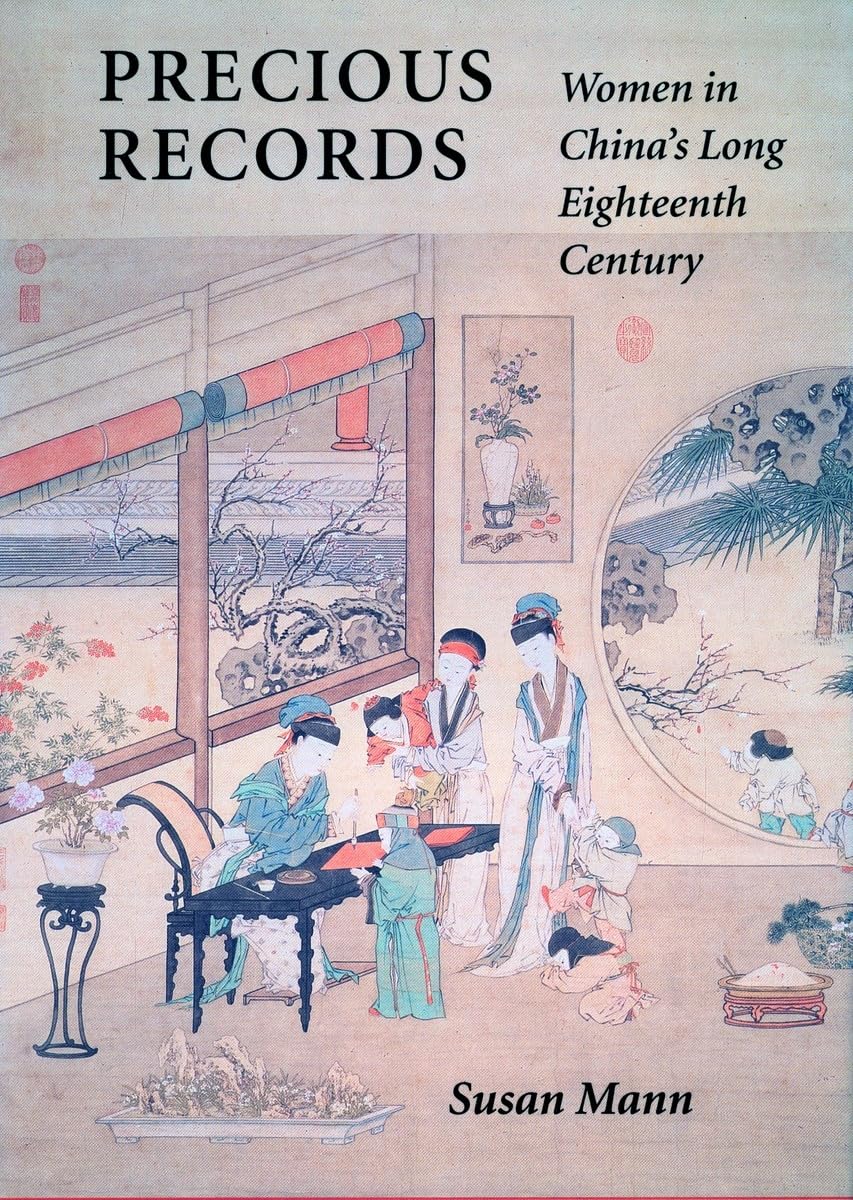
Title
Precious Records: Women in China's Long Eighteenth Century,New
Sold by Ergodebooks, an authorized reseller.
Returns accepted within 30 days | support@ergodebooks.com
Shipping Information
- Free Standard Shipping — United States only
- Processing Time: 3–5 business days
- Estimated Delivery: 6–10 business days after dispatch
- Double-boxed, fully insured & discreetly packaged
- Tracking number sent via email once dispatched
Returns & Refund
Returns accepted within 30 days of delivery.
Damaged or Defective Item
Free return shipping + replacement or full refund
Wrong Item Received
Free return shipping + replacement or full refund
Change of Mind
Return shipping at customer's expense · 25% restocking fee applies
Payment Option

This first booklength study of gender relations in the Lower Yangzi region during the High Qing era (c. 16831839) challenges enduring latenineteenthcentury perspectives that emphasized the oppression and subjugation of Chinese women. Placing women at the center of the High Qing era shows how gender relations shaped the economic, political, social, and cultural changes of the age, and gives us a sense of what women felt and believed, and what they actually did, during this period. Most analyses of gender in High Qing times have focused on literature and on the writings of the elite; this book broadens the scope of inquiry to include women's work in the farm household, courtesan entertainment, and womens participation in ritual observances and religion. In dealing with literature, it shows how women's poetry can serve the historian as well as the literary critic, drawing on one of the first anthologies of women's writing compiled by a woman to examine not only literary sensibilities and intimate emotions, but also political judgments, moral values, and social relations. After an introductory chapter that evaluates the historiography of Chinese women, the book surveys High Qing history, charts the female life course, and discusses women's place in writing and learning, in entertainment, at work, and in religious practice. The concluding chapter returns to broad historiographic questions about where women figure in space and time and why we can no longer write histories that ignore them.
⚠️ WARNING (California Proposition 65):
This product may contain chemicals known to the State of California to cause cancer, birth defects, or other reproductive harm.
For more information, please visit www.P65Warnings.ca.gov.