If you have any questions, you are always welcome to contact us. We'll get back to you as soon as possible, withing 24 hours on weekdays.
Customer service
All questions about your order, return and delivery must be sent to our customer service team by e-mail at yourstore@yourdomain.com
Sale & Press
If you are interested in selling our products, need more information about our brand or wish to make a collaboration, please contact us at press@yourdomain.com
Help
If you have any questions, you are always welcome to contact us. We'll get back to you as soon as possible, withing 24 hours on weekdays.
Customer service
All questions about your order, return and delivery must be sent to our customer service team by e-mail at yourstore@yourdomain.com
Sale & Press
If you are interested in selling our products, need more information about our brand or wish to make a collaboration, please contact us at press@yourdomain.com
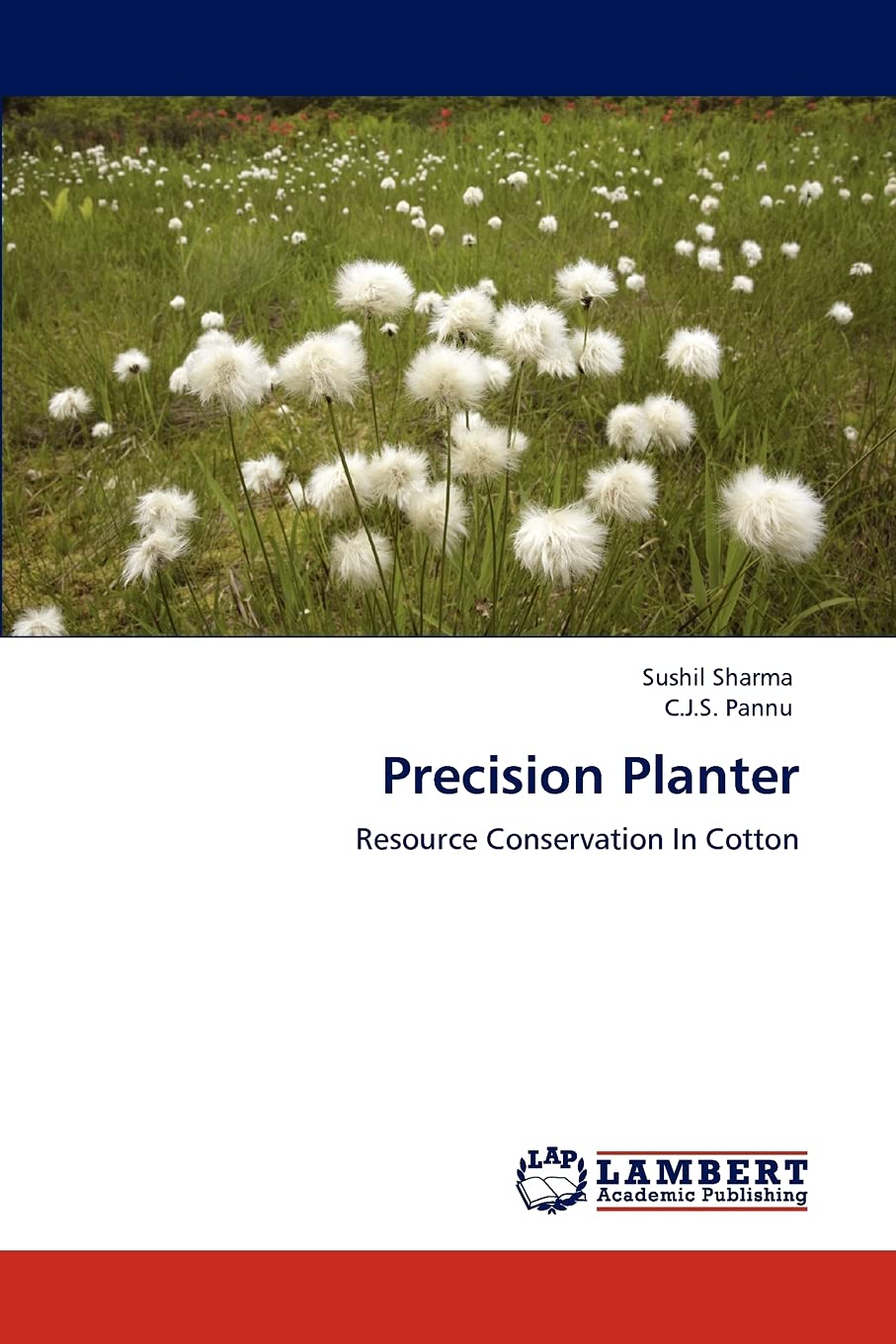
Cotton (Gossypium L.), the king of fibres, is an industrial commodity of worldwide importance. It has the slowest early growth and the lowest nutrient uptake initially which increases rapidly afterwards. Approximately the uptake of 76% of total N, 86% of P and 82% of K take place in cotton between 4999 days after planting. Broadcasting of fertilizers, especially P and K, produces fixation problems due to more soil contact. Nearly 5871%, 3040% and less than 2% of total cotton growing roots are located in the top 20, 2040 and below 40cm soil depth, respectively. Further, it is feasible to grow cotton with reduced tillage. The reducedtillage production methods results into decrease in the number of tractor operations by 41% to 53%, fuel use by 48% to 62% and overall production costs by 14% to 18%. A tractor operated cotton precision planter was developed and evaluated for differential rate application of fertilizers at different depths along rows of seed placement under reduced tillage conditions. The development planter shall be especially useful to professionals in precision farming in cotton, or anyone else who is related to the production in cotton.
⚠️ WARNING (California Proposition 65):
This product may contain chemicals known to the State of California to cause cancer,
birth defects, or other reproductive harm.
For MAP (Minimum Advertised Price) violations and Intellectual Property (IP) or Trademark concerns, please contact:
support@ergodebooks.com
⚠️ California Proposition 65 Warning: Some products sold on this website may expose you to chemicals known to the State of California to cause cancer, birth defects, or other reproductive harm. For more information, visit www.P65Warnings.ca.gov.