
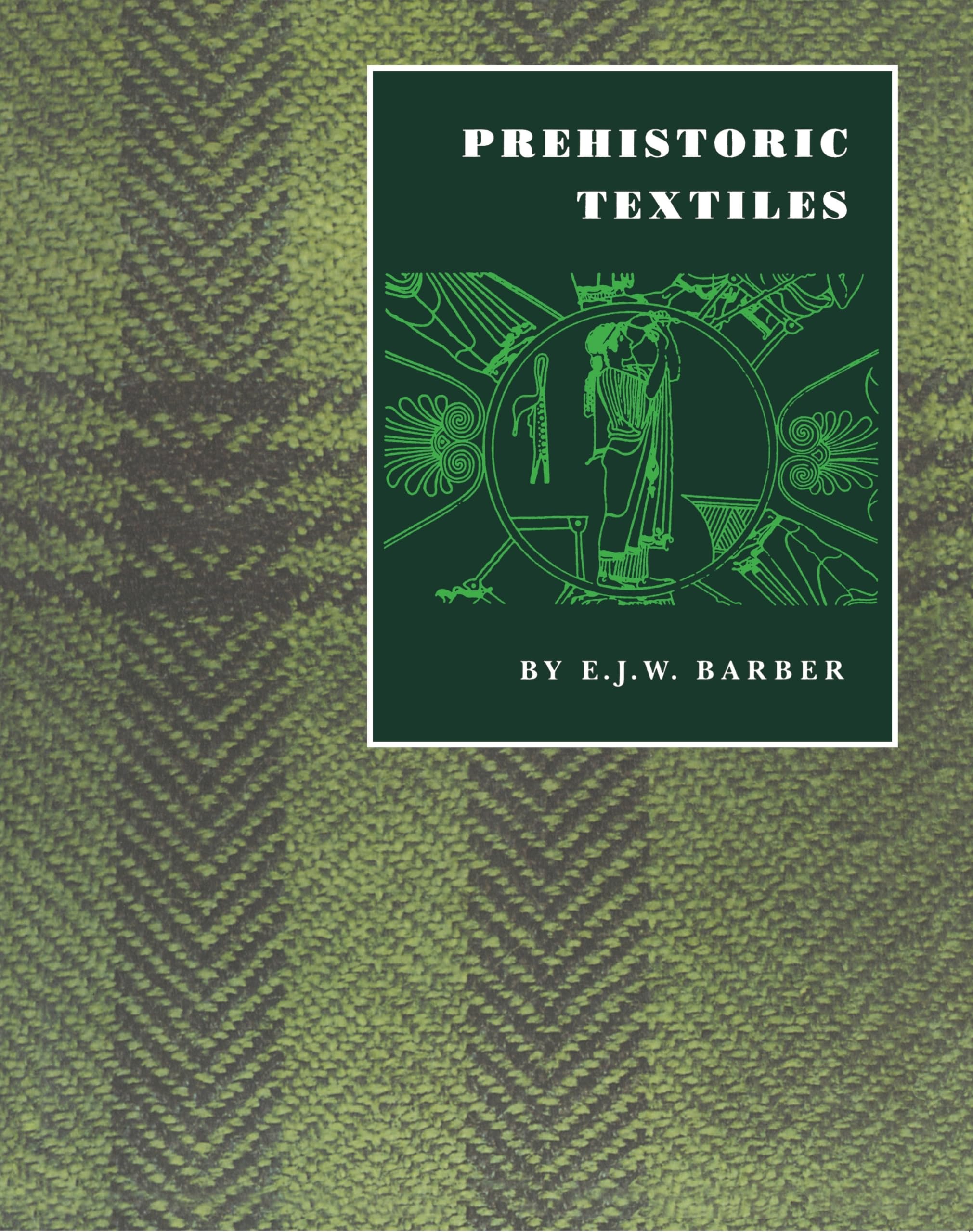
Title
Prehistoric Textiles: The Development Of Cloth In The Neolithic And Bronze Ages With Special Reference To The Aegean,New
Sold by Ergodebooks, an authorized reseller.
Returns accepted within 30 days | support@ergodebooks.com
Shipping Information
- Free Standard Shipping — United States only
- Processing Time: 3–5 business days
- Estimated Delivery: 6–10 business days after dispatch
- Double-boxed, fully insured & discreetly packaged
- Tracking number sent via email once dispatched
Returns & Refund
Returns accepted within 30 days of delivery.
Damaged or Defective Item
Free return shipping + replacement or full refund
Wrong Item Received
Free return shipping + replacement or full refund
Change of Mind
Return shipping at customer's expense · 25% restocking fee applies
Payment Option

This Pioneering Work Revises Our Notions Of The Origins And Early Development Of Textiles In Europe And The Near East. Using Innovative Linguistic Techniques, Along With Methods From Palaeobiology And Other Fields, It Shows That Spinning And Pattern Weaving Began Far Earlier Than Has Been Supposed.Prehistoric Textiles Made An Unsurpassed Leap In The Social And Cultural Understanding Of Textiles In Humankind'S Early History. Cloth Making Was An Industry That Consumed More Time And Effort, And Was More Culturally Significant To Prehistoric Cultures, Than Anyone Assumed Before The Book'S Publication. The Textile Industry Is In Fact Older Than Potteryand Perhaps Even Older Than Agriculture And Stockbreeding. It Probably Consumed Far More Hours Of Labor Per Year, In Temperate Climates, Than Did Pottery And Food Production Put Together. And This Work Was Done Primarily By Women. Up Until The Industrial Revolution, And Into This Century In Many Peasant Societies, Women Spent Every Available Moment Spinning, Weaving, And Sewing.The Author, Elizabeth Wayland Barber, Demonstrates Command Of An Almost Unbelievably Disparate Array Of Disciplinesfrom Historical Linguistics To Archaeology And Paleobiology, From Art History To The Practical Art Of Weaving. Her Passionate Interest In The Subject Matter Leaps Out On Every Page. Barber, A Professor Of Linguistics And Archaeology, Developed Expert Sewing And Weaving Skills As A Small Girl Under Her Mother'S Tutelage. One Could Say She Had Been Born And Raised To Write This Book.Because Modern Textiles Are Almost Entirely Made By Machines, We Have Difficulty Appreciating How Timeconsuming And Important The Premodern Textile Industry Was. This Book Opens Our Eyes To This Crucial Area Of Prehistoric Human Culture.
⚠️ WARNING (California Proposition 65):
This product may contain chemicals known to the State of California to cause cancer, birth defects, or other reproductive harm.
For more information, please visit www.P65Warnings.ca.gov.
- Q: How many pages are in the book? A: This book has four hundred seventy-one pages. It provides an in-depth exploration of prehistoric textiles and their cultural significance.
- Q: What is the binding type of this book? A: The binding type is paperback. This makes it flexible and easier to handle for reading.
- Q: What are the dimensions of the book? A: The book measures seven point seventeen inches in length, one point fifteen inches in width, and nine point thirty-seven inches in height. These dimensions make it a manageable size for reading.
- Q: Who is the author of this book? A: The author is E.J.W. Barber. She is a professor with expertise in linguistics and archaeology.
- Q: What historical period does the book focus on? A: The book focuses on the Neolithic and Bronze Ages. It discusses the development of textiles during these crucial periods in history.
- Q: How do I use this book for research? A: You can use this book as a primary source for studying the origins of textiles. It’s particularly useful for historians and students of archaeology.
- Q: Is this book suitable for beginners in textile history? A: Yes, the book is suitable for beginners. It provides clear insights and is well-structured for readers new to the topic.
- Q: What themes are explored in this book? A: The book explores themes of cultural significance, women's roles in textile production, and the evolution of weaving techniques. These themes highlight the importance of textiles in prehistoric societies.
- Q: How should I care for this book? A: Keep the book in a cool, dry place away from direct sunlight. Avoid exposing it to excessive moisture to ensure its longevity.
- Q: Can I read this book in a noisy environment? A: Yes, you can read this book in a noisy environment. Its engaging narrative can capture attention even amidst distractions.
- Q: What if the book arrives damaged? A: If the book arrives damaged, contact the seller for a return or replacement. Most sellers have policies in place to handle such issues.
- Q: Is there a warranty on this book? A: No, books typically do not come with a warranty. However, check the seller's return policy for options regarding damaged items.
- Q: How is this book different from other history books? A: This book differs by focusing specifically on textiles and their role in early societies, rather than broader historical events. It offers a unique perspective on cultural development.
- Q: Is there a glossary or index in the book? A: Yes, the book includes an index. This helps readers locate specific topics related to prehistoric textiles efficiently.
- Q: What type of audience would benefit from this book? A: Academics, textile enthusiasts, and anyone interested in prehistoric cultures would benefit from this book. Its insights are valuable across multiple disciplines.
- Q: Does the book include illustrations or photographs? A: Yes, the book includes illustrations that complement the text. These visual aids help readers understand the textile techniques discussed.