
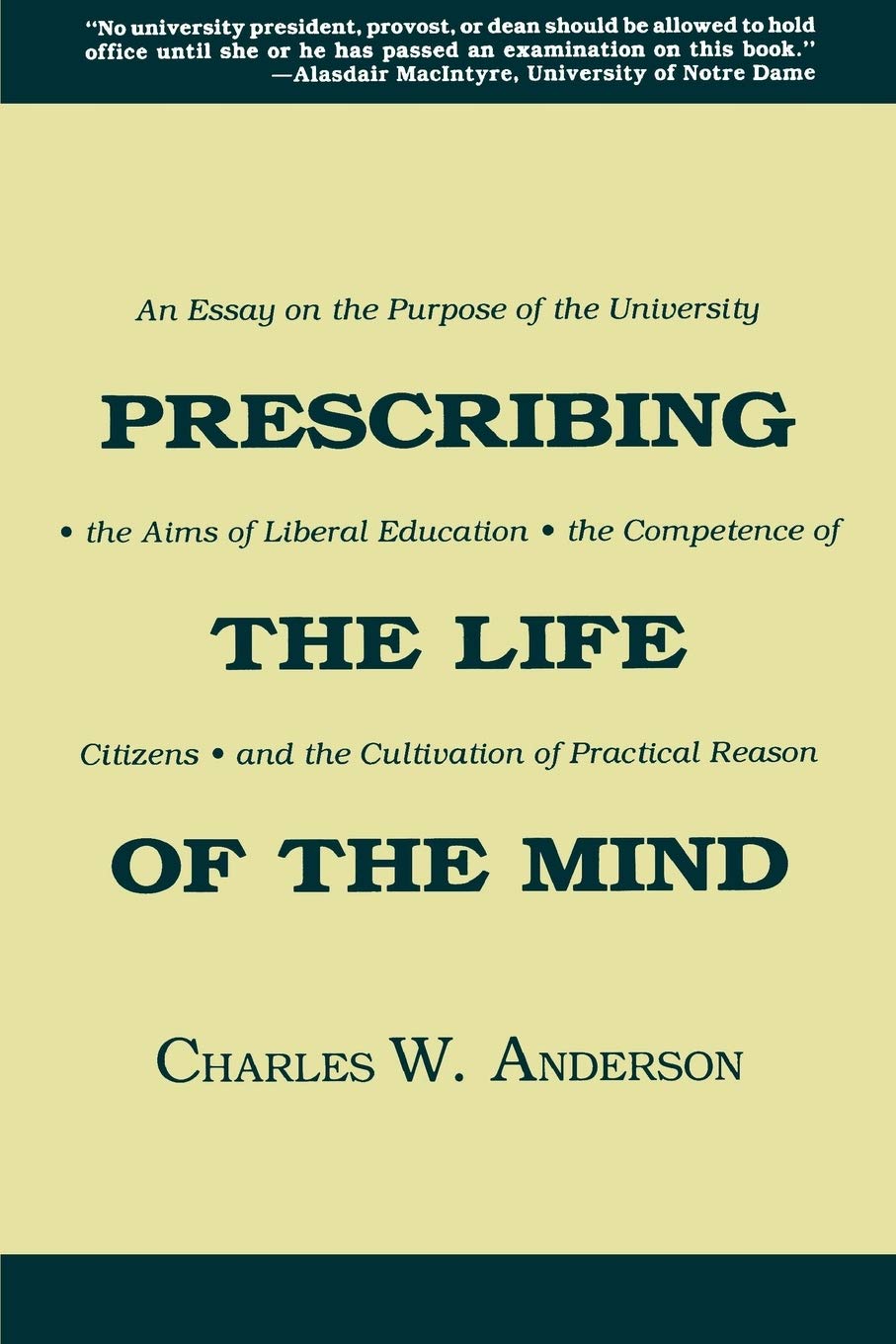
Title
Prescribing the Life of the Mind: An Essay on the Purpose of the University, the Aims of Liberal Education, the Competence of Ci,New
Sold by Ergodebooks, an authorized reseller.
Returns accepted within 30 days | support@ergodebooks.com
Shipping Information
- Free Standard Shipping — United States only
- Processing Time: 3–5 business days
- Estimated Delivery: 6–10 business days after dispatch
- Double-boxed, fully insured & discreetly packaged
- Tracking number sent via email once dispatched
Returns & Refund
Returns accepted within 30 days of delivery.
Damaged or Defective Item
Free return shipping + replacement or full refund
Wrong Item Received
Free return shipping + replacement or full refund
Change of Mind
Return shipping at customer's expense · 25% restocking fee applies
Payment Option

A distinguished political philosopher with years of experience teaching in undergraduate liberal arts programs, Anderson shows how the ideal of practical reason can reconcile academias research aims with public expectations for universities: the preparation of citizens, the training of professionals, the communication of a cultural inheritance. It is not good enough, he contends, to simply say that the university should stick to the great books of the classic tradition, or to denounce this tradition and declare that all important questions are a matter of personal or cultural choice. By applying the methods of practical reason, instead, teachers and students will think critically about the essential purposes of any human activity and the underlying arguments of any text.
⚠️ WARNING (California Proposition 65):
This product may contain chemicals known to the State of California to cause cancer, birth defects, or other reproductive harm.
For more information, please visit www.P65Warnings.ca.gov.
- Q: What is the main subject of 'Prescribing the Life of the Mind'? A: 'Prescribing the Life of the Mind' explores the purposes of the university, the goals of liberal education, and the development of practical reasoning in citizens.
- Q: Who is the author of this book? A: The author of 'Prescribing the Life of the Mind' is Charles W. Anderson, a distinguished political philosopher with extensive teaching experience.
- Q: What is the publication date of this book? A: The book was published on January 15, 1996.
- Q: Is this book suitable for undergraduate students? A: Yes, the book is particularly relevant for undergraduate students as it addresses the aims of liberal education and the preparation of citizens.
- Q: What is the format of 'Prescribing the Life of the Mind'? A: The book is available in paperback format.
- Q: How many pages does the book contain? A: 'Prescribing the Life of the Mind' has a total of 173 pages.
- Q: What edition of the book is currently available? A: The book is available in a new edition.
- Q: What is the condition of the book? A: The book is brand new.
- Q: What insights does the author provide about practical reason? A: The author argues that practical reason can bridge the gap between academic research and public expectations, emphasizing critical thinking about human activities and texts.
- Q: Does the book discuss the classic tradition in education? A: Yes, the book critiques both adherence to the classic tradition and the rejection of it, advocating for a balanced approach through practical reasoning.