
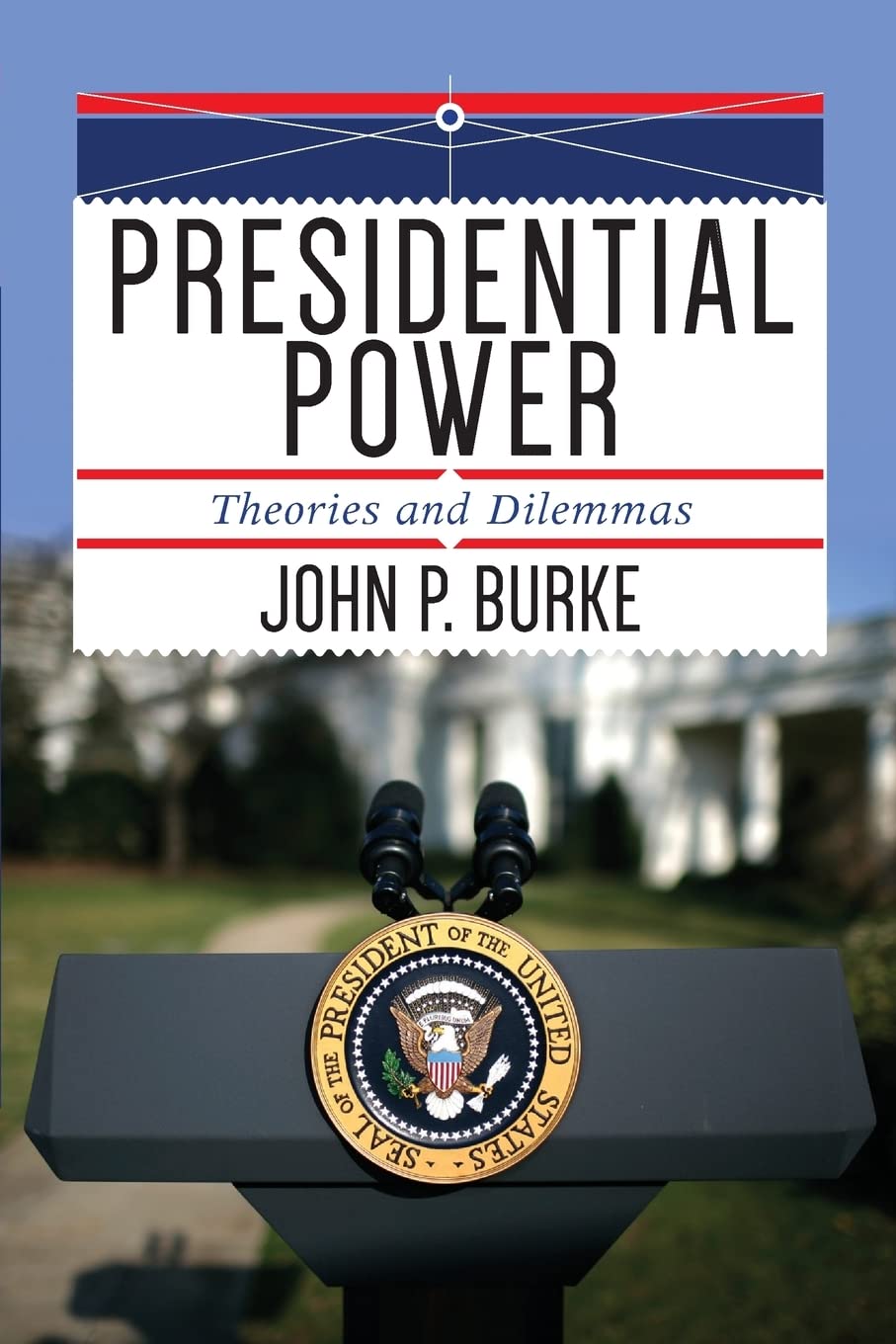
Title
Presidential Power: Theories And Dilemmas,Used
Sold by Ergodebooks, an authorized reseller.
Returns accepted within 30 days | support@ergodebooks.com
Shipping Information
- Free Standard Shipping — United States only
- Processing Time: 3–5 business days
- Estimated Delivery: 6–10 business days after dispatch
- Double-boxed, fully insured & discreetly packaged
- Tracking number sent via email once dispatched
Returns & Refund
Returns accepted within 30 days of delivery.
Damaged or Defective Item
Free return shipping + replacement or full refund
Wrong Item Received
Free return shipping + replacement or full refund
Change of Mind
Return shipping at customer's expense · 25% restocking fee applies
Payment Option

Presidential power is perhaps one of the most central issues in the study of the American presidency. Since Richard E. Neustadt's classic study, first published in 1960, there has not been a book that thoroughly examines the issue of presidential power. Presidential Power: Theories and Dilemmas by noted scholar John P. Burke provides an updated and comprehensive look at the issues, constraints, and exercise of presidential power.This book considers the enduring question of how presidents can effectively exercise power within our system of shared powers by examining major tools and theories of presidential power, including Neustadt's theory of persuasion and bargaining as power, constitutional and inherent powers, Samuel Kernell's theory of going public, models of historical time, and the notion of internal time. Using illustrative examples from historical and contemporary presidencies, Burke helps students and scholars better understand how presidents can manage the public's expectations, navigate presidentialcongressional relations, and exercise influence in order to achieve their policy goals.
⚠️ WARNING (California Proposition 65):
This product may contain chemicals known to the State of California to cause cancer, birth defects, or other reproductive harm.
For more information, please visit www.P65Warnings.ca.gov.
- Q: What is the page count of 'Presidential Power: Theories and Dilemmas'? A: This book has two hundred seventy-two pages. It provides an in-depth exploration of presidential power and its complexities.
- Q: What are the dimensions of this book? A: The book measures five point ninety-eight inches in length, zero point sixty-three inches in width, and nine point zero two inches in height. These dimensions make it portable and easy to handle.
- Q: What type of binding does this book have? A: This book is available in paperback binding. This choice of binding is typically lightweight and flexible, making it user-friendly.
- Q: How do I read 'Presidential Power: Theories and Dilemmas' effectively? A: To read this book effectively, start by reviewing the introduction and key concepts before diving into the chapters. This will help you grasp the foundational theories of presidential power.
- Q: Is this book suitable for beginners in political science? A: Yes, this book is suitable for beginners in political science. It provides comprehensive insights into presidential power while being accessible to new learners.
- Q: What age group is this book appropriate for? A: This book is appropriate for readers aged sixteen and older. Its themes and discussions are designed for a mature audience.
- Q: How should I store 'Presidential Power: Theories and Dilemmas'? A: Store this book in a cool, dry place away from direct sunlight. This will help preserve its condition and longevity.
- Q: Can I clean the book if it gets dirty? A: Yes, you can clean the book carefully. Use a soft, dry cloth to gently wipe the cover and pages to avoid damage.
- Q: What if I accidentally damage the book during use? A: If the book is damaged, you can repair minor tears with book repair tape. For significant damage, consider contacting the seller for replacement options.
- Q: How does this book compare to others on presidential power? A: This book offers a comprehensive analysis that is unmatched by other works. It updates classic theories with contemporary examples, making it unique.
- Q: Is 'Presidential Power: Theories and Dilemmas' suitable for academic use? A: Yes, this book is suitable for academic use. It is often recommended for courses on American government and political science.
- Q: What makes this book different from Richard E. Neustadt's study? A: This book expands on Neustadt's theories while incorporating new perspectives and examples from recent presidencies, providing a more updated view.
- Q: Are there illustrations in this book? A: No, this book does not contain illustrations. It focuses on text to convey complex ideas about presidential power.
- Q: Who is the author of this book? A: The author of this book is John P. Burke. He is a noted scholar in the field of political science, specializing in the presidency.
- Q: What is the main theme explored in this book? A: The main theme explored is the complexities and constraints of presidential power in the American political system. It delves into various theories and tools used by presidents.