If you have any questions, you are always welcome to contact us. We'll get back to you as soon as possible, withing 24 hours on weekdays.
Customer service
All questions about your order, return and delivery must be sent to our customer service team by e-mail at yourstore@yourdomain.com
Sale & Press
If you are interested in selling our products, need more information about our brand or wish to make a collaboration, please contact us at press@yourdomain.com
Help
If you have any questions, you are always welcome to contact us. We'll get back to you as soon as possible, withing 24 hours on weekdays.
Customer service
All questions about your order, return and delivery must be sent to our customer service team by e-mail at yourstore@yourdomain.com
Sale & Press
If you are interested in selling our products, need more information about our brand or wish to make a collaboration, please contact us at press@yourdomain.com
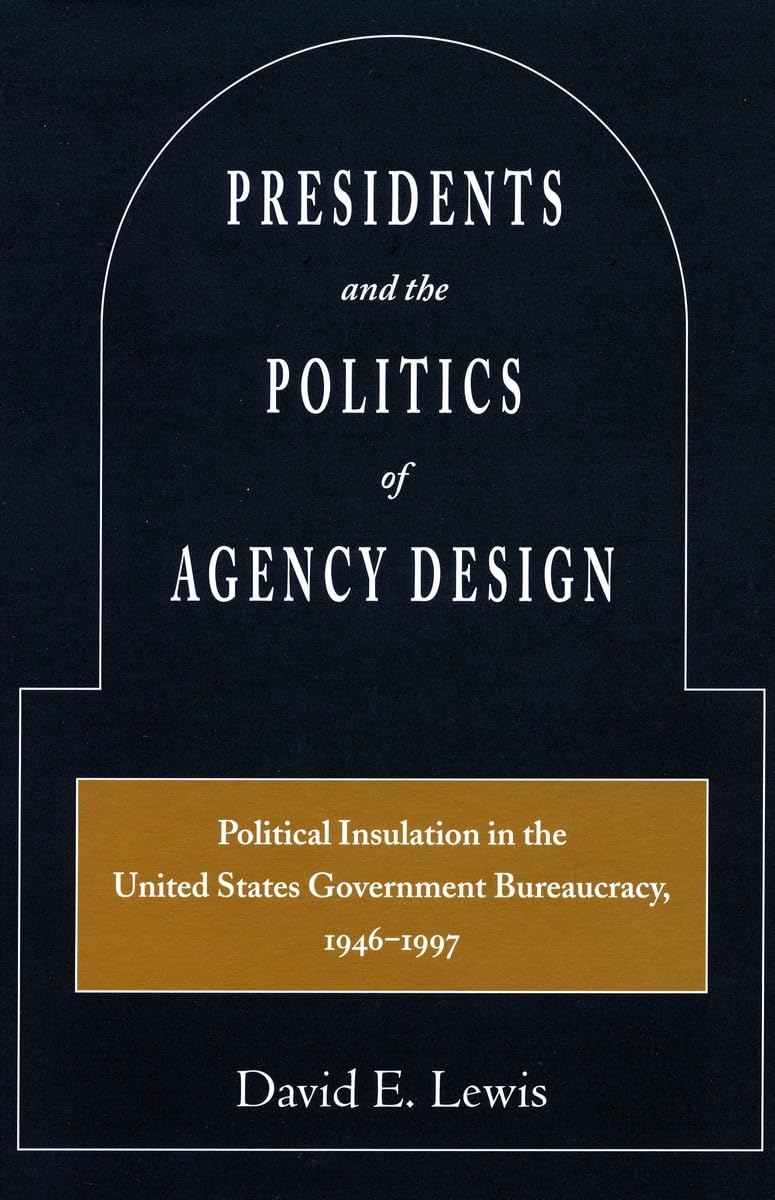
The administrative state is the nexus of American policy making in the postwar period. The vague and sometimes conflicting policy mandates of Congress, the president, and courts are translated into real public policy in the bureaucracy. As the role of the national government has expanded, the national legislature and executive have increasingly delegated authority to administrative agencies to make fundamental policy decisions. How this administrative state is designed, its coherence, its responsiveness, and its efficacy determine, in Robert Dahls phrase, who gets what, when, and how. This study of agency design, thus, has implications for the study of politics in many areas. The structure of bureaucracies can determine the degree to which political actors can change the direction of agency policy. Politicians frequently attempt to lock their policy preferences into place through insulating structures that are mandated by statute or executive decree. This insulation of public bureaucracies such as the National Transportation Safety Board, the Federal Election Commission, and the National Nuclear Security Administration, is essential to understanding both administrative policy outputs and executivelegislative politics in the United States. This book explains why, when, and how political actors create administrative agencies in such a way as to insulate them from political control, particularly presidential control.
⚠️ WARNING (California Proposition 65):
This product may contain chemicals known to the State of California to cause cancer,
birth defects, or other reproductive harm.
For MAP (Minimum Advertised Price) violations and Intellectual Property (IP) or Trademark concerns, please contact:
support@ergodebooks.com
⚠️ California Proposition 65 Warning: Some products sold on this website may expose you to chemicals known to the State of California to cause cancer, birth defects, or other reproductive harm. For more information, visit www.P65Warnings.ca.gov.