If you have any questions, you are always welcome to contact us. We'll get back to you as soon as possible, withing 24 hours on weekdays.
Customer service
All questions about your order, return and delivery must be sent to our customer service team by e-mail at yourstore@yourdomain.com
Sale & Press
If you are interested in selling our products, need more information about our brand or wish to make a collaboration, please contact us at press@yourdomain.com
Help
If you have any questions, you are always welcome to contact us. We'll get back to you as soon as possible, withing 24 hours on weekdays.
Customer service
All questions about your order, return and delivery must be sent to our customer service team by e-mail at yourstore@yourdomain.com
Sale & Press
If you are interested in selling our products, need more information about our brand or wish to make a collaboration, please contact us at press@yourdomain.com
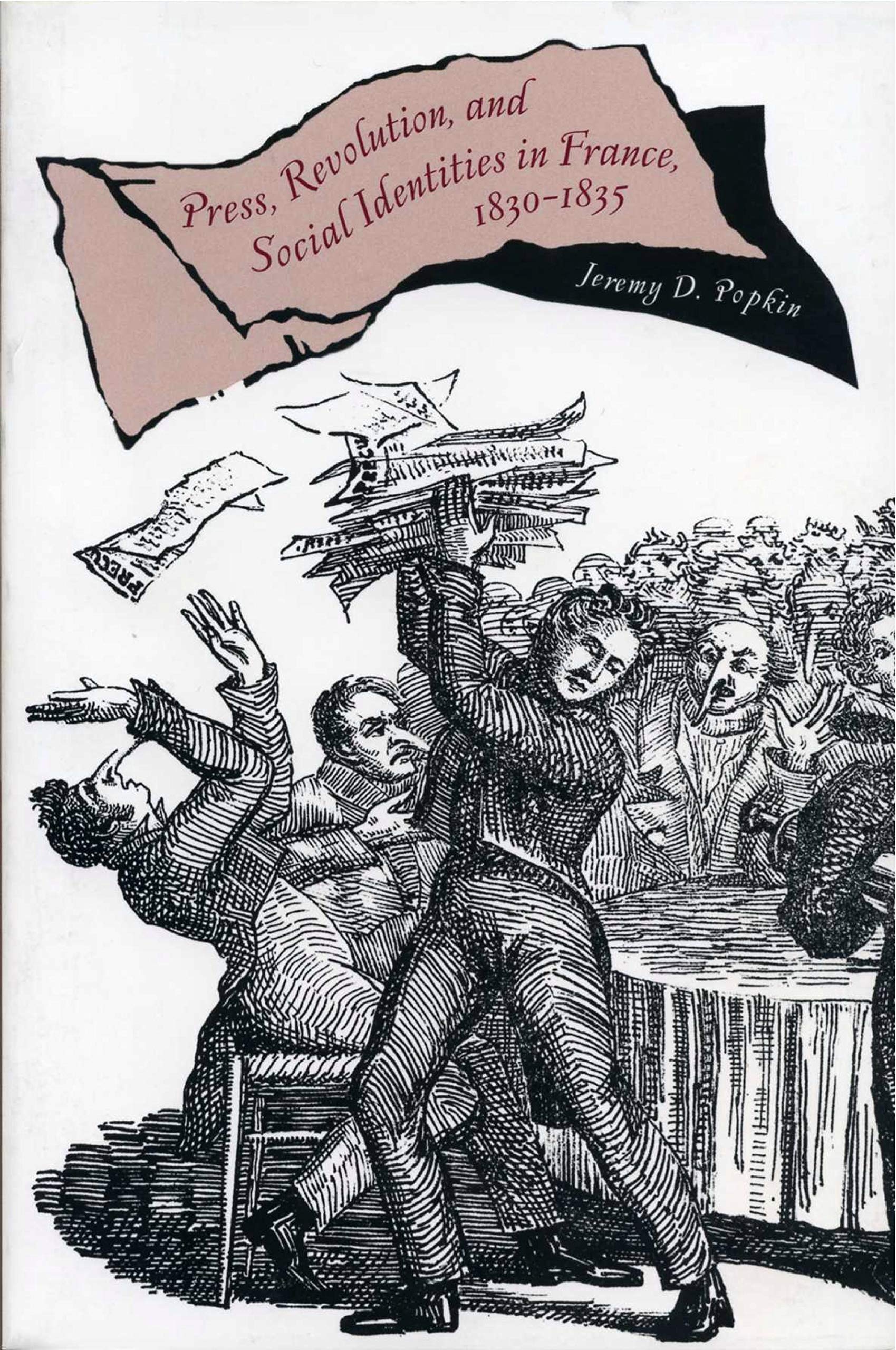
In this innovative study of the press during the French Revolutionary crisis of the early 1830s, Jeremy Popkin shows that newspapers played a crucial role in defining a new repertoire of identitiesfor workers, women, and members of the middle classesthat redefined Europes public sphere.Nowhere was this process more visible than in Lyon, the great manufacturing center where the aftershocks of the July Revolution of 1830 were strongest. In July 1830 Lyons population had rallied around its liberal newspaper and opposed the conservative Restoration government. In less than two years, however, Lyons press and its public opinion, like those of the country as a whole, had become irrevocably fragmented. Popkin shows how the structure of the "journalistic field" in liberal society multiplied political conflicts and produced new tensions between the domains of politics and culture. New periodicals appeared claiming to speak for workers, for women, and for the local interests of Lyon. The public was becoming inherently plural with the emergence of new "imagined communities" that would dominate French public life well into the twentieth century.Jeremy Popkin is well known for his earlier studies of journalism during the eighteenth century and the French Revolution. In Press, Revolution, and Social Identities in France, he not only moves forward in time but also offers a new model for a cultural history of journalism and its relationship to literature.
⚠️ WARNING (California Proposition 65):
This product may contain chemicals known to the State of California to cause cancer,
birth defects, or other reproductive harm.
For MAP (Minimum Advertised Price) violations and Intellectual Property (IP) or Trademark concerns, please contact:
support@ergodebooks.com
⚠️ California Proposition 65 Warning: Some products sold on this website may expose you to chemicals known to the State of California to cause cancer, birth defects, or other reproductive harm. For more information, visit www.P65Warnings.ca.gov.