
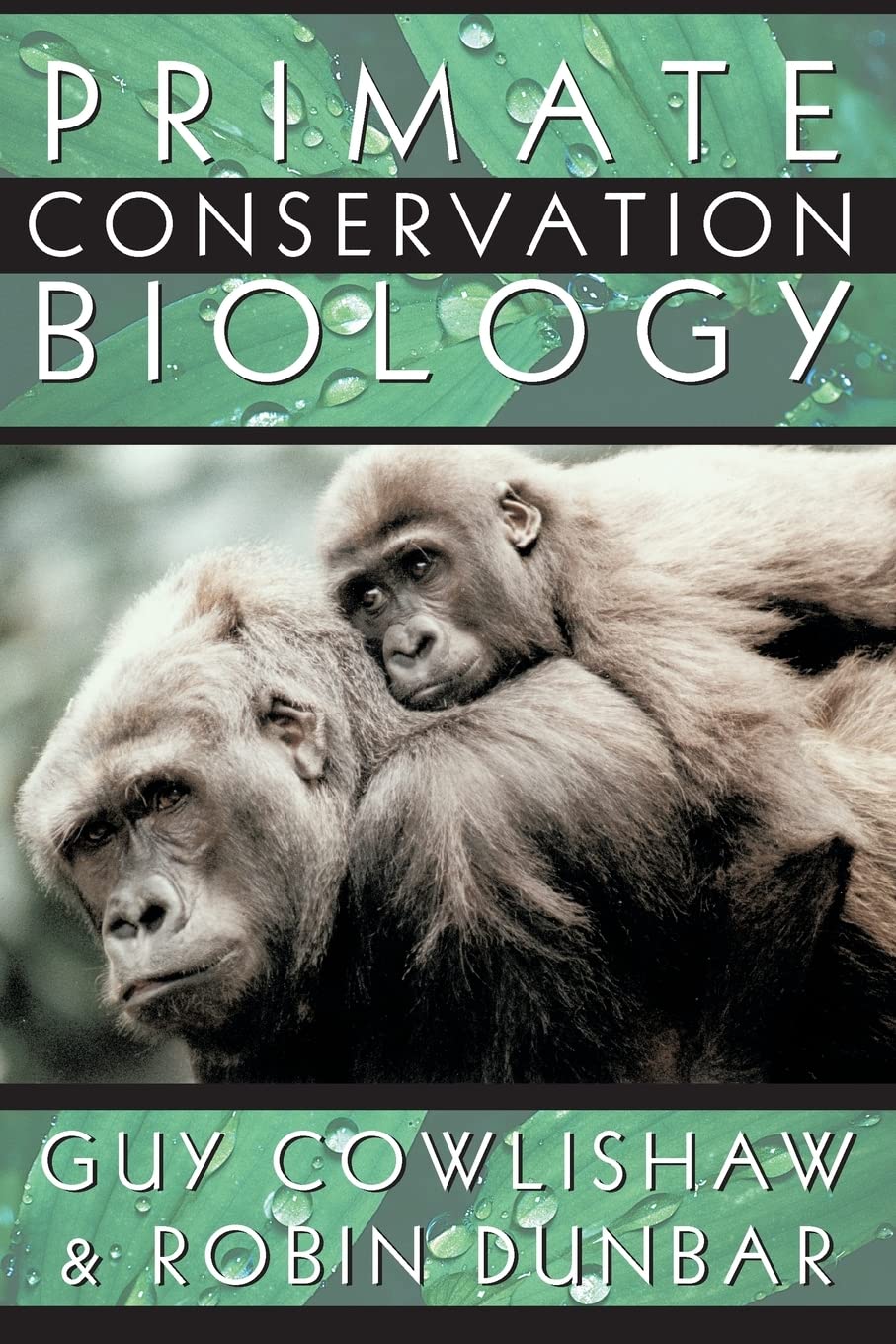
Title
Primate Conservation Biology,Used
Sold by Ergodebooks, an authorized reseller.
Returns accepted within 30 days | support@ergodebooks.com
Shipping Information
- Free Standard Shipping — United States only
- Processing Time: 3–5 business days
- Estimated Delivery: 6–10 business days after dispatch
- Double-boxed, fully insured & discreetly packaged
- Tracking number sent via email once dispatched
Returns & Refund
Returns accepted within 30 days of delivery.
Damaged or Defective Item
Free return shipping + replacement or full refund
Wrong Item Received
Free return shipping + replacement or full refund
Change of Mind
Return shipping at customer's expense · 25% restocking fee applies
Payment Option

From The Snubnosed Monkeys Of China To The Mountain Gorillas Of Central Africa, Our Closest Nonhuman Relatives Are In Critical Danger Worldwide. A Recent Report, For Example, Warns That Nearly 20 Percent Of The World'S Primates May Go Extinct Within The Next Ten Or Twenty Years. In This Book Guy Cowlishaw And Robin Dunbar Integrate Cuttingedge Theoretical Advances With Practical Management Priorities To Give Scientists And Policymakers The Tools They Need To Help Keep These Species From Disappearing Forever.Primate Conservation Biology Begins With Detailed Overviews Of The Diversity, Life History, Ecology, And Behavior Of Primates And The Ways These Factors Influence Primate Abundance And Distribution. Cowlishaw And Dunbar Then Discuss The Factors That Put Primates At The Greatest Risk Of Extinction, Especially Habitat Disturbance And Hunting. The Remaining Chapters Present A Comprehensive Review Of Conservation Strategies And Management Practices, Highlighting The Key Issues That Must Be Addressed To Protect Primates For The Future.
⚠️ WARNING (California Proposition 65):
This product may contain chemicals known to the State of California to cause cancer, birth defects, or other reproductive harm.
For more information, please visit www.P65Warnings.ca.gov.
- Q: How many pages does this book have? A: This book has four hundred ninety-eight pages. It provides an in-depth exploration of primate conservation issues.
- Q: What is the binding type of this book? A: The binding type of this book is paperback. This makes it lightweight and easy to handle.
- Q: What is the size of this book? A: The dimensions of this book are approximately nine point zero six inches in length, six point zero six inches in width, and one point one four inches in height.
- Q: Who are the authors of this book? A: The authors of this book are Guy Cowlishaw and Robin Dunbar. They are recognized experts in primate biology and conservation.
- Q: What is the main topic of this book? A: The main topic of this book is primate conservation biology. It discusses the challenges and strategies for protecting endangered primate species.
- Q: What type of audience is this book suitable for? A: This book is suitable for academics, conservationists, and policymakers interested in primate biology. It integrates theoretical advances with practical management priorities.
- Q: How should I read this book? A: You can read this book at your own pace. It is structured to allow both casual readers and professionals to engage with the content effectively.
- Q: Is this book appropriate for beginners in conservation? A: Yes, this book is suitable for beginners. It provides foundational knowledge while also addressing complex conservation strategies.
- Q: How do I care for this book? A: To care for this book, keep it in a dry place away from direct sunlight. Avoid bending the spine to maintain its condition.
- Q: Can I store this book on a shelf? A: Yes, you can store this book on a shelf. Ensure it is upright and supported to prevent damage to the binding.
- Q: What if my copy arrives damaged? A: If your copy arrives damaged, contact the seller for a return or exchange. Most sellers have a return policy for damaged items.
- Q: Does this book include illustrations? A: Yes, this book includes illustrations that enhance the understanding of primate biology and conservation.
- Q: Is there a glossary in this book? A: Yes, this book includes a glossary of terms related to primate conservation. It helps clarify complex terminology for readers.
- Q: What makes this book a valuable resource? A: This book is valuable because it combines scientific research with practical conservation strategies. It addresses urgent issues facing primates today.
- Q: Is this book part of a series? A: No, this book is a standalone title. It focuses specifically on primate conservation biology without being part of a series.