
Title
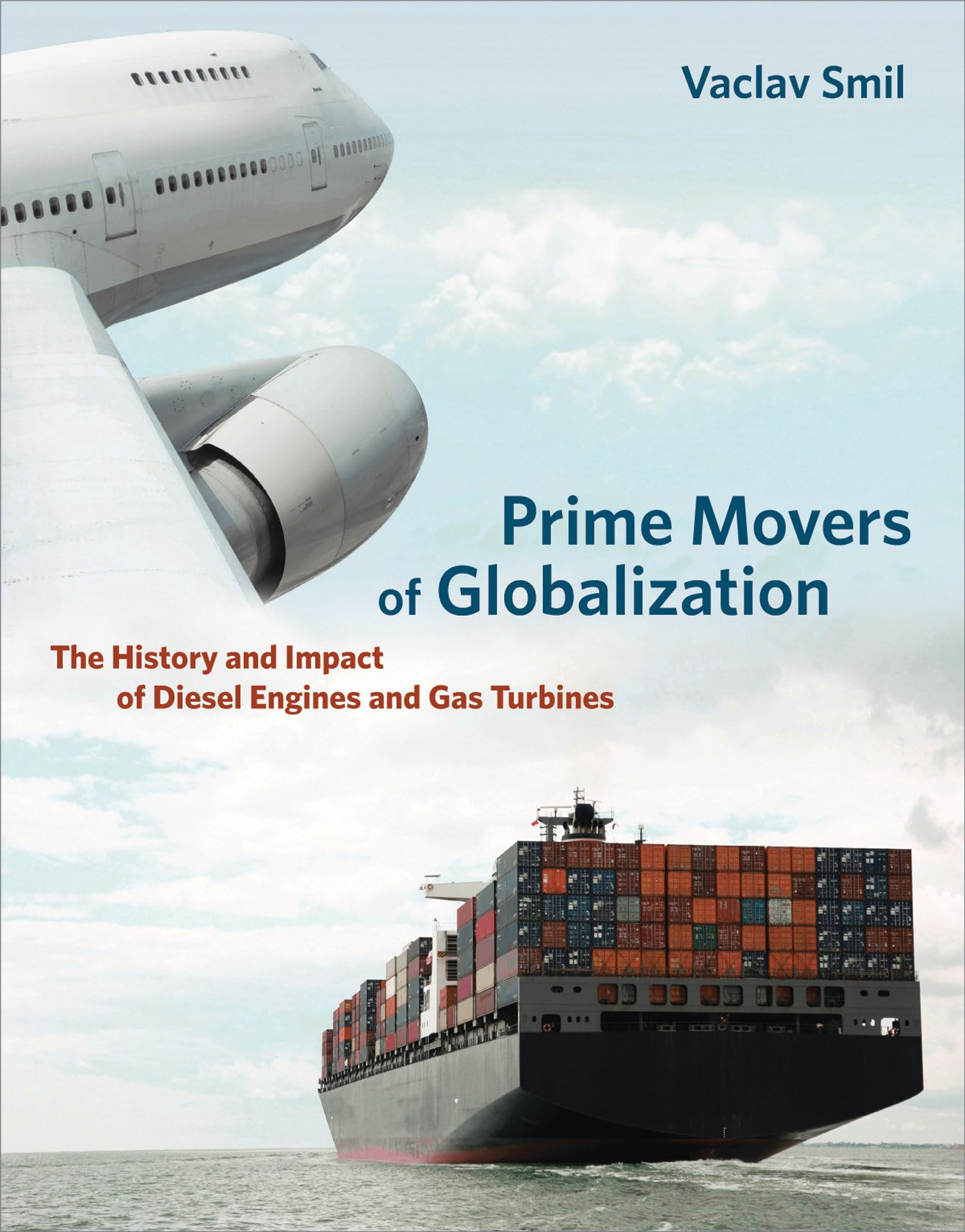
Prime Movers of Globalization: The History and Impact of Diesel Engines and Gas Turbines (Mit Press),New
Sold by Ergodebooks, an authorized reseller.
Returns accepted within 30 days | support@ergodebooks.com
Shipping Information
- Free Standard Shipping — United States only
- Processing Time: 3–5 business days
- Estimated Delivery: 6–10 business days after dispatch
- Double-boxed, fully insured & discreetly packaged
- Tracking number sent via email once dispatched
Returns & Refund
Returns accepted within 30 days of delivery.
Damaged or Defective Item
Free return shipping + replacement or full refund
Wrong Item Received
Free return shipping + replacement or full refund
Change of Mind
Return shipping at customer's expense · 25% restocking fee applies
Payment Option

The story of how diesel engines and gas turbines, used to power cargo ships and jet airplanes, made today's globally integrated economy possible.The many books on globalization published over the past few years range from claims that the world is flat to an unlikely rehabilitation of Genghis Khan as a pioneer of global commerce. Missing from these accounts is a consideration of the technologies behind the creation of the globalized economy. What makes it possible for us to move billions of tons of raw materials and manufactured goods from continent to continent? Why are we able to fly almost anywhere on the planet within twentyfour hours? In Prime Movers of Globalization, Vaclav Smil offers a history of two key technical developments that have driven globalization: the highcompression nonsparking internal combustion engines invented by Rudolf Diesel in the 1890s and the gas turbines designed by Frank Whittle and HansJoachim Pabst von Ohain in the 1930s. The massive diesel engines that power cargo ships and the gas turbines that propel jet engines, Smil argues, are more important to the global economy than any corporate structure or international trade agreement. Smil compares the efficiency and scale of these two technologies to prime movers of the past, including the sail and the steam engine. The lengthy processes of development, commercialization, and diffusion that the diesel engine and the gas turbine went through, he argues, provide perfect examples of gradual technical advances that receive little attention but have resulted in epochal shifts in global affairs and the global economy.
⚠️ WARNING (California Proposition 65):
This product may contain chemicals known to the State of California to cause cancer, birth defects, or other reproductive harm.
For more information, please visit www.P65Warnings.ca.gov.