
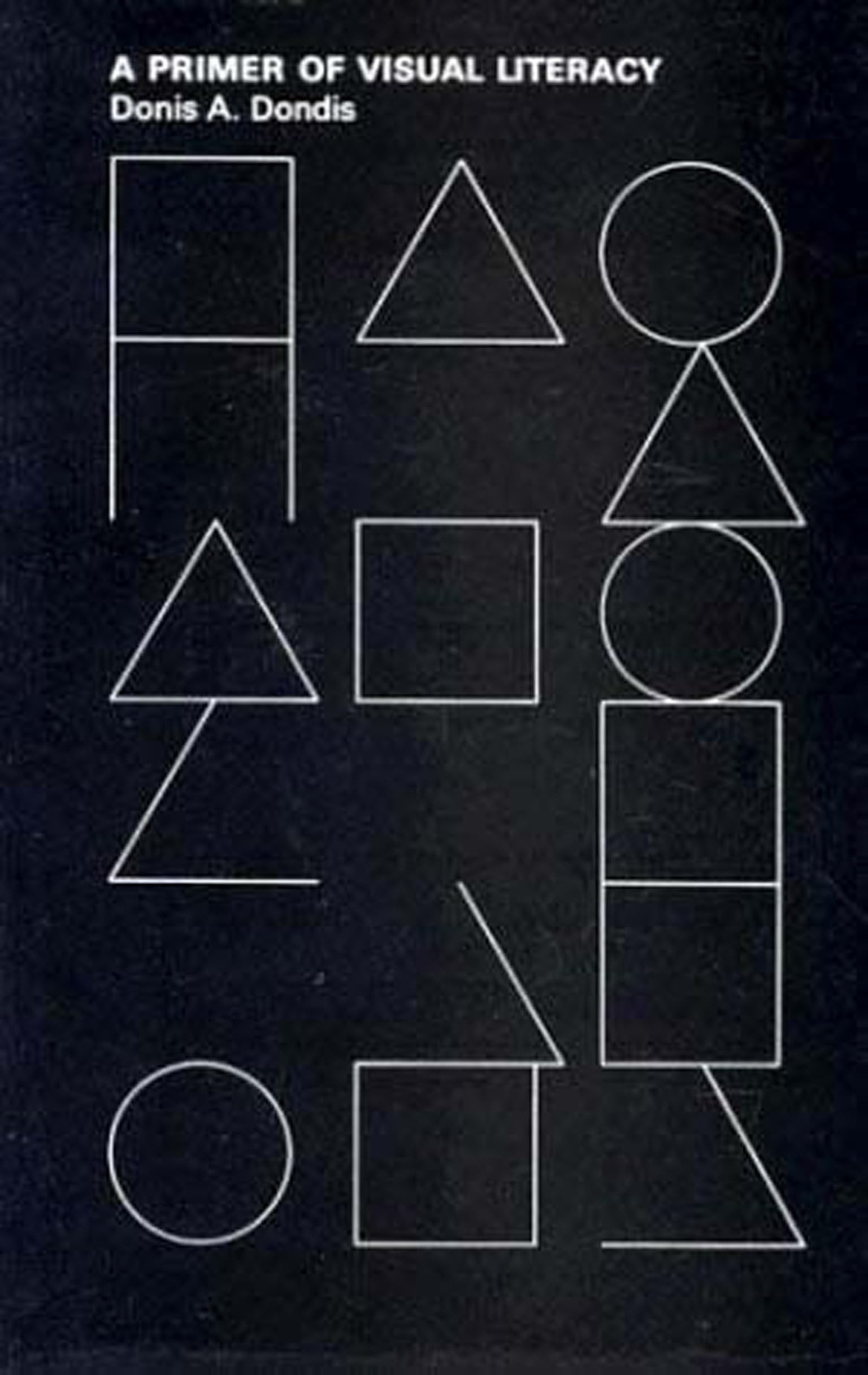
Title
Primer of Visual Literacy,New
Sold by Ergodebooks, an authorized reseller.
Returns accepted within 30 days | support@ergodebooks.com
Shipping Information
- Free Standard Shipping — United States only
- Processing Time: 3–5 business days
- Estimated Delivery: 6–10 business days after dispatch
- Double-boxed, fully insured & discreetly packaged
- Tracking number sent via email once dispatched
Returns & Refund
Returns accepted within 30 days of delivery.
Damaged or Defective Item
Free return shipping + replacement or full refund
Wrong Item Received
Free return shipping + replacement or full refund
Change of Mind
Return shipping at customer's expense · 25% restocking fee applies
Payment Option

This primer is designed to teach students the interconnected arts of visual communication. The subject is presented, not as a foreign language, but as a native one that the student 'knows' but cannot yet 'read.'Responding to the need she so clearly perceives, Ms. Dondis, a designer and teacher of broad experience, has provided a beginning text for art and design students and a basic text for all other students; those who do not intend to become artists or designers but who need to acquire the essential skills of understanding visual communication at a time when so much information is being studied and transmitted in nonverbal modes, especially through photography and film. Understanding through seeing only seems to be an obviously intuitive process. Actually, developing the visual sense is something like learning a language, with its own special alphabet, lexicon, and syntax. People find it necessary to be verbally literate whether they are 'writers': or not; they should find it equally necessary to be visually literate, 'artists' or not. This primer is designed to teach students the interconnected arts of visual communication. The subject is presented, not as a foreign language, but as a native one that the student 'knows' but cannot yet 'read.' The analogy provides a useful teaching method, in part because it is not overworked or too rigorously applied. This method of learning to see and read visual data has already been proved in practice, in settings ranging from Harlem to suburbia. Appropriately, the book makes some of its most telling points through visual means. Numerous illustrated examples are employed to clarify the basic elements of design (teach an alphabet), to show how they are used in simple syntactic combinations ('See Jane run.'), and finally, to present the meaningful synthesis of visual information that is a finished work of art (the apprehension of poetry...).
⚠️ WARNING (California Proposition 65):
This product may contain chemicals known to the State of California to cause cancer, birth defects, or other reproductive harm.
For more information, please visit www.P65Warnings.ca.gov.
- Q: What is the size of the Primer of Visual Literacy? A: This book measures eight point nine four inches in length and five point eight eight inches in width. It has a thickness of zero point four seven inches.
- Q: How many pages does the Primer of Visual Literacy have? A: The Primer of Visual Literacy contains two hundred six pages. This provides ample content for students learning about visual communication.
- Q: What type of binding does the Primer of Visual Literacy have? A: This book is bound in paperback format. This makes it lightweight and easy to handle for readers.
- Q: Who is the author of the Primer of Visual Literacy? A: The author of this book is Donis A. Dondis. She is an experienced designer and educator in visual communication.
- Q: What is the main focus of the Primer of Visual Literacy? A: The main focus is to teach students the interconnected arts of visual communication. It aims to enhance visual literacy for both artists and non-artists.
- Q: Is the Primer of Visual Literacy suitable for beginners? A: Yes, this book is designed for beginners. It serves as an introductory text for art and design students and anyone interested in visual communication.
- Q: How can I apply the knowledge from the Primer of Visual Literacy? A: You can apply your knowledge by practicing visual analysis and interpretation. The book encourages you to engage with visual data in everyday contexts.
- Q: Is there a specific age group for the Primer of Visual Literacy? A: This book is suitable for high school students and above. It is designed for anyone looking to improve their understanding of visual communication.
- Q: Can I use the Primer of Visual Literacy for a course? A: Yes, this book can be used as a textbook for courses in visual communication or design. It provides foundational knowledge necessary for understanding visual literacy.
- Q: How should I care for the Primer of Visual Literacy? A: To care for this book, keep it in a dry area and avoid exposure to direct sunlight. This will help maintain its condition over time.
- Q: Is the Primer of Visual Literacy safe for all readers? A: Yes, the content is safe for all readers. It focuses on teaching visual communication without inappropriate themes.
- Q: How do I store the Primer of Visual Literacy? A: Store this book upright on a shelf or in a bookcase. This will prevent damage to the spine and keep it in good condition.
- Q: Can the Primer of Visual Literacy be used as a reference guide? A: Yes, it can be used as a reference guide. Its structured content allows readers to look up visual communication concepts easily.
- Q: What makes the Primer of Visual Literacy unique? A: Its unique approach teaches visual communication as a native language. This analogy helps students understand and interpret visual data effectively.
- Q: What if I receive a damaged Primer of Visual Literacy? A: If you receive a damaged book, contact customer support for assistance. They can help with returns or exchanges.
- Q: Is there a warranty for the Primer of Visual Literacy? A: Typically, there is no warranty for books. However, you may inquire about the seller's return policy for specific details.