
Title
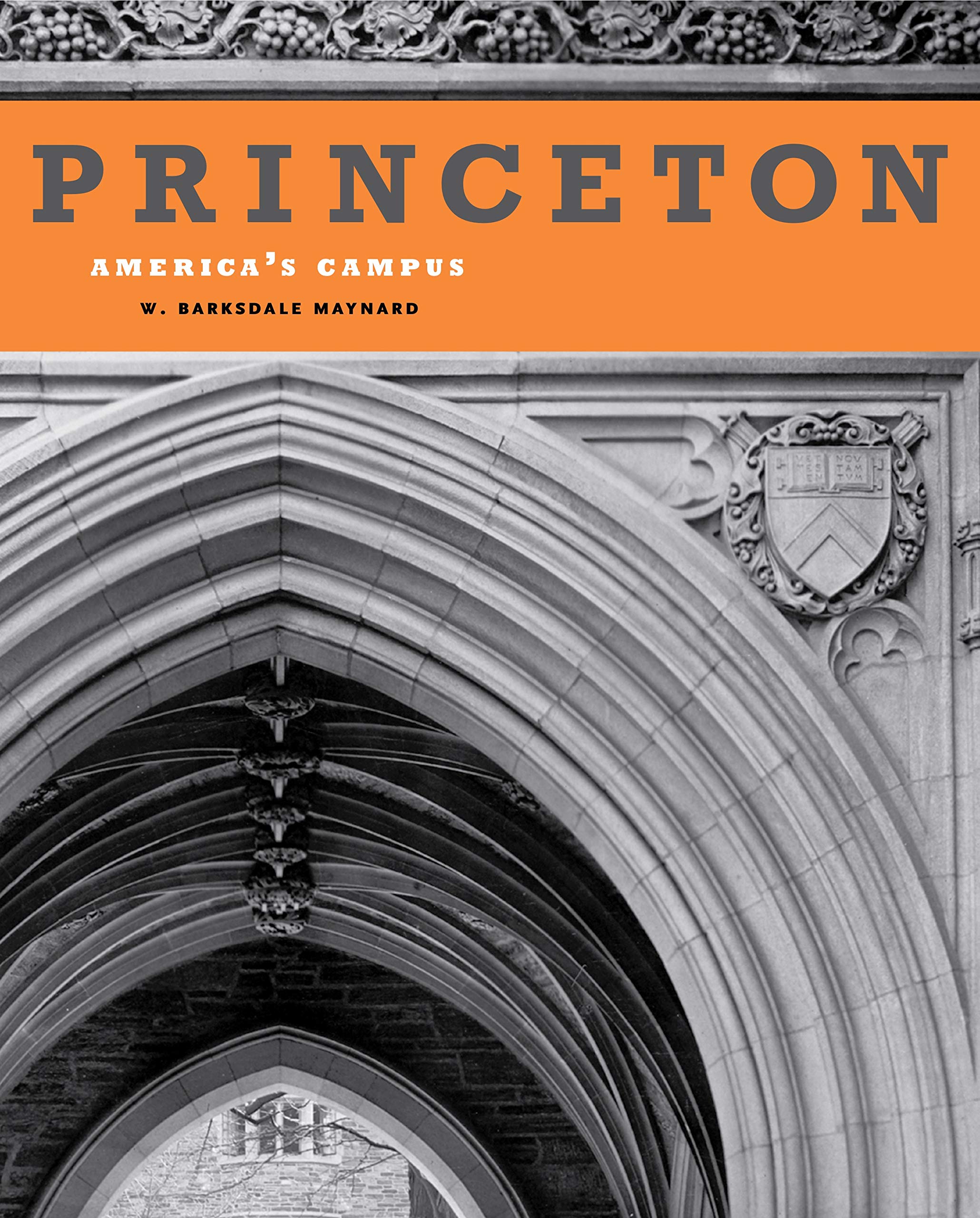
Princeton: America's Campus,Used
Sold by Ergodebooks, an authorized reseller.
Returns accepted within 30 days | support@ergodebooks.com
Shipping Information
- Free Standard Shipping — United States only
- Processing Time: 3–5 business days
- Estimated Delivery: 6–10 business days after dispatch
- Double-boxed, fully insured & discreetly packaged
- Tracking number sent via email once dispatched
Returns & Refund
Returns accepted within 30 days of delivery.
Damaged or Defective Item
Free return shipping + replacement or full refund
Wrong Item Received
Free return shipping + replacement or full refund
Change of Mind
Return shipping at customer's expense · 25% restocking fee applies
Payment Option

Founded in 1746, Princeton is the fourtholdest university in the country. It has been called a national treasure and is considered by many to be the loveliest campus in America. The very word campus debuted there in the eighteenth century, and over time, Princetons has ceaselessly evolved, passing through a series of distinct identities. Architectural critics have lavishly praised it, and careful stewardship by administrators and architects has preserved its appeal from generation to generation. Thousands of alumni return every year to march in the gaudy Prade, which twists among the buildings in a veritable tour of campus history, from Nassau Hall (1756) to the twentyfirst centurys Bloomberg Hall. And yet, if one wants to learn moreto go deeper than the beautiful surface and explore the history of these buildings or the complex development of the campusit can be surprisingly hard to do so. Although Princeton resembles an outdoor museum, explanatory markers are few, written sources are out of print and scattered, and sophomore tour guides cheerfully mix fact and myth. No plaques help the curious visitor who wishes to follow in the footsteps of James Madison, Aaron Burr, James McCosh, Albert Einstein, John Foster Dulles, Bill Bradley, or Michelle Obama, and the stories of the buildings themselves are known to few. Princeton: Americas Campus offers a way in. Neither a straightforward architectural history nor a simple guidebook, it weaves social history and the built fabric into a biography of a great American place.To create this work, Barksdale Maynard conducted an ambitious series of interviews with major architects active at Princeton over the past forty years, including Robert Venturi, Denise Scott Brown, Charles Gwathmey, Michael Graves, Tod Williams, Hugh Hardy, Perry Morgan, Rodolfo Machado, Henry Cobb, Frances Halsband, Demetri Porphyrios, Harold Fredenburgh, Alan Chimacoff, Robert A. M. Stern, and Rafael Violy. He also interviewed educational leaders, including deans at Princeton, MIT, Cooper Union, and Yale, in addition to university presidents Goheen and Bowen of Princeton, Gutmann of Penn, and Rudenstine of Harvard. The book is thus not just a guide and a history; it is also an archive of the living recollections of the people who built Princetons majestic campus.
⚠️ WARNING (California Proposition 65):
This product may contain chemicals known to the State of California to cause cancer, birth defects, or other reproductive harm.
For more information, please visit www.P65Warnings.ca.gov.