
Title
Principles of Brain Evolution,New
Sold by Ergodebooks, an authorized reseller.
Returns accepted within 30 days | support@ergodebooks.com
Shipping Information
- Free Standard Shipping — United States only
- Processing Time: 3–5 business days
- Estimated Delivery: 6–10 business days after dispatch
- Double-boxed, fully insured & discreetly packaged
- Tracking number sent via email once dispatched
Returns & Refund
Returns accepted within 30 days of delivery.
Damaged or Defective Item
Free return shipping + replacement or full refund
Wrong Item Received
Free return shipping + replacement or full refund
Change of Mind
Return shipping at customer's expense · 25% restocking fee applies
Payment Option

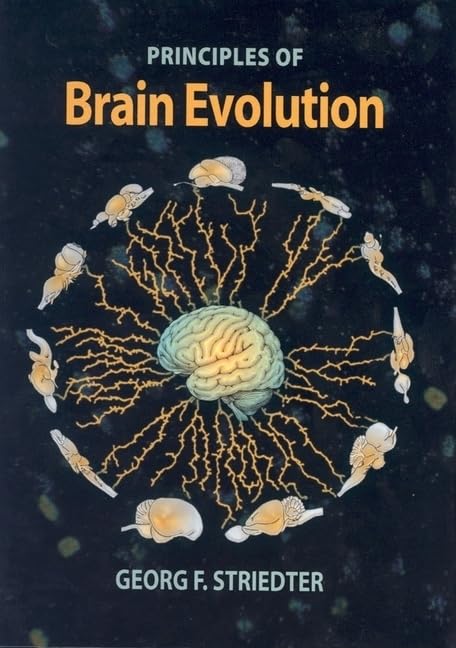
Brain evolution is a complex weave of species similarities and differences, bound by diverse rules or principles. This book is a detailed examination of these principles, using data from a wide array of vertebrates but minimizing technical details and terminology. It is written for advanced undergraduates, graduate students, and more senior scientists who already know something about 'the brain,' but want a deeper understanding of how diverse brains evolved.The book opens with a brief history of evolutionary neuroscience, then introduces the various groups of vertebrates and their major brain regions. The core of the text explores: what aspects of brain organization are conserved across the vertebrates; how brains and bodies changed in size as vertebrates evolved; how individual brain regions tend to increase or decrease in size; how regions can become structurally more (or less) complex; and how neuronal circuitry evolves. A central theme emerges from these chaptersthat evolutionary changes in brain size tend to correlate with many other aspects of brain structure and function, including the proportional size of individual brain regions, their complexity, and their neuronal connections. To explain these correlations, the book delves into rules of brain development and asks how changes in brain structure impact function and behavior. The two penultimate chapters demonstrate the application of these rules, focusing on how mammal brains diverged from other brains and how Homo sapiens evolved a very large and 'special' brain.
⚠️ WARNING (California Proposition 65):
This product may contain chemicals known to the State of California to cause cancer, birth defects, or other reproductive harm.
For more information, please visit www.P65Warnings.ca.gov.
- Q: What is the main topic of 'Principles of Brain Evolution'? A: 'Principles of Brain Evolution' examines the complex principles underlying brain evolution across various vertebrate species, focusing on similarities and differences in brain organization.
- Q: Who is the intended audience for this book? A: The book is intended for advanced undergraduates, graduate students, and senior scientists who have a foundational understanding of neuroscience and wish to explore brain evolution in depth.
- Q: How does the book approach the topic of brain evolution? A: The book opens with a brief history of evolutionary neuroscience, followed by an exploration of the major brain regions of different vertebrate groups, discussing conservation, size changes, and structural complexity.
- Q: What are some key themes discussed in the book? A: Key themes include the correlation between brain size and structure, the evolution of brain circuitry, and how changes in brain development impact function and behavior.
- Q: Is technical jargon used in the book? A: The book minimizes technical details and terminology, making it accessible for those with a basic understanding of the brain.
- Q: What is the publication date of 'Principles of Brain Evolution'? A: The book was published on October 20, 2004.
- Q: What is the format of the book? A: 'Principles of Brain Evolution' is available in hardcover format and consists of 436 pages.
- Q: Who is the author of this book? A: The book is authored by Georg F. Striedter.
- Q: What unique insights does this book provide? A: The book provides insights into how mammal brains diverged from other vertebrates and the evolutionary path that led to the development of the human brain.
- Q: Does the book include practical applications of the concepts discussed? A: Yes, the penultimate chapters apply the principles of brain evolution to real-world examples, particularly focusing on mammalian brain development.