If you have any questions, you are always welcome to contact us. We'll get back to you as soon as possible, withing 24 hours on weekdays.
Customer service
All questions about your order, return and delivery must be sent to our customer service team by e-mail at yourstore@yourdomain.com
Sale & Press
If you are interested in selling our products, need more information about our brand or wish to make a collaboration, please contact us at press@yourdomain.com
Help
If you have any questions, you are always welcome to contact us. We'll get back to you as soon as possible, withing 24 hours on weekdays.
Customer service
All questions about your order, return and delivery must be sent to our customer service team by e-mail at yourstore@yourdomain.com
Sale & Press
If you are interested in selling our products, need more information about our brand or wish to make a collaboration, please contact us at press@yourdomain.com
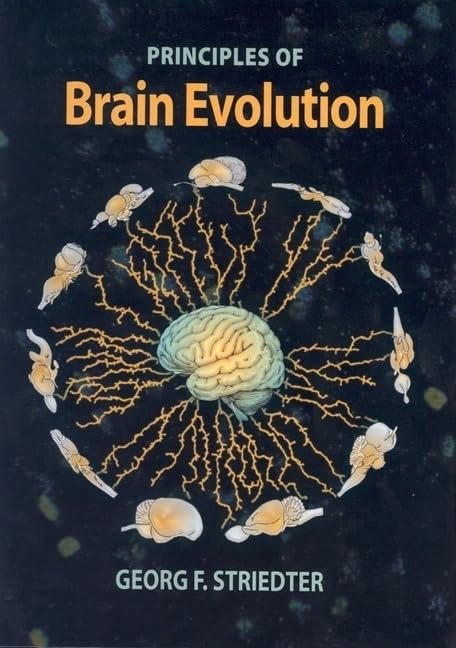
Brain evolution is a complex weave of species similarities and differences, bound by diverse rules or principles. This book is a detailed examination of these principles, using data from a wide array of vertebrates but minimizing technical details and terminology. It is written for advanced undergraduates, graduate students, and more senior scientists who already know something about 'the brain,' but want a deeper understanding of how diverse brains evolved.The book opens with a brief history of evolutionary neuroscience, then introduces the various groups of vertebrates and their major brain regions. The core of the text explores: what aspects of brain organization are conserved across the vertebrates; how brains and bodies changed in size as vertebrates evolved; how individual brain regions tend to increase or decrease in size; how regions can become structurally more (or less) complex; and how neuronal circuitry evolves. A central theme emerges from these chaptersthat evolutionary changes in brain size tend to correlate with many other aspects of brain structure and function, including the proportional size of individual brain regions, their complexity, and their neuronal connections. To explain these correlations, the book delves into rules of brain development and asks how changes in brain structure impact function and behavior. The two penultimate chapters demonstrate the application of these rules, focusing on how mammal brains diverged from other brains and how Homo sapiens evolved a very large and 'special' brain.
⚠️ WARNING (California Proposition 65):
This product may contain chemicals known to the State of California to cause cancer,
birth defects, or other reproductive harm.
For MAP (Minimum Advertised Price) violations and Intellectual Property (IP) or Trademark concerns, please contact:
support@ergodebooks.com
⚠️ California Proposition 65 Warning: Some products sold on this website may expose you to chemicals known to the State of California to cause cancer, birth defects, or other reproductive harm. For more information, visit www.P65Warnings.ca.gov.