
Title
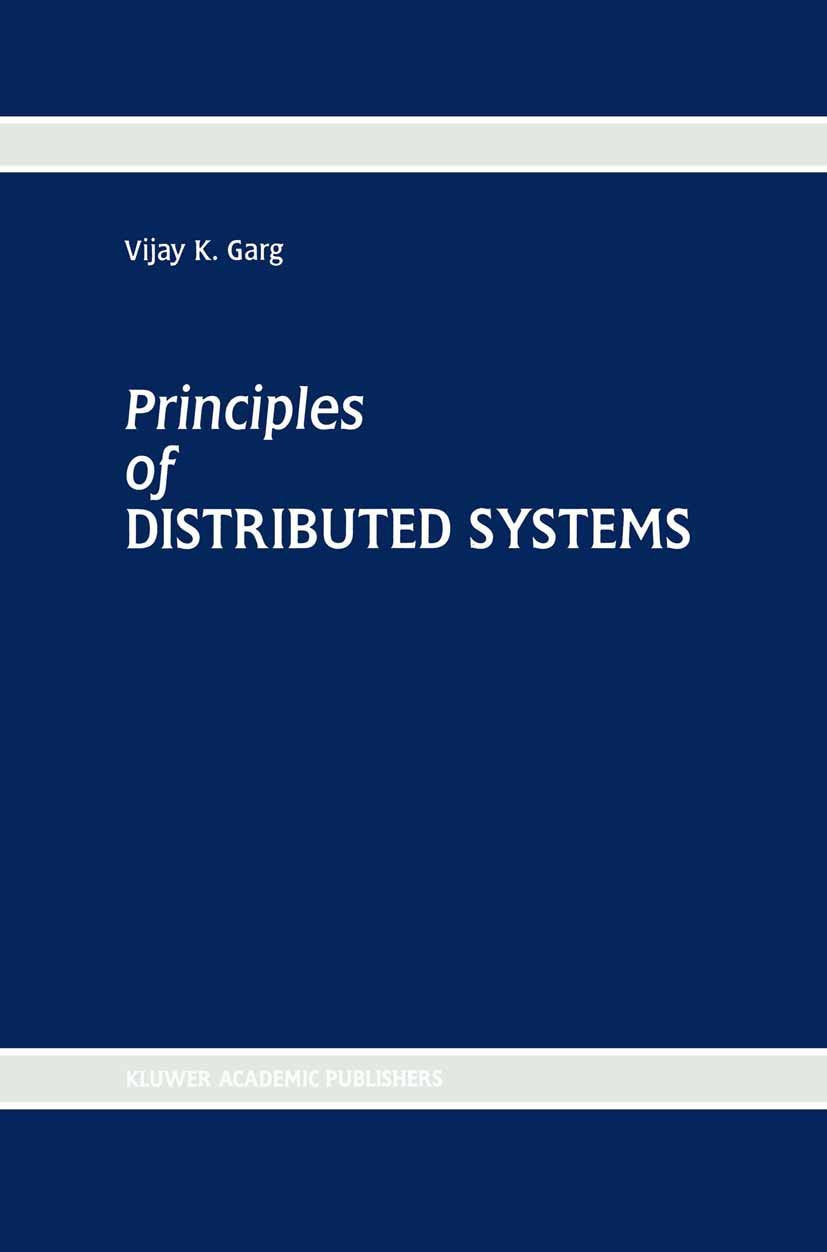
Principles of Distributed Systems,New
Sold by Ergodebooks, an authorized reseller.
Returns accepted within 30 days | support@ergodebooks.com
Shipping Information
- Free Standard Shipping — United States only
- Processing Time: 3–5 business days
- Estimated Delivery: 6–10 business days after dispatch
- Double-boxed, fully insured & discreetly packaged
- Tracking number sent via email once dispatched
Returns & Refund
Returns accepted within 30 days of delivery.
Damaged or Defective Item
Free return shipping + replacement or full refund
Wrong Item Received
Free return shipping + replacement or full refund
Change of Mind
Return shipping at customer's expense · 25% restocking fee applies
Payment Option

Distributed computer systems are now widely available but, despite a number of recent advances, the design of software for these systems remains a challenging task, involving two main difficulties: the absence of a shared clock and the absence of a shared memory. The absence of a shared clock means that the concept of time is not useful in distributed systems. The absence of shared memory implies that the concept of a state of a distributed system also needs to be redefined. These two important concepts occupy a major portion of this book.Principles of Distributed Systems describes tools and techniques that have been successfully applied to tackle the problem of global time and state in distributed systems. The author demonstrates that the concept of time can be replaced by that of causality, and clocks can be constructed to provide causality information. The problem of not having a global state is alleviated by developing efficient algorithms for detecting properties and computing global functions.The author's major emphasis is in developing general mechanisms that can be applied to a variety of problems. For example, instead of discussing algorithms for standard problems, such as termination detection and deadlocks, the book discusses algorithms to detect general properties of a distributed computation. Also included are several worked examples and exercise problems that can be used for individual practice and classroom instruction.Audience: Can be used to teach a onesemester graduate course on distributed systems. Also an invaluable reference book for researchers and practitioners working on the many different aspects of distributed systems.
⚠️ WARNING (California Proposition 65):
This product may contain chemicals known to the State of California to cause cancer, birth defects, or other reproductive harm.
For more information, please visit www.P65Warnings.ca.gov.