
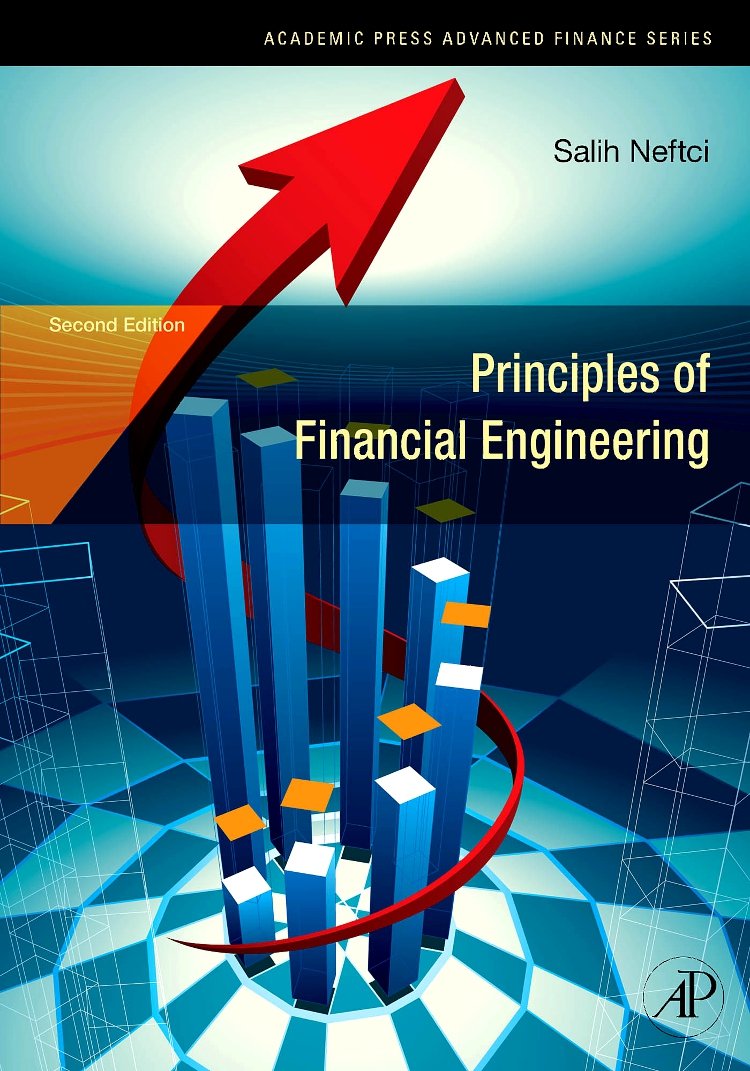
Title
Principles of Financial Engineering (Academic Press Advanced Finance),Used
Sold by Ergodebooks, an authorized reseller.
Returns accepted within 30 days | support@ergodebooks.com
Shipping Information
- Free Standard Shipping — United States only
- Processing Time: 3–5 business days
- Estimated Delivery: 6–10 business days after dispatch
- Double-boxed, fully insured & discreetly packaged
- Tracking number sent via email once dispatched
Returns & Refund
Returns accepted within 30 days of delivery.
Damaged or Defective Item
Free return shipping + replacement or full refund
Wrong Item Received
Free return shipping + replacement or full refund
Change of Mind
Return shipping at customer's expense · 25% restocking fee applies
Payment Option

Principles of Financial Engineering, Second Edition, is a highly acclaimed text on the fastpaced and complex subject of financial engineering. This updated edition describes the 'engineering' elements of financial engineering instead of the mathematics underlying it. It shows you how to use financial tools to accomplish a goal rather than describing the tools themselves. It lays emphasis on the engineering aspects of derivatives (how to create them) rather than their pricing (how they act) in relation to other instruments, the financial markets, and financial market practices.This volume explains ways to create financial tools and how the tools work together to achieve specific goals. Applications are illustrated using realworld examples. It presents three new chapters on financial engineering in topics ranging from commodity markets to financial engineering applications in hedge fund strategies, correlation swaps, structural models of default, capital structure arbitrage, contingent convertibles, and how to incorporate counterparty risk into derivatives pricing. Poised midway between intuition, actual events, and financial mathematics, this book can be used to solve problems in risk management, taxation, regulation, and above all, pricing.This latest edition of Principles of Financial Engineering is ideal for financial engineers, quantitative analysts in banks and investment houses, and other financial industry professionals. It is also highly recommended to graduate students in financial engineering and financial mathematics programs. The Second Edition presents 5 new chapters on structured product engineering, credit markets and instruments, and principle protection techniques, among other topics Additions, clarifications, and illustrations throughout the volume show these instruments at work instead of explaining how they should act The Solutions Manual enhances the text by presenting additional cases and solutions to exercises
⚠️ WARNING (California Proposition 65):
This product may contain chemicals known to the State of California to cause cancer, birth defects, or other reproductive harm.
For more information, please visit www.P65Warnings.ca.gov.
- Q: What are the dimensions of this book? A: This book measures seven point five two inches in length, one point three inches in width, and ten point two inches in height. These dimensions make it a standard size for hardcover books.
- Q: How many pages does this book contain? A: This book contains six hundred ninety-six pages. It provides a comprehensive exploration of financial engineering concepts.
- Q: What type of binding does this book have? A: This book is bound in hardcover. The hardcover design enhances durability and makes it suitable for frequent use.
- Q: What is the main focus of this book? A: The main focus of this book is on the engineering aspects of financial engineering rather than the underlying mathematics. It emphasizes practical applications of financial tools.
- Q: Who is the author of this book? A: The author of this book is Salih N. Neftci. He is well-regarded in the field of financial engineering.
- Q: Is this book suitable for beginners? A: Yes, this book is suitable for both beginners and professionals in financial engineering. It provides insights that cater to a wide range of expertise.
- Q: Can this book help with risk management? A: Yes, this book includes strategies for solving problems in risk management. It presents practical examples relevant to the field.
- Q: Does this book cover hedge fund strategies? A: Yes, this book includes discussions on hedge fund strategies. It provides insights into financial engineering applications in this area.
- Q: Is there a solutions manual available with this book? A: Yes, a solutions manual is available. It presents additional cases and solutions to exercises in the book.
- Q: How should I care for this hardcover book? A: To care for this hardcover book, keep it in a dry place and avoid exposure to direct sunlight. This helps preserve its condition.
- Q: Is this book appropriate for graduate students? A: Yes, this book is highly recommended for graduate students in financial engineering and financial mathematics programs. It aligns well with their curriculum.
- Q: What topics are covered in the new chapters? A: The new chapters cover topics such as structured product engineering, credit markets, and principle protection techniques. These additions enhance the book's relevance.
- Q: Are there real-world examples in this book? A: Yes, this book includes real-world examples to illustrate financial engineering applications. This practical approach aids understanding.
- Q: What is the publication date of this book? A: The second edition of this book was published by Academic Press. The exact publication date can typically be found on the copyright page.
- Q: Does this book discuss counterparty risk? A: Yes, this book discusses how to incorporate counterparty risk into derivatives pricing. It's a critical aspect of financial engineering.