
Title
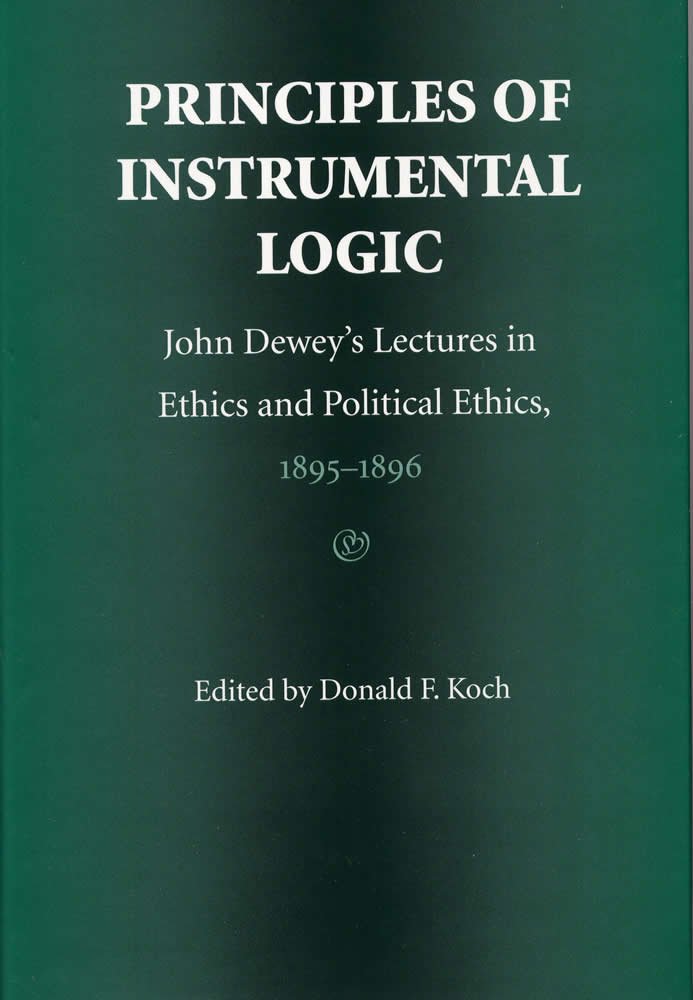
Principles Of Instrumental Logic: John Dewey'S Lectures In Ethics And Political Ethics, 18951896,Used
Sold by Ergodebooks, an authorized reseller.
Returns accepted within 30 days | support@ergodebooks.com
Shipping Information
- Free Standard Shipping — United States only
- Processing Time: 3–5 business days
- Estimated Delivery: 6–10 business days after dispatch
- Double-boxed, fully insured & discreetly packaged
- Tracking number sent via email once dispatched
Returns & Refund
Returns accepted within 30 days of delivery.
Damaged or Defective Item
Free return shipping + replacement or full refund
Wrong Item Received
Free return shipping + replacement or full refund
Change of Mind
Return shipping at customer's expense · 25% restocking fee applies
Payment Option

John Dewey Delivered Two Sets Of Related Lectures At The University Of Chicago In The Fall Quarter 1895 And The Spring Quarter 1896. Designed For Graduate Students, The Lectures Show The Birth Of Deweys Instrumentalist Theory Of Inquiry In Its Application To Ethical And Political Thinking.From 1891 Through 1903, Dewey Attempted To Develop A Revolutionary Experimentalist Approach To Ethical Inquiry Designed To Replace The More Traditional Ways Of Moral Theorizing That Relied On The Fixed Moral Knowledge Given In Advance Of The Situations In Which They Were Applied. In The Lectures On The Logic Of Ethics, He Sets Forth And Defends The View That The 'Is' In A Moral Judgment Such As 'This Is Good' Is A Coordinating Factor In An Inquiry. Although The Subject Matter Of The Lectures Is Highly Technical, Its Significance Is Paramount. It Provides The Key To And Opens The Door For A Theory That Preserves The Difference Between Strictly Scientific Inquiry And Moral Inquiry Even While It Provides A 'Scientific Treatment' Of The Latter.The Lectures On Political Ethics Apply Deweys Theory Of Inquiry To The Logical Problems Created By Three Disciplines Designated As Politics, Economics, And Ethics, Which Appear To Have Separate And Antagonistic Subject Matters. Politics Is A Quest For Political Power; Economics Is Based On Selfinterest; Ethical Inquiry Is About Morality. These Lectures Carry On The Experimental Theory Of Inquiry Developed In The Previous Lectures By Explaining How The Distinction Between These Subject Matters Can Be Developed Without The Antagonism.These Lectures Enable Us To Make Much Better Sense Of Deweys Later Works On Moral And Political Topics.
⚠️ WARNING (California Proposition 65):
This product may contain chemicals known to the State of California to cause cancer, birth defects, or other reproductive harm.
For more information, please visit www.P65Warnings.ca.gov.
- Q: How many pages are in the book? A: This book contains two hundred eight pages. It provides a comprehensive exploration of John Dewey's lectures on ethics and political ethics.
- Q: What is the binding type of this book? A: The book is bound in hardcover. This provides durability and a professional appearance for academic use.
- Q: What are the dimensions of the book? A: The book measures six inches in length, nine point zero two inches in height, and zero point seven five inches in width. These dimensions make it portable and easy to handle.
- Q: What is the main focus of the book? A: The book focuses on John Dewey's instrumentalist theory of inquiry. It analyzes its application to ethical and political thinking during the late nineteenth century.
- Q: Is this book suitable for beginners in ethics? A: This book is designed for graduate students. It may be challenging for beginners due to its technical subject matter.
- Q: How can I apply the theories discussed in the book? A: You can apply Dewey's theories by critically analyzing ethical dilemmas and political situations. The book encourages a practical approach to moral inquiry.
- Q: What is the best way to store this book? A: Store this book upright in a cool, dry place. This will help maintain its condition and prevent damage to the binding.
- Q: Does the book contain any illustrations or images? A: No, the book does not contain illustrations. It focuses on text-based content to convey complex philosophical ideas.
- Q: What if the book arrives damaged? A: If the book arrives damaged, you can return it for a replacement or refund. Keep all packaging materials for the return process.
- Q: Is there a return policy for this book? A: Yes, there is a return policy. You can return the book within a specified period if you are unsatisfied with your purchase.
- Q: Who is the author of this book? A: The author of the book is Professor Donald F. Koch, PhD. He offers insights into Dewey's lectures and their significance.
- Q: What themes are explored in this book? A: The book explores themes of ethics, political power, and moral inquiry. It examines the intersection of these disciplines in Dewey's thought.
- Q: Can I find a summary of Dewey's theories in this book? A: Yes, the book provides a detailed summary of Dewey's theories. It is useful for those looking to understand instrumentalism in ethics.
- Q: Is this book relevant to contemporary ethical discussions? A: Yes, the book is relevant to contemporary discussions. Dewey's ideas continue to influence modern ethical and political thought.
- Q: What is the publisher of this book? A: The book is published by Southern Illinois University Press. This publisher is known for academic and scholarly works.